
Flexible launch locations mean more tailored customer solutions and easier access to lucrative international markets, without regulatory headaches tied to overflying foreign land.
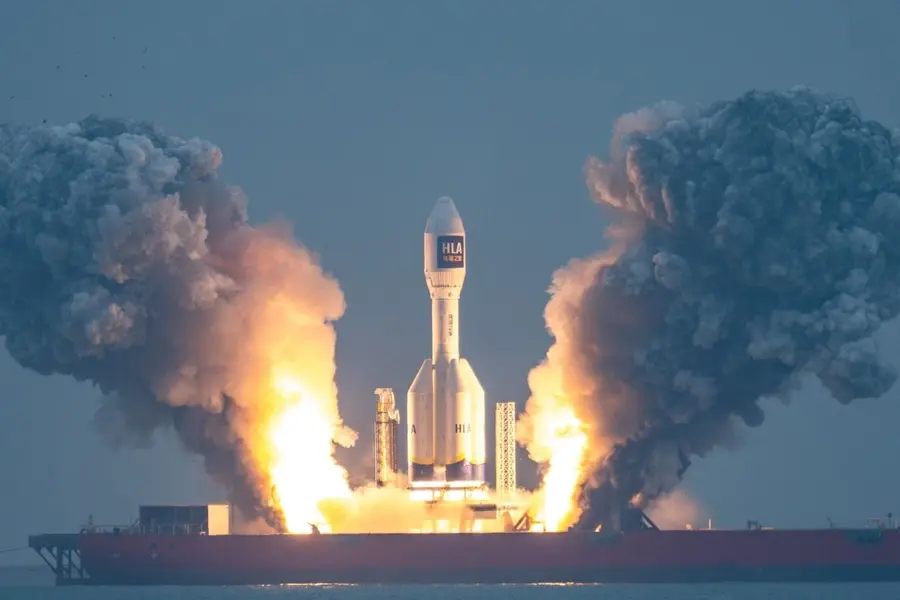
China’s private rocket company Orienspace has set a new milestone by launching three satellites from a floating barge in the Yellow Sea. The Gravity-1 rocket, lifting off on October 10, demonstrates that ocean-based launches are becoming a commercial reality. This is Orienspace’s second successful launch, just months after its first earlier this year, and shows how quickly private space players in China are moving forward.
The highlight of this launch was its commercial focus. The main payload, Jilin-1 Wideband 02B07, can capture high-resolution Earth images useful for mapping, agriculture, and urban management—key growth areas for satellite services. The other two satellites, built by Geespace (affiliated with Geely, a leading auto company), show how non-space companies are investing in the satellite business, hoping for new revenue streams from telecommunications, connected vehicles, and IoT applications.
Orienspace's investment story is strong. The company has attracted between $27 million and $124 million in funding to build the next-generation Gravity-2 rocket. This new, reusable launch vehicle promises bigger payloads -- up to 29,000 kg -- and lower costs, aiming to win a share in China’s massive satellite constellation projects like Guowang and Qianfan.
The success of the Gravity-1's second launch, with important internal upgrades and a live broadcast (unusual for China), builds confidence among investors and potential customers about reliability, capacity, and openness.
Why sea launches make business sense
Sea-based launches can change the economics of space access for India and the world. Launching closer to the equator from a ship increases payload abilities, saving fuel and money. Flexible launch locations mean more tailored customer solutions and easier access to lucrative international markets, without regulatory headaches tied to overflying foreign land. The reduced risk to populated areas also keeps insurance and legal costs down.
Risks and technical barriers
However, launching from sea platforms is a big technical and logistical challenge. Rockets and barges must be protected from saltwater corrosion, frequent storms, and rough sea states. Specialized engineering, supply chains, and highly trained teams are needed. Emergency responses and environmental hazards also require new regulatory attention. These hurdles mean that, in the short term, sea launches suit high-volume, constellation-type satellite deployments or customers seeking flexible, rapid access to rare orbits.
India’s strategic opportunity
India’s space sector, led by ISRO, already has world-class talent, successful launch vehicles, and a rapidly growing commercial ecosystem. India’s long coastline and ports could serve as sea launch bases, providing a competitive edge if future demand grows for large satellite constellations or specialty orbits.
However, policymakers and investors should note that significant capital, regulatory reforms, and ecosystem support will be needed. India’s cost-effective ground-based launches meet today's market, but developing sea launch capacity can ensure long-term competitiveness and leadership in the global space economy.
Takeaway for investors and policymakers
China’s 60 successful space launches this year -- mostly through joint government-commercial projects --showcase a powerful model combining private innovation and strategic state support.
For India, now is the time to study these trends, invest in public-private partnerships, and prepare for new markets that ocean-based launching could unlock. Building such capabilities early will help Indian companies compete for global contracts and strengthen national security and technological independence.
The author is a defence, aerospace & geopolitical analyst.
Published: 13 Oct 2025, 09:16 pm IST
Related Topics
Disclaimer: Kindly avoid objectionable, derogatory, unlawful and lewd comments, while responding to reports. Such comments are punishable under cyber laws. Please keep away from personal attacks. The opinions expressed here are the personal opinions of readers and not that of Mathrubhumi.
