
A recent government survey has revealed that more than 1.6 million children in Pakistan’s Sindh province are engaged in child labour
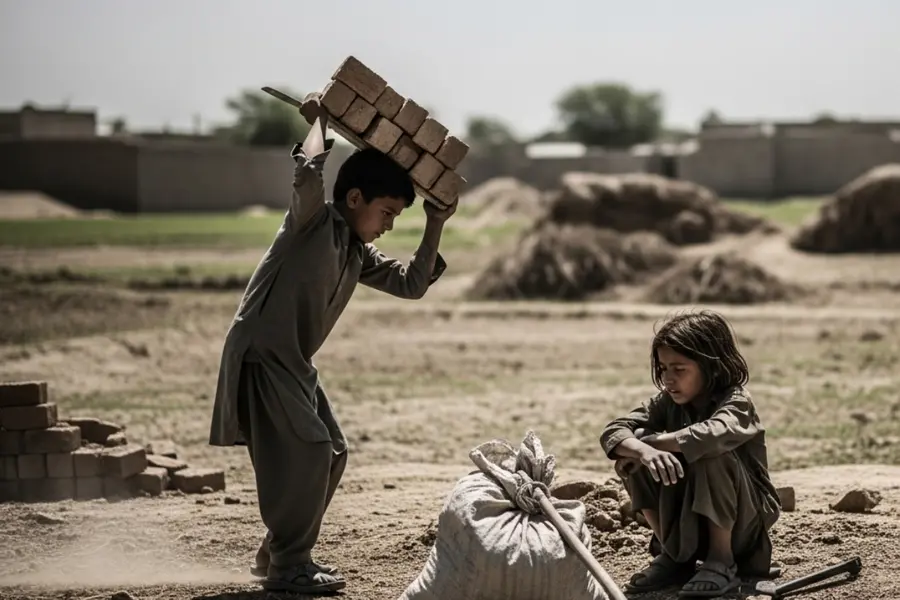
Islamabad: Over 1.6 million children are currently engaged in child labour across Sindh, Pakistan, according to a new provincial survey released by the Sindh Labour Department. Despite repeated government efforts to reform labour laws and protect minors, the practice remains widespread across the province.
Sindh Director General of Labour, Syed Muhammad Murtaza Ali Shah, said the survey—conducted in July and August with support from UNICEF and the Bureau of Statistics—found that 10.3 per cent of children aged between 5 and 17 were working. Alarmingly, around 800,000 of these children, or 50.4 per cent of those aged 10–17, were employed in hazardous and exploitative conditions, including long hours, exposure to extreme weather, and unsafe work environments in the agriculture and industrial sectors.
Also Read

The survey also found that only 40.6 per cent of working children attend school, compared to 70.5 per cent of non-working children. District-level data showed that Qambar Shahdadkot had the highest prevalence of child labour at 30.8 per cent, followed by Tharparkar (29 per cent), Tando Muhammad Khan (20.3 per cent) and Shikarpur (20.2 per cent). Karachi recorded the lowest rate at 2.38 per cent.
Shah stated that the provincial government is revising existing laws, expanding awareness projects, and conducting workplace raids to protect minors. He added that Chief Minister Syed Murad Ali Shah has formed a special task force to tackle the issue.
According to the official, child labour in Sindh has declined by nearly 50 per cent since 1996, when it stood at 20.6 per cent. Social protection programmes have also been launched to assist families living in poverty, one of the root causes of child labour.
However, child rights advocates argue that progress remains insufficient. The Society for the Protection of the Rights of the Child (SPARC) said that poverty, large families, and lack of awareness about child rights are key factors behind the persistence of the problem.
Nazra Jahan, a SPARC protection officer, noted that 33.7 per cent of the poorest households had at least one child working. She added that many impoverished families are compelled to send their children to work to survive.
“Until more employment opportunities are created, education becomes accessible for underprivileged children, and poverty is reduced, the fight against child labour will remain an uphill battle,” Jahan said.
The Sindh Labour Department’s latest survey paints a grim picture of child labour across the province, revealing that one in ten children aged between 5 and 17 are engaged in some form of work. Of these, nearly half are subjected to unsafe or exploitative environments.
The data underscores the sharp divide between urban and rural Sindh, with Karachi having the lowest child labour rate at just over 2 per cent, while rural districts like Qambar Shahdadkot and Tharparkar report rates exceeding 25 per cent.
The report also highlights the educational gap between working and non-working children, reflecting the trade-off between survival and schooling in low-income households.
Officials said that while the rate of child labour has fallen considerably over the past three decades, poverty continues to drive children into the workforce. The government’s ongoing initiatives aim to enhance social protection and awareness, but activists stress that structural change—through economic support, education access, and enforcement of child labour laws—is essential for lasting reform.
(With PTI inputs)
Published: 09 Nov 2025, 04:41 pm IST
Related Topics
Disclaimer: Kindly avoid objectionable, derogatory, unlawful and lewd comments, while responding to reports. Such comments are punishable under cyber laws. Please keep away from personal attacks. The opinions expressed here are the personal opinions of readers and not that of Mathrubhumi.