
The upcoming auction of 30 Bob Ross paintings marks one of the rarest art events in recent history — and it’s happening as public television in the US
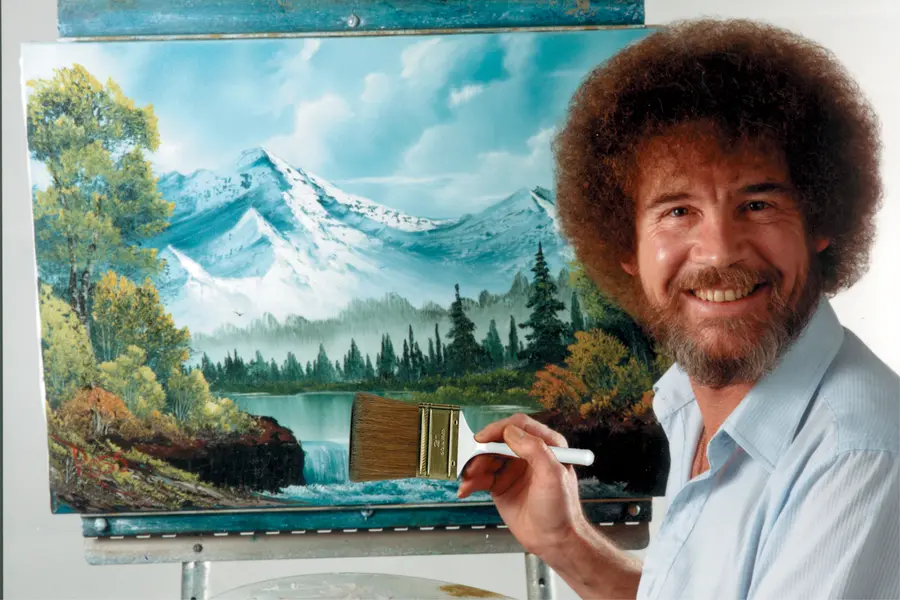
New York: Sales of Bob Ross’ original paintings are nearly unheard of. Despite the artist producing more than 30,000 works during his lifetime, fewer than 100 are believed to have ever entered the open market.
The reason lies in the strict control of his estate, which has long focused on licensing Bob Ross’ image and media rights rather than commercialising his paintings. That makes this new auction historically significant — and it comes at a time when the future of public television is uncertain.
American Public Television (APT), the distributor behind The Joy of Painting, announced that 30 Ross originals will be auctioned through Bonhams starting 11 November in Los Angeles, with additional sales in New York, Boston and online through 2026. APT has pledged that 100% of the proceeds will go to local public broadcasting stations struggling after Congress eliminated $1.1 billion in funding for the Corporation for Public Broadcasting earlier this year.
The cut has hit nearly 600 stations nationwide — 330 PBS affiliates and 246 NPR members — forcing some to reduce staff, cancel local programming and rely more on viewer donations. APT President Joan Kowalski said the auction ensures Ross’ legacy “continues to support the very medium that introduced his art to millions.”
Bonhams, which holds the record for the most expensive Bob Ross painting ever sold, expects global interest. Two of his mountain-and-lake landscapes fetched $114,800 and $95,750 in August 2025, while a rare painting from the first episode of The Joy of Painting was listed in 2022 for $9.85 million. Experts note that these prices have made Ross — once considered a “pop-culture curiosity” — a serious presence in the collectible art market.
Ross’ paintings are also seen as symbols of American cultural nostalgia. Produced on-air in just 30 minutes, his tranquil “happy little trees” and calming presence became a cornerstone of PBS’ educational ethos. The fact that his art may now help sustain the very network that once carried his message adds emotional and historical weight to the auction.
Beyond its financial purpose, the sale represents the first large-scale public release of works directly from the Bob Ross estate. Most of his paintings have been kept in storage, donated to institutions, or occasionally displayed in travelling exhibitions. Collectors have long clamoured for access, but until now, the estate had refused to monetise the archive.
As public television faces the most severe funding shortfall in its history, this auction is seen as both a symbolic and practical effort to preserve a cornerstone of American cultural life — one “happy little painting” at a time.
Published: 10 Oct 2025, 02:20 pm IST
Disclaimer: Kindly avoid objectionable, derogatory, unlawful and lewd comments, while responding to reports. Such comments are punishable under cyber laws. Please keep away from personal attacks. The opinions expressed here are the personal opinions of readers and not that of Mathrubhumi.
