
David Hockney, the influential British artist renowned for his vibrant pool paintings, landscapes and pioneering use of digital art, has died at the age of 88, bringing to a close one of the most celebrated careers in contemporary art.
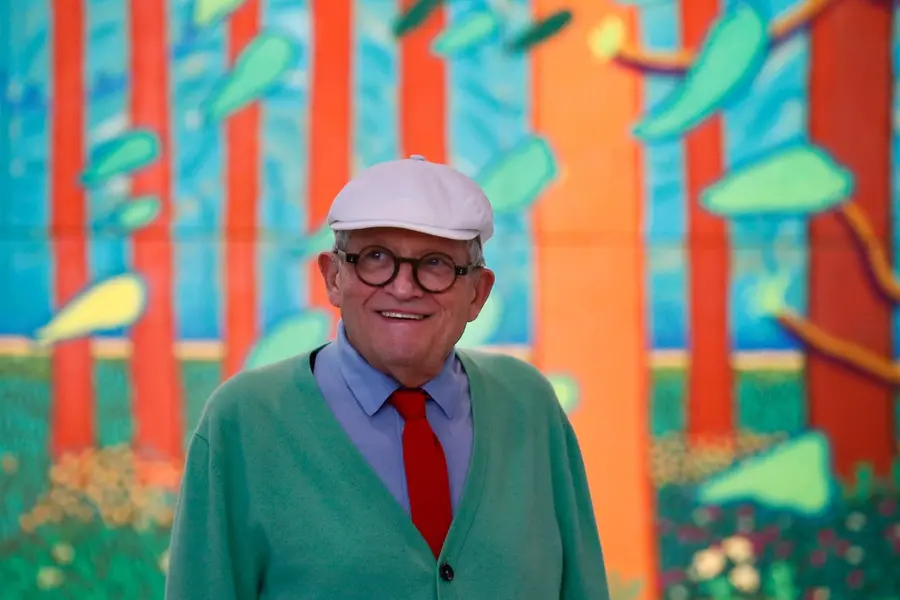
David Hockney, one of Britain's most admired and influential artists, has died at his home in London at the age of 88, his publicist confirmed on Friday.
Over a career spanning more than seven decades, Hockney transformed contemporary art through his distinctive use of colour, experimentation with new mediums and ability to reinvent traditional artistic forms. His death marks the end of an era for the global art world.
A career that reshaped contemporary art
Hockney became internationally recognised for paintings that captured the bright light and relaxed atmosphere of Southern California, particularly his famous swimming pool scenes that became defining images of modern art.
Throughout his career, he explored portraiture, landscape painting, collage, photography, printmaking and digital drawing, constantly pushing artistic boundaries while remaining accessible to a broad audience.
Art historian Simon Schama once described Hockney's appeal as rooted in the pleasure and optimism his work conveyed, making him one of the most beloved artists of his generation.
From Bradford to global fame
Born on July 9, 1937, in Bradford, northern England, Hockney studied at the Royal College of Art in London and gained recognition while still a student.
His artistic influences ranged from Renaissance portrait painters and British masters such as J.M.W. Turner to Pablo Picasso and the emerging Pop Art movement.
By the 1960s, Hockney had become a prominent figure in both British and American art circles, known as much for his distinctive style and personality as for his innovative artwork.
California inspired some of his greatest works
After moving to Los Angeles in 1964, Hockney found inspiration in California's sunlight, architecture and lifestyle.
Works such as his swimming pool paintings became synonymous with his artistic identity and helped establish him as one of the leading figures of contemporary art.
His 1972 masterpiece, Portrait of an Artist (Pool with Two Figures), became one of the most valuable artworks by a living artist when it sold for more than $90 million at auction in 2018.
A pioneer beyond painting
Although best known as a painter, Hockney continually embraced new technologies and artistic methods.
He created acclaimed photographic collages, designed sets and costumes for opera productions, experimented with video art and later became an enthusiastic user of digital drawing tools.
In his later years, he gained widespread attention for colourful artworks created on iPads, proving that creativity and innovation remained central to his practice even in his eighties.
Returning to nature and home
After spending decades in California, Hockney returned to Europe and drew inspiration from the landscapes of Yorkshire and later Normandy in France.
His large-scale landscape paintings celebrated changing seasons, trees and countryside scenes, earning critical acclaim and attracting hundreds of thousands of visitors to exhibitions around the world.
One of his best-known later works carried the message, "They can't cancel the spring", a phrase that resonated globally during the Covid-19 pandemic.
An artist who never stopped creating
Despite health challenges, including a minor stroke in 2012 and increasing hearing loss, Hockney continued working throughout his life.
He often credited his passion for art with keeping him youthful and motivated, maintaining a daily creative routine well into his late eighties.
His publicist noted that he remained committed to his work until the very end.
A lasting artistic legacy
Hockney leaves behind an extraordinary body of work that influenced generations of artists and changed how people viewed painting, photography and digital art.
From the swimming pools of California to the landscapes of Yorkshire and Normandy, his art celebrated colour, light and the simple joy of looking at the world.
His death closes a remarkable chapter in modern art history, but his influence is expected to endure for generations to come.
Published: 12 Jun 2026, 06:11 pm IST
Disclaimer: Kindly avoid objectionable, derogatory, unlawful and lewd comments, while responding to reports. Such comments are punishable under cyber laws. Please keep away from personal attacks. The opinions expressed here are the personal opinions of readers and not that of Mathrubhumi.
