
A glacial lake outburst flood (GLOF) at Bhutan's Shintaphu Lake has triggered flood warnings in parts of West Bengal and Assam, prompting authorities to move thousands of residents to safer locations. With a possible surge of water expected in the Sankosh River system, emergency teams have been deployed and a red alert remains in effect.
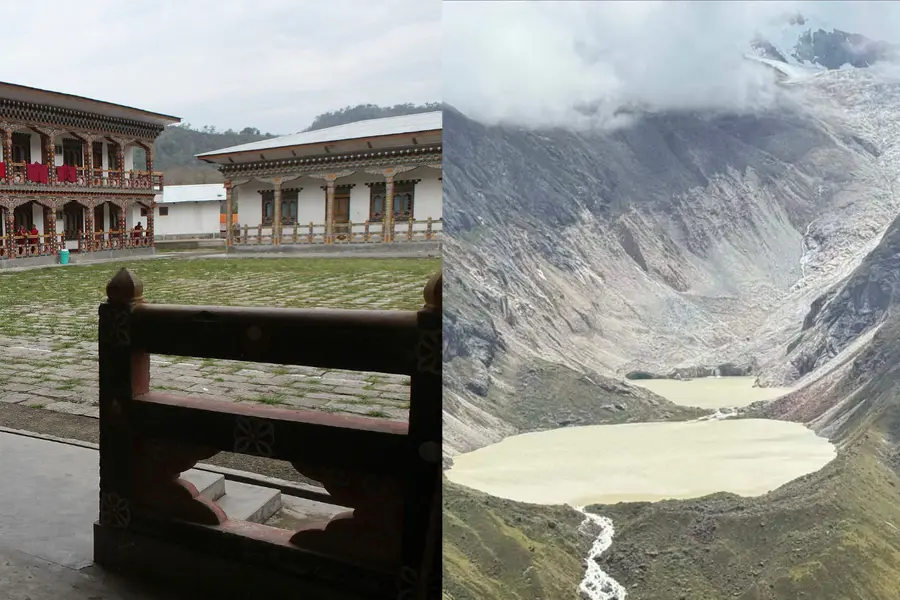
Thimphu: A glacial lake outburst flood (GLOF) was reported at Shintaphu Lake in Bhutan's Gasa district on Thursday evening, October 29, raising concerns about possible flash floods in parts of northern West Bengal and Assam.
The sudden release of water from the lake has prompted authorities in India to issue alerts in vulnerable areas along the Sankosh River. Residents living close to riverbanks have been advised to move to higher ground as emergency teams monitor the situation.
In West Bengal, thousands of people have been shifted to safer locations as a precaution. Police, disaster response teams and district officials have been mobilised to manage the situation.
Thousands shifted as red alert issued along Sankosh River
West Bengal Police Superintendent Amit Kumar Shaw said authorities were coordinating with Bhutanese officials and various emergency agencies to prepare for the possible impact of the water surge.
Appealing to residents not to panic, Shaw said the situation was under control, with multiple departments working together to ensure public safety.
According to the police officer, approximately 4,000 to 5,000 people had been moved to shelters, with school buildings being used as temporary relief centres. More than 6,000 additional people had also been relocated to safer areas.
An NDRF team was on its way, while the State Disaster Response Force (SDRF) and Civil Defence personnel had been deployed.
Authorities have arranged dry food, drinking water and toilet facilities for people moved from vulnerable locations.
Shaw said the intensity of the water flow had decreased slightly according to the latest information available to the administration. However, officials remained on high alert.
A red alert is currently in effect for the Sankosh River system. The police officer said authorities were expecting water to flow through the river in the coming hours, potentially carrying dead fish, large pieces of wood and concrete debris.
Which areas of West Bengal are on alert?
The administration has issued warnings in vulnerable locations of Alipurduar district, particularly along the Sankosh River.
West Bengal Forest Minister and Kumargram MLA Manoj Kumar Oraon appealed to residents in Kumargram, Pakriguri, Bholka and nearby tea estates to remain alert and move to higher ground.
In a video message, Oraon warned that the water surge from Bhutan could reach the Kumargram stretch of the Sankosh River within approximately one to one-and-a-half hours.
Sirens and public announcements have been used to alert people living close to riverbanks.
Authorities in neighbouring Jalpaiguri district have also issued warnings in vulnerable areas, including Banarhat.
Residents have been advised not to wait for water levels to rise before moving to safer locations.
What happened at Shintaphu Lake in Bhutan?
The reported glacial lake outburst took place at Shintaphu Lake in the Lungo area of Laya Gewog in Bhutan's northwestern Gasa district.
The lake is located below Wakila Mountain and is among 17 glacial lakes in Bhutan identified as potentially dangerous.
The incident reportedly occurred on Thursday evening, triggering a sudden release of water through the Mo Chhu river system.
The surge also affected facilities at Gasa Tshachu, a popular hot spring destination, which were reportedly washed away.
No casualties were reported from the incident, as the affected area had been evacuated beforehand.
An official from Bhutan's National Centre for Hydrology and Meteorology (NCHM) told India Today that a water-level monitoring station at Taktsimakhang had not issued an alert when the initial reports emerged. The full volume of water released and the extent of the outburst were not immediately clear.
What is a glacial lake outburst flood (GLOF)?
A glacial lake outburst flood occurs when water accumulated in a lake formed by melting glaciers is suddenly released.
Such lakes are often held back by natural barriers made of ice, rocks and glacial debris. If these barriers collapse or are breached, large volumes of water can rush downstream through mountain valleys.
GLOFs can carry rocks, sediment, trees and other debris, causing extensive damage to roads, bridges, settlements and other infrastructure.
The floods can be particularly dangerous because water levels may rise rapidly, leaving communities downstream with limited time to evacuate.
Why are West Bengal and Assam at risk?
The concern in India stems from the interconnected river systems that carry water from Bhutan into the northeastern and eastern parts of the country.
The Mo Chhu is part of Bhutan's Punatsangchhu river basin, which connects downstream to the Sankosh river system.
The Sankosh flows from Bhutan into India and passes through parts of West Bengal and Assam.
A sudden increase in water discharge could threaten settlements along the riverbanks, agricultural land, livestock and infrastructure.
Alipurduar district in North Bengal is among the areas being closely monitored because of its proximity to the Sankosh River.
Authorities are assessing the movement of water and its possible impact on downstream communities.
Why GLOFs are a growing concern in the Eastern Himalayas
The incident highlights the flood risks faced by communities living downstream of glacial lakes in the Eastern Himalayas.
As glaciers melt, water can accumulate in lakes held back by unstable natural barriers. Changes in temperature, ice conditions, landslides and other disturbances can increase the possibility of sudden water releases.
Bhutan's identification of Shintaphu among its potentially dangerous glacial lakes underlines the importance of monitoring vulnerable Himalayan water bodies.
For India, the incident also highlights the need for coordination with neighbouring countries because rivers originating in the Himalayas cross international boundaries.
Early warning systems, real-time river monitoring, evacuation plans and communication between disaster management agencies are essential to reducing the impact of such events.
The immediate priority remains the safety of communities along the Sankosh River in West Bengal and Assam. Although officials have reported a slight reduction in the intensity of the water flow, the red alert and emergency preparations remain in place.
Published: 30 Oct 2026, 07:47 am IST


ABOUT THE AUTHOR

Related Topics
Disclaimer: Kindly avoid objectionable, derogatory, unlawful and lewd comments, while responding to reports. Such comments are punishable under cyber laws. Please keep away from personal attacks. The opinions expressed here are the personal opinions of readers and not that of Mathrubhumi.