
Nepal’s devastating flood crisis has deepened, with the death toll rising to 469 and 1,468 people still missing across Nepal and Tibet. Rescue teams are racing to reach isolated communities, while a rapidly filling barrier lake has raised fears of another potentially destructive flood surge downstream.
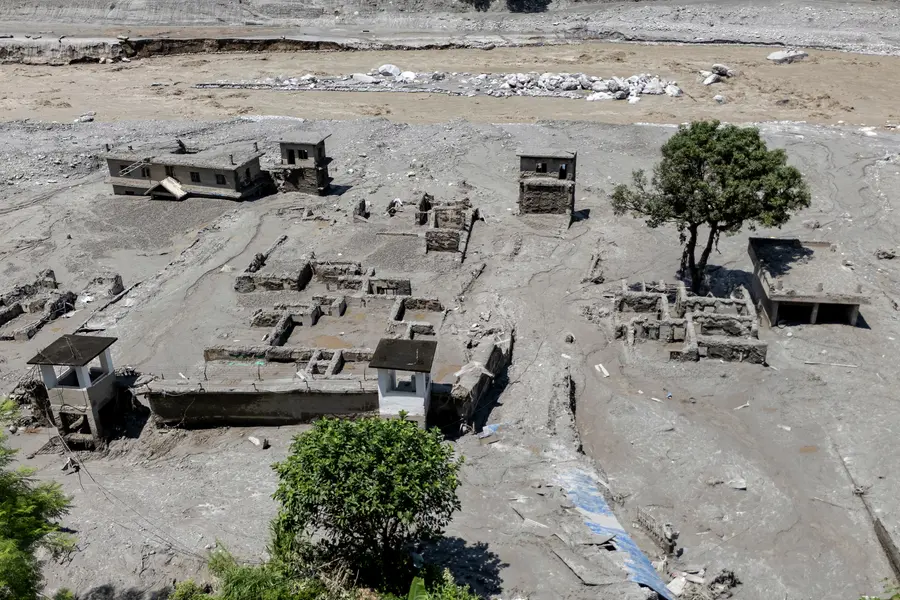
Nepal's devastating flash floods have killed 469 people, while 1,468 remain missing across Nepal and Tibet, as rescuers race to reach cut-off communities and authorities warn that a rapidly filling barrier lake could trigger another dangerous flood surge.
The disaster was triggered by an ice-rock avalanche following a glacial collapse near the Nepal-Tibet border. A huge torrent of water, mud and debris swept through central Nepal, destroying homes, roads, bridges and other infrastructure.
Rasuwa and Nuwakot were among the worst-hit areas, with entire settlements buried under mud and debris.
290 Indians remain untraceable
India is urgently trying to establish the whereabouts of 290 Indian nationals who remain uncontactable in Nepal.
External Affairs Minister S Jaishankar said India was coordinating with Nepal, other ministries, state governments, tour operators and relevant authorities to trace those affected.
Prime Minister Narendra Modi also spoke to Nepal Prime Minister Balendra Shah and assured him of India's full humanitarian assistance.
India has so far rescued 84 nationals, including 63 workers from the Trishuli-I hydropower project and 21 people from Tamil Nadu.
Around 200 Indians on the Tibet side have also sought assistance for evacuation.
India sends 47.5 tonnes of relief
India has stepped up its humanitarian response, sending a total of 47.5 tonnes of relief material to Nepal.
The supplies include temporary shelters, blankets, hygiene kits, solar lamps, medicines and food packets.
The Ministry of External Affairs has also established a 24-hour control room to help with tracing and evacuation efforts.
Nepalese authorities rescued 27 foreign tourists stranded in Rasuwa, including 11 Indians.
The group also included four South Koreans, two Italians and two US citizens. The tourists were airlifted to Kathmandu by the Nepal Army.
Many Indian tourists affected by the disaster had been travelling towards Kailash Mansarovar in Tibet or Gosainkunda in Nepal.
A second flood threat emerges
Even as rescue teams continue searching for survivors, authorities are facing a fresh danger from a newly formed barrier lake near the source of the Bhote Koshi river system.
Chinese authorities estimated that around 2 million cubic metres of water had accumulated in the lake by Thursday morning. Another 3 million cubic metres could potentially enter the lake over the following three days.
If the natural barrier breaks, a sudden surge could travel downstream and worsen conditions in areas already devastated by the first flood.
Nepal's Department of Hydrology and Meteorology has warned people to stay away from riverbanks and remain in safe locations. Chinese authorities are conducting flood simulations and risk assessments to determine the danger.
What caused the devastating floods?
The disaster began after an ice-rock avalanche triggered by a glacial collapse near the Nepal-China border.
The avalanche struck the Lhende River and temporarily blocked its flow. When the natural barrier gave way, a massive surge travelled downstream into the Bhote Koshi and Trishuli river systems.
The US Geological Survey revised its initial assessment of a reported 4.4-magnitude earthquake, concluding that the seismic signal was generated by the glacial collapse and resulting debris flow rather than an earthquake.
Infrastructure destroyed
The floods have caused extensive damage to Nepal's transport and energy infrastructure.
Nepal's Department of Roads reported damage at multiple points along the 42-kilometre road between Betrawati and Rasuwagadhi.
Authorities said the disaster damaged 35 motorable bridges, 45 suspension bridges and around 40 kilometres of black-topped roads.
The Trishuli and Devighat hydropower projects and other power infrastructure have also been affected.
The damage has made rescue operations significantly harder, with some communities cut off by destroyed roads and bridges.
Rescue teams race against time
Nepal Police said 796 people, including 50 foreigners, had been rescued by helicopters, while another 796 people had been evacuated by land.
Helicopters, drones and ground teams are searching riverbanks, isolated settlements and downstream areas.
At least 44 Nepal Army personnel, 28 Nepal Police personnel and 13 Armed Police Force personnel are among those whose whereabouts remain unknown. Around 160 people working at hydropower projects and customs offices have also been reported missing.
The scale of the disaster has left families searching hospitals, rescue centres and temporary facilities for missing relatives.
Hospitals in Kathmandu and Chitwan have displayed lists and photographs of people who were rescued or killed to help families identify their relatives.
The search has become more difficult because some bodies were recovered in poor condition and large areas remain inaccessible.
International assistance grows
China, India, the United States and other countries have offered assistance as Nepal continues its massive rescue and relief operation.
Chinese Premier Li Qiang visited flood-hit Gyirong Township to oversee rescue and relief operations, while Chinese military and rescue teams were deployed to the affected area.
Nepal's government has also been coordinating with foreign governments over missing nationals and international rescue assistance.
The danger is not over
The immediate emergency is no longer limited to recovering people from the first flood. The possibility of a barrier-lake breach has created a second potential flood threat in the Bhote Koshi and Trishuli river systems.
With roads and bridges already destroyed, another surge could make access to affected communities even more difficult.
Authorities are therefore urging residents, travellers and rescue personnel to remain away from riverbanks and closely follow official warnings while monitoring of the lake and downstream rivers continues.
Published: 28 Aug 2026, 09:47 am IST
ABOUT THE AUTHOR

Related Topics
Disclaimer: Kindly avoid objectionable, derogatory, unlawful and lewd comments, while responding to reports. Such comments are punishable under cyber laws. Please keep away from personal attacks. The opinions expressed here are the personal opinions of readers and not that of Mathrubhumi.