
A new study highlights severe climate threats facing the Himalayas, warning that accelerating glacier melt threatens human lives and one-fifth of India's economic output.
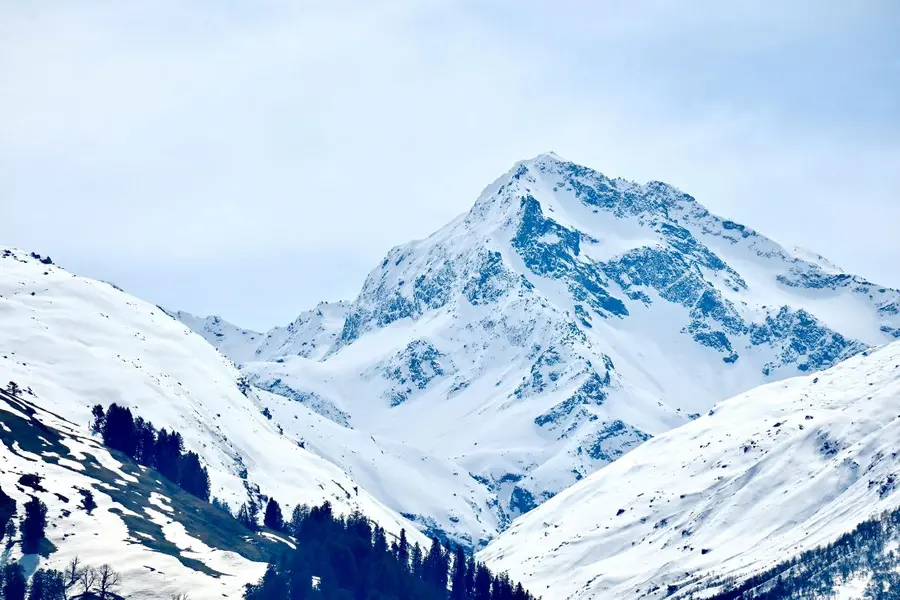
New Delhi: Accelerating glacier melt, increasingly unstable glacial lakes and a critical lack of environmental monitoring are pushing the Himalayas toward a dangerous tipping point, according to new research highlighted by the BBC.
The report, produced by global consultancy Systemiq alongside the Integrated Mountain Initiative and with technical inputs from ICIMOD and the GB Pant National Institute of Himalayan Environment, warns that Himalayan glaciers are now losing ice mass 65% faster than they did just 10 years ago.
Despite the rising threat, severe gaps in tracking persist. Out of an estimated 40,000 glaciers spanning the Himalaya-Karakoram range, a mere 21 are being monitored in detail on a continuous basis.
This monitoring deficit poses severe risks to regional safety. As ice retreats, it forms expanding glacial lakes contained only by fragile walls of rock and mud. Compounding the hazard, rising temperatures are thawing high-altitude permafrost, increasing the likelihood of catastrophic, cascading natural disasters.
The consequences are already evident in India, where the Himalayan region, comprising 18% of the nation's landmass, accounts for roughly 35% of all national disasters. In a parliamentary statement earlier this year, the Indian government confirmed that 56 glacial lakes have been classified as “very high risk” following a scientific survey of 189 vulnerable water bodies across the region.
The physical dangers are well-documented. In 2023, a sudden glacial lake outburst flood (GLOF) in Sikkim claimed at least 70 lives while destroying key roads, bridges, and hydroelectric dams. A similar catastrophe in Uttarakhand’s Rishiganga and Dhauliganga valleys killed more than 200 people in 2021.
Beyond localised flooding, the report underscores an immense macro-economic vulnerability. Himalayan runoff underpins approximately 20% of India's Gross Domestic Product (GDP), supporting critical sectors including tea estates, wheat and rice farming, hydroelectric power and religious tourism. However, the mountain states themselves retain only about 5% of this economic value.
Scientists at ICIMOD project that river basins across the Hindu Kush Himalaya will reach “peak water”, the threshold where glacier runoff reaches its maximum volume before permanently declining, around the middle of this century, threatening the long-term water and economic security of hundreds of millions across South Asia.
Published: 14 Sept 2026, 01:43 pm IST
ABOUT THE AUTHOR

Related Topics
Disclaimer: Kindly avoid objectionable, derogatory, unlawful and lewd comments, while responding to reports. Such comments are punishable under cyber laws. Please keep away from personal attacks. The opinions expressed here are the personal opinions of readers and not that of Mathrubhumi.