
Benin says it has thwarted an attempted military takeover after soldiers briefly appeared on state TV claiming to dissolve the government.
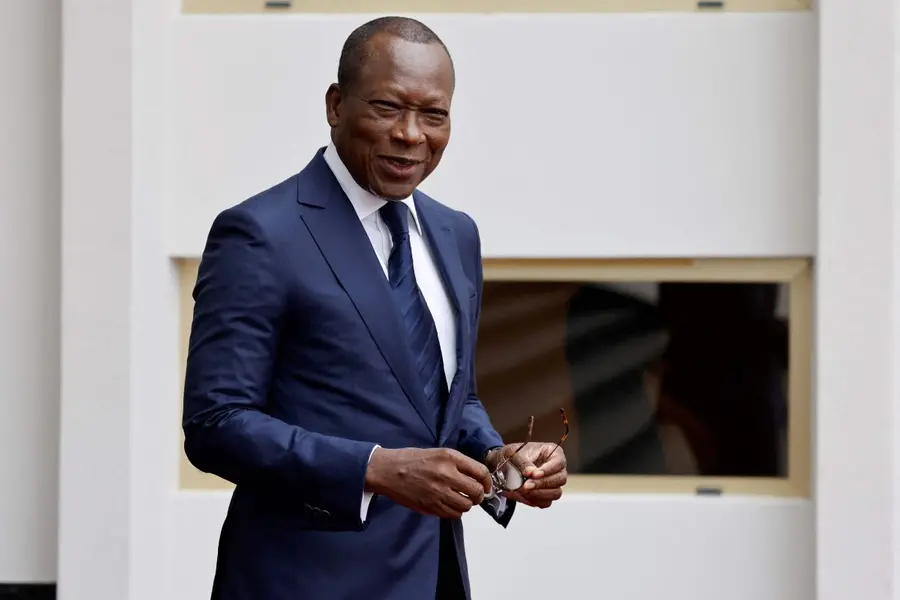
Cotonou: Benin’s government says it has regained control after a group of soldiers briefly claimed to dissolve state institutions in an apparent coup attempt early Sunday. Interior Minister Alassane Seidou announced that the mutiny had been contained, even as questions continue to swirl about the whereabouts of President Patrice Talon.
What really happened?
Tension gripped the West African nation on Sunday morning when gunfire echoed in parts of Cotonou and soldiers appeared on state television declaring that they had seized power. Identifying themselves as the Military Committee for Refoundation, the group announced that the government had been dissolved and named Lt. Col. Pascal Tigri as their leader.
The broadcast was cut soon after, and transmission on both state TV and public radio went dark before later being restored.
Attempt foiled, says government
Hours after the dramatic announcement, Benin’s interior minister issued a video message on Facebook, stating that the attempted takeover had been stopped.
Here is Alassane Seidou’s statement in full:
“People of Benin, dear compatriots, In the early morning of Sunday, December 7, 2025, a small group of soldiers launched a mutiny with the aim of destabilising the state and its institutions. Faced with this situation, the Beninese armed forces and their hierarchy, faithful to their oath, remained committed to the republic.
Their response allowed them to maintain control of the situation and thwart the attempt. Therefore, the government urges the population to go about their business as usual.”
According to security sources quoted by AFP, roughly a dozen soldiers have been detained, including 13 active members and one former military officer.
Where is President Talon now?
Official information about President Patrice Talon has not been released since shots were heard around the presidential compound. However, government spokesperson Wilfried Houngbedji told the Associated Press that the situation was under control and that there was no cause for alarm.
Al Jazeera cited Oluwole Ojewale of the Institute for Security Studies as saying back-channel updates indicated the president was unharmed. According to Ojewale, “we can reasonably conclude that the president is in good spirits now and is probably under some high-level security protection right now”.
He added that “Since the cloud is still foggy, it’s too early for the president to step out” and described any coup attempt in Benin as an “uphill task”, citing Nigeria’s likely resistance to being surrounded by military-led neighbours.
How Benin arrived at this flashpoint
Benin, long regarded as relatively stable compared to its coup-prone neighbours, has witnessed several shocks in recent years. In January, two associates of President Talon were handed 20-year prison sentences over an alleged 2024 coup plan. Just weeks ago, lawmakers approved a controversial extension of the presidential term from five to seven years, while maintaining the two-term limit.
Talon’s preferred successor, former finance minister Romuald Wadagni, is widely seen as the frontrunner for next April’s presidential poll. Meanwhile, opposition figure Renaud Agbodjo was barred from contesting after the electoral commission ruled he lacked the required number of sponsors.
About Talon and his presidency
A billionaire businessman known as the “King of Cotton,” Talon returned from exile in 2015 to back opposition forces against then-president Boni Yayi. He won the 2016 election with 65% of the vote amid allegations of irregularities and secured re-election in 2021 with 86% after electoral reforms critics say restricted opposition participation.
Economic reforms under his leadership have attracted positive signals from the International Monetary Fund. An IMF assessment noted that fiscal discipline had reduced debt-related risks and helped lower poverty levels from 40% to 36%, though inequality persists in the country’s northern regions, where jihadist threats from the Sahel have increased since 2019.
Talon has promoted Benin as a stable partner within ECOWAS and has played mediator roles during regional crises, including Niger’s 2023 coup.
Regional reaction
The Economic Community of West African States (ECOWAS) condemned the attempted overthrow in strong terms, calling it an assault on democratic order.
The bloc stated that it “strongly condemns this unconstitutional move that represents a subversion of the will of the people of Benin” and pledged its support to help safeguard the country’s constitutional system and territorial integrity.
About Benin
Situated on the West African coast, Benin stretches from the Gulf of Guinea to the Niger River. It borders Togo to the west, Nigeria to the east, and Burkina Faso and Niger to the north. Though Porto-Novo is officially the capital, Cotonou functions as its economic and administrative centre.
Home to around 14 million people, Benin was formerly the French colony of Dahomey until independence in 1960. The country adopted the name Republic of Benin in 1975. French is the official language, but its ethnic groups – including Fon, Gen, Bariba, Yoruba and Dendi – speak a variety of local languages. Religious practice is diverse, with Christianity, Islam and traditional beliefs all prominent.
(With inputs from agencies)
Published: 07 Dec 2025, 08:30 pm IST
Related Topics
Disclaimer: Kindly avoid objectionable, derogatory, unlawful and lewd comments, while responding to reports. Such comments are punishable under cyber laws. Please keep away from personal attacks. The opinions expressed here are the personal opinions of readers and not that of Mathrubhumi.
