
The political maneuvering comes as Netanyahu, Israel's longest-serving leader, remains locked in a close contest or trailing in polls ahead of the October 27 elections.
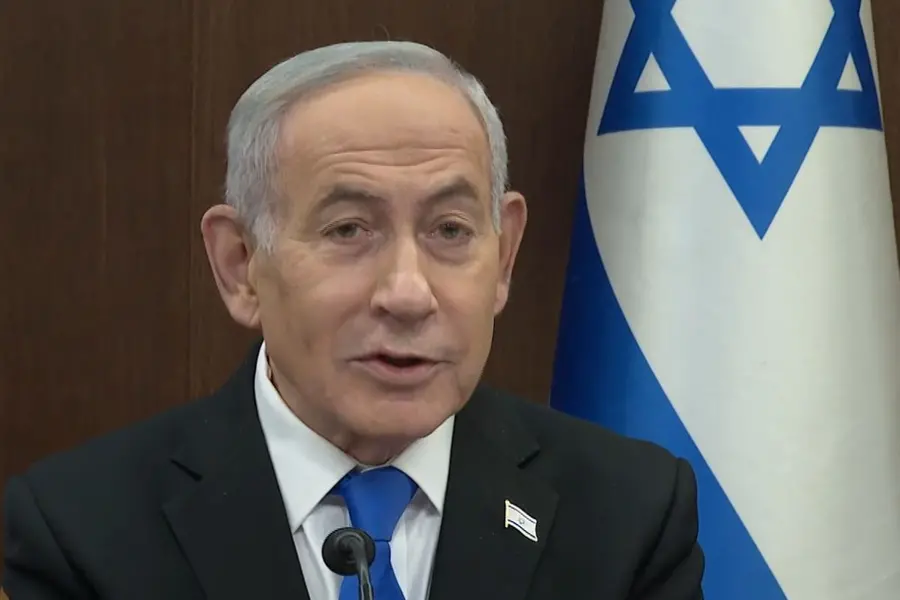
Jerusalem: Israeli Prime Minister Benjamin Netanyahu officially rejected a US-led Gaza peace plan endorsed by Hamas on Sunday, putting explicit distance between himself and President Donald Trump as he seeks to shore up his political base ahead of upcoming national elections.
Netanyahu’s formal opposition follows over a week of gradually escalating internal criticism of the proposal. Despite receiving prior assurances that Israeli forces would not be required to begin withdrawing from Gaza immediately, the prime minister explicitly opposed the deal after experiencing intense pushback from his right-wing coalition allies. Addressing a cabinet meeting, Netanyahu stated directly, "Israel rejects the 15-point document," referring to the proposal signed off on by Hamas in late July. He emphasized that the Israeli military "will not carry out any withdrawal until Hamas is genuinely disarmed, and will continue to thwart threats against our forces and our citizens."
While describing President Trump—who had previously praised the Gaza deal as a major milestone for peace—as "our greatest friend in the White House," Netanyahu made clear that he was willing to challenge Washington. He noted that Israel is actively conveying its objections to the United States, explaining, "They have ideas; some of them are acceptable to us and some are not, and we know how to stand our ground on these matters."
The political maneuvering comes as Netanyahu, Israel's longest-serving leader, remains locked in a close contest or trailing in polls ahead of the October 27 elections. These will mark the nation's first general election since the devastating October 7, 2023 attack by Hamas that ignited the war. Public opinion polling indicates the proposed Gaza plan is broadly unpopular among Netanyahu’s conservative base, and far-right members of his cabinet have aggressively pressured him to derail the agreement.
Days after naming Khalil al-Hayya as its new leader, Hamas announced its support for the Gaza framework and called on American officials to push Netanyahu toward acceptance. Bassem Naim, a member of Hamas's political bureau, told AFP, "We expect the mediators and the American guarantor to pressure Netanyahu and his government to adhere to the roadmap, and not obstruct the process for internal political and electoral reasons." Hamas later reiterated in an official statement that it remains committed to the roadmap.
Also read: Mojtaba Khamenei video surfaces amid health rumours: Where is Iran’s Supreme Leader?
The public rift marks a notable turn in relations between the two leaders. Netanyahu had previously campaigned on the strength of his close ties with Trump, who took several unprecedented steps in support of Israel, including moving the US embassy to Jerusalem. While the two leaders jointly launched operations against Iran in late February, their approaches diverged when Trump sought a ceasefire and subsequent diplomatic settlement as the conflict weighed on his popularity and sent global oil prices surging. Netanyahu reaffirmed his hawkish stance during Sunday's cabinet meeting, asserting, "with an agreement or without an agreement, as long as I am prime minister, Iran will not have nuclear weapons." Additionally, Netanyahu ordered fresh military strikes on Lebanon last week following an alleged ceasefire violation by Iran-backed Hezbollah, precisely as US-mediated talks were taking place between Israel and Lebanon.
The disputed Gaza framework represents the latest stage of a US-brokered ceasefire originally announced in October, which has curtailed but not completely halted Israeli military operations in the enclave. Under the proposed terms, Hamas would surrender its weapons to an emerging Palestinian governing body, with Israeli forces initiating a concurrent withdrawal—a timeline Israel flatly rejected. Following a meeting with Netanyahu last week, Trump's deal-implementing body, the Board of Peace, adjusted its position to state that an Israeli pullout would occur only after "complete" disarmament. However, the revision failed to satisfy the Israeli leader, who declared on Sunday, "We are talking about real disarmament, not fictitious disarmament."
In response to the growing deadlock, key mediator Egypt urged all parties to "honour their commitments" and refrain from actions that could derail diplomatic progress, following a discussion between Egyptian Foreign Minister Badr Abdelatty and Nickolay Mladenov, the Board of Peace's high representative for Gaza.
Despite Netanyahu's vocal rejection, Israeli military operations in Gaza have generally decreased since the plan's announcement, though localized violence persists. Civil defence spokesman Mahmoud Bassal reported that Israeli gunfire injured a child on Sunday, who was subsequently admitted to a hospital in Khan Yunis. According to the Gaza health ministry—which functions under Hamas authority and whose figures are regarded as reliable by the United Nations—Israeli military actions in Gaza have resulted in 1,258 Palestinian fatalities since the October ceasefire took effect, while the Israeli military has reported five deaths among its forces during the same period. (AFP)
Published: 09 Aug 2026, 09:13 pm IST
Related Topics
Disclaimer: Kindly avoid objectionable, derogatory, unlawful and lewd comments, while responding to reports. Such comments are punishable under cyber laws. Please keep away from personal attacks. The opinions expressed here are the personal opinions of readers and not that of Mathrubhumi.
