
Attacks on Indian diplomatic missions highlight the escalating anti-India rhetoric, raising security concerns for India.
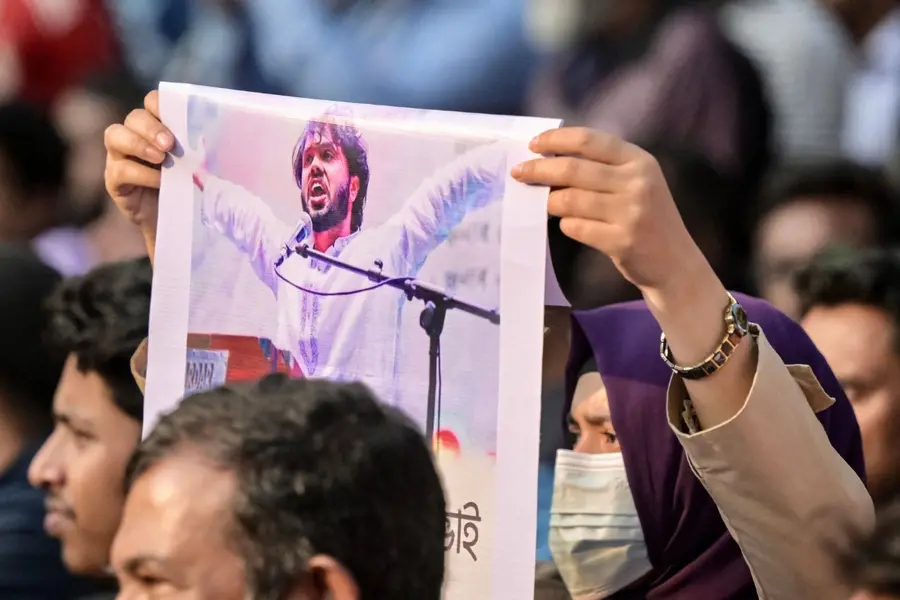
New Delhi: Bangladesh remains in a state of high tension following the assassination of Sharif Osman Hadi, a prominent figure in the country’s recent student-led uprising. While the identity of the perpetrators remains unconfirmed, Indian intelligence officials suggest the killing may have been an internally orchestrated strike.
Surge in Targeted Violence
Also Read

The death of the activist has ignited a wave of unrest across the capital. Reports indicate that the resulting violence has specifically targeted individuals perceived as pro-India, members of the neutral media, the Hindu minority, and supporters of the Awami League. Properties associated with the former ruling party have also been subjected to attacks.
Allegations of Strategic Engineering
Observers and agency officials note a distinct pattern in the escalating chaos, suggesting the turmoil is being manipulated to achieve two primary objectives: postponing upcoming national elections and intensifying anti-India sentiment within the country.
Current polling indicates a narrowing gap between the Jamaat-e-Islami and the Bangladesh Nationalist Party (BNP). Experts suggest that a fair electoral process would likely result in a BNP victory, an outcome reportedly unfavourable to both the ISI-linked Jamaat and the current interim administration led by Chief Adviser Muhammad Yunus.
The Rise of the National Citizens Party
Following the student movement that toppled the Sheikh Hasina administration, student leaders formed the National Citizens Party (NCP). However, the group reportedly lacks the electoral momentum to compete effectively at this stage.
Sources claim the NCP enjoys the full support of Yunus, who may favour an election delay to allow his preferred political vehicle time to establish a stronger foothold. An official stated that a narrative is being constructed to suggest that the current security climate is "not safe to hold elections in Bangladesh," a development that aligns with ISI interests by allowing for prolonged external interference.
Orchestrated Chaos and Anti-India Rhetoric
The events of the past 24 hours have been described by officials as "completely managed," with local incidents being rapidly politicised to spark spontaneous violence.
A major portion of the unrest is being channelled into anti-India fervour. Despite Hadi’s own vocal opposition to New Delhi, efforts are underway in Bangladesh to frame his murder as the work of pro-India operatives to incite the radicalised public.
The violence included targeted assaults on Indian diplomatic missions, as demonstrators in Chattogram hurled stones and bricks at the office of the Indian Deputy High Commission and the personal residence of the mission head. Simultaneously, a radical mob in the capital city of Dhaka attempted to force its way into the Indian High Commission while chanting threats and inflammatory slogans, though the group was successfully intercepted by law enforcement before they could breach the facility.
Security and Diplomatic Implications
Indian agency officials argue there is a concerted effort to portray India as the primary antagonist in the current crisis. They further noted that the violence appears "institutional in nature," citing the apparent inaction of law enforcement agencies in several volatile zones.
Security experts in New Delhi expressed concern that continued instability in the neighbouring nation poses a direct threat to India’s internal security. They emphasised that the Indian government faces a significant challenge in countering "false narratives" intended to weaponise public sentiment against India.
With inputs from IANS
Published: 19 Dec 2025, 05:35 pm IST
Related Topics
Disclaimer: Kindly avoid objectionable, derogatory, unlawful and lewd comments, while responding to reports. Such comments are punishable under cyber laws. Please keep away from personal attacks. The opinions expressed here are the personal opinions of readers and not that of Mathrubhumi.