
Shah’s rise to prominence began in 2022 when he became the first independent candidate to be elected mayor of Kathmandu
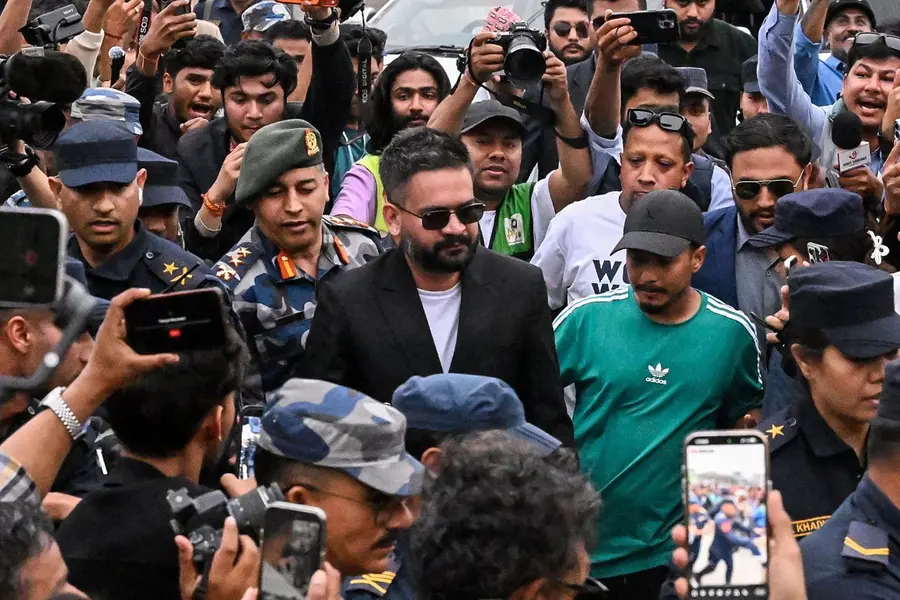
Kathmandu: Balendra Shah, the rapper‑turned‑mayor better known as Balen, secured a dramatic victory in Nepal’s parliamentary elections on Saturday, defeating veteran politician KP Sharma Oli in the former prime minister’s own constituency.
Shah’s triumph over the 74‑year‑old four‑time premier is being seen as one of the most symbolic outcomes of this high‑stakes poll, held six months after mass anti‑corruption protests toppled the government.
The 35‑year‑old reformist, who resigned as Kathmandu’s mayor to take on Oli, took an unassailable lead according to figures from the Election Commission. His party, the Rastriya Swatantra Party (RSP), is on course to secure a parliamentary majority, putting Shah on track to become prime minister.
Born in Kathmandu in 1990, Shah grew up during Nepal’s decade‑long civil war, which ended the monarchy. Trained as a civil engineer, he first gained national attention in the underground hip‑hop scene with songs that railed against corruption and inequality — themes that continue to shape his political message.
“If a person involved in politics also engages in literature or music, it becomes emotionally driven,” Shah told AFP during the campaign. “We also need to nurture the emotional aspect of our lives, and a politician should possess that sensitivity.”
His music, which has attracted millions of views online, helped him build a devoted social media following — a platform he still uses extensively to communicate with supporters.
Shah’s rise to prominence began in 2022 when he became the first independent candidate to be elected mayor of Kathmandu, shocking Nepal’s entrenched political establishment. As mayor, he built a reputation as a blunt and often confrontational reformer, launching campaigns against tax evasion, traffic congestion and civic mismanagement. However, his tenure also drew criticism for heavy‑handed methods and for bypassing traditional media in favour of direct broadcasts to his online audience.
In January, Shah resigned as mayor to contest the general election, not from his Kathmandu stronghold but in Jhapa‑5, a largely rural constituency some 300 kilometres south‑east of the capital. He said challenging a major figure like Oli demonstrated his willingness to confront entrenched interests rather than take an easier route to parliament.
Shah joined the centrist RSP, led by television host Rabi Lamichhane, which emerged as parliament’s fourth‑largest party in 2022 after challenging Nepal’s long‑dominant political forces. Shah described his vision as a blend of “a liberal economic system with social justice,” advocating free education and healthcare for the poor.
Shah also played a central role in the mass protests in September, initially sparked by anger over a brief ban on social media under the loose “Gen Z” banner. The demonstrations quickly grew into a broader movement against corruption and economic stagnation, and at least 77 people were killed during the unrest.
“Gen Z’s number one demand is good governance, because there is a high level of corruption in the country,” Shah said during the campaign.
Despite his political ambitions, he insists that music will remain part of his identity. “Music is a medium to express oneself,” he said. “I will continue it, even if I am elected as prime minister.”
Published: 07 Mar 2026, 06:14 pm IST
Related Topics
Disclaimer: Kindly avoid objectionable, derogatory, unlawful and lewd comments, while responding to reports. Such comments are punishable under cyber laws. Please keep away from personal attacks. The opinions expressed here are the personal opinions of readers and not that of Mathrubhumi.
