
Ali Khamenei's funeral procession has reached Iraq, with thousands expected in Najaf and Karbala before the late Iranian leader's final burial in Mashhad.
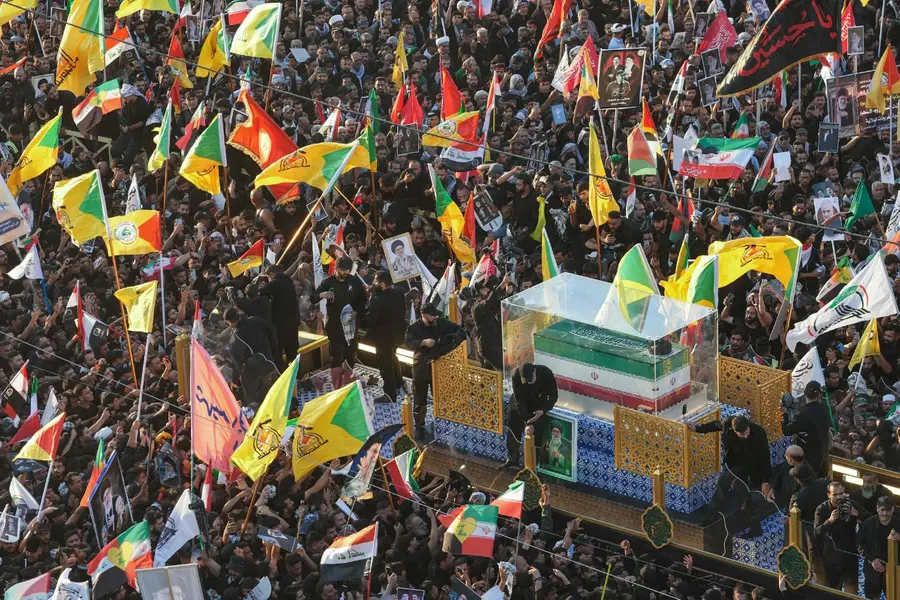
Najaf: Iraq's holy cities of Najaf and Karbala are set to host funeral processions for Iran's slain Supreme Leader Ali Khamenei on Wednesday, with large crowds expected to gather at some of Shia Islam's most revered religious sites.
The ceremonies form part of a six-day period of public mourning that began in Iran on Saturday. One full day has been dedicated to Iraq, reflecting the close religious and political relationship between the two neighbouring Shia-majority nations.
Iranian authorities hope the extended funeral events will demonstrate national unity and resilience following the recent Middle East conflict, which began with US and Israeli military strikes on 28 February that killed Khamenei along with several of his relatives.
Khamenei's remains received in Najaf
Following a large funeral procession in the Iranian holy city of Qom, Khamenei's remains arrived in Iraq on Tuesday night.
The coffin was received at Najaf International Airport by Iraqi officials and senior political leaders in the presence of Iranian President Masoud Pezeshkian.
To mark the occasion, Iraqi authorities declared Wednesday a public holiday. Funeral ceremonies in Najaf are scheduled to begin at 6 am local time (0300 GMT).
Thousands expected in Iraq's holiest Shia cities
Authorities expect huge crowds to attend the processions in both Najaf and Karbala.
Across the two cities, streets have been decorated with banners welcoming Khamenei. Large portraits of the late Iranian leader have been displayed alongside Iranian flags and images of other commanders from Iran's so-called "axis of resistance" who were also killed.
In Karbala, one banner carried the message, "We bid you farewell", while another featured Khamenei's photograph alongside the words, "The one who humiliated America."
Khamenei's final burial is scheduled to take place on Thursday in his hometown of Mashhad in north-eastern Iran.
Pilgrims travel from across Iraq
Many mourners travelled long distances to attend the funeral ceremonies.
Mohammed al-Bayati, a 30-year-old Iraqi who spent several hours travelling to Najaf, said the occasion carried great significance.
"It is an opportunity not to be missed to participate in the funeral of the person who challenged the power of America and Israel," he said.
In Najaf, mourners are expected to take part in a six-kilometre procession that will conclude at the shrine of Imam Ali, the Prophet Mohammed's son-in-law and the first Imam in Shia Islam.
Religious importance of Najaf and Karbala
Najaf is regarded as the world's leading centre for Shia religious scholarship and is home to Grand Ayatollah Ali Sistani, Iraq's highest Shia religious authority.
The city has also been home to many prominent Shia scholars over the years, including Ayatollah Ruhollah Khomeini, who preceded Khamenei as Iran's Supreme Leader.
Many Shia Muslims from around the world also choose Najaf as their final resting place.
After the Najaf procession, Khamenei's body will be flown approximately 60 kilometres north to Karbala, where another public procession will end at the shrines of Imam Hussein and his brother Abbas.
The death of Imam Hussein, the third Imam in Shia Islam, during the seventh century remains one of the defining events in Shia history and continues to draw millions of pilgrims to Karbala and Najaf every year.
Along the procession routes in both cities, hundreds of volunteer-run stalls have been set up to provide food and drinks for mourners.
Iran-Iraq ties rooted in religion and politics
The relationship between Iran and Iraq has been shaped by both shared religious traditions and political developments.
Iranian state media quoted Esmail Qaani, commander of the Quds Force of Iran's Revolutionary Guards, as saying:
"The extensive planning for this historical event by the Iraqi government and people show the depth of the spiritual bond between the two great nations of Iraq and Iran to the whole world."
Relationship transformed over the decades
Relations between the two countries have not always been close.
During the 1980s, Iraq, under former ruler Saddam Hussein, fought a prolonged war against Iran while also suppressing Iraq's Shia population.
However, ties strengthened significantly after Saddam's removal during the US-led invasion in 2003 and the emergence of Shia-led governments in Baghdad.
Today, Iran supports influential Iraqi political leaders as well as several armed groups. Some of those groups joined the recent Middle East conflict after Khamenei's death, launching attacks on US facilities in Iraq in support of Tehran.
Haidar Jaafar, who travelled from the southern Iraqi city of Basra to attend the procession in Najaf, said he believed the turnout would be enormous.
"I expect millions of people to attend Khamenei's procession, even those who do not align with Iran, just because he was killed by Israeli-American hands," he said.
Agency inputs
Published: 08 Jul 2026, 09:42 am IST
Related Topics
Disclaimer: Kindly avoid objectionable, derogatory, unlawful and lewd comments, while responding to reports. Such comments are punishable under cyber laws. Please keep away from personal attacks. The opinions expressed here are the personal opinions of readers and not that of Mathrubhumi.
