
India’s gold import bill hit a record $71.98 billion in FY26 even as volumes fell, raising the foreign exchange cost of the yellow metal.
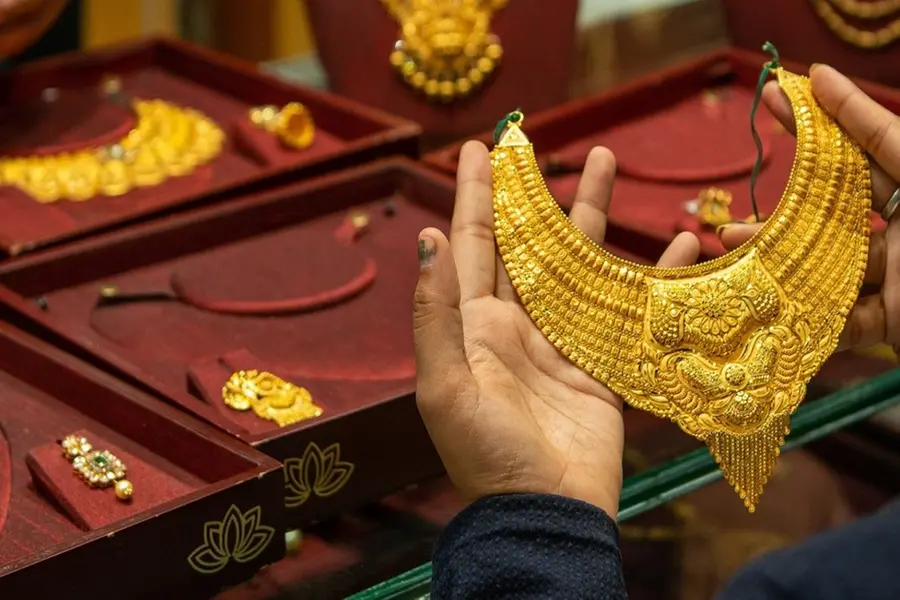
For Indian families, gold is often more than jewellery. It is savings, security and tradition rolled into one.
Yet Prime Minister Narendra Modi is asking Indians to think twice before buying it — unless there is a genuine need.
Modi renewed his appeal on Tuesday, urging people to avoid unnecessary gold purchases and instead put greater emphasis on 'swadeshi' and self-reliance.
He said that a stronger focus on Indian products could help the country move towards becoming a developed nation by the time India marks 100 years of Independence.
But why gold?
The answer lies largely in India’s dependence on imported gold and the huge amount of foreign exchange spent on it. India is buying less gold, but spending much more.
The latest import figures offer a striking picture.
India’s gold import bill climbed to a record $71.98 billion in FY26, up more than 24% from about $58 billion in the previous financial year.
At the same time, the quantity of gold coming into the country actually fell by nearly 5%. Imports dropped from 757.09 tonnes in FY25 to 721.03 tonnes in FY26.
So, how did the bill rise so sharply despite lower volumes?
Gold prices have surged. India is paying considerably more for every tonne of gold it imports, pushing up the overall import bill even as the physical quantity purchased has declined.
Why does an imported metal matter so much?
India produces only a small fraction of the gold it consumes and depends heavily on overseas supplies.
When Indian buyers purchase imported gold, the transaction ultimately requires payment to international suppliers, largely in US dollars.
A bigger appetite for gold therefore means a greater requirement for foreign currency.
This matters for India because the country also has to spend dollars on other major imports, including crude oil and several industrial goods.
Reducing unnecessary gold purchases could consequently help contain the amount of foreign exchange being spent on the metal.
Modi’s bigger 'swadeshi' argument
The Prime Minister’s message is also part of a wider push to encourage Indians to choose domestically made products.
His argument is essentially that money spent on imported goods leaves the country, whereas stronger demand for Indian-made products can support domestic businesses, manufacturing, employment and economic activity.
Gold presents a particularly interesting case because, unlike an imported machine or technology product, it does not itself create productive capacity when brought into the country.
Much of the imported gold eventually enters the jewellery market, where it is processed and sold domestically.
Why could the appeal be difficult for Indians to follow?
Gold has an unusually strong hold on Indian consumers. From weddings and festivals to family savings, the metal has traditionally been treated as a form of financial protection.
For many households, buying gold is not seen as an ordinary act of consumption.
India is also the world’s second-largest gold consumer after China, with jewellery accounting for a significant portion of demand.
That makes Modi’s appeal as much about changing a deeply established consumption habit as it is about economics.
This is not Modi’s first appeal
The Prime Minister had made a similar request in May, when he called on Indians to refrain from buying gold for a year.
His latest message comes against the backdrop of an unprecedented gold import bill, making the issue particularly significant.
The trajectory of India’s gold imports tells the story:
- FY20: $28.2 billion
- FY21: $34.62 billion
- FY22: $46.14 billion
- FY23: $35 billion
- FY24: $45.54 billion
- FY25: $58 billion
- FY26: $71.98 billion
The government’s concern, therefore, is not simply about how much gold Indian households own. It is about how much the country spends overseas to satisfy that demand.
So, is Modi asking Indians to stop buying gold altogether? Not exactly.
His latest wording was focused on avoiding purchases when there is no real need.
The broader message is to discourage unnecessary demand for a commodity that India imports in large quantities and pays for substantially in foreign currency.
In simple terms, the argument is: if you don't need the gold, don't spend scarce foreign exchange on it. Put that spending towards Indian products instead.
The appeal also comes with a clear economic message, if India wants to become more self-reliant, changing what consumers choose to buy could be one part of that transition.
Published: 01 Sept 2026, 11:12 am IST
ABOUT THE AUTHOR

Related Topics
Disclaimer: Kindly avoid objectionable, derogatory, unlawful and lewd comments, while responding to reports. Such comments are punishable under cyber laws. Please keep away from personal attacks. The opinions expressed here are the personal opinions of readers and not that of Mathrubhumi.