
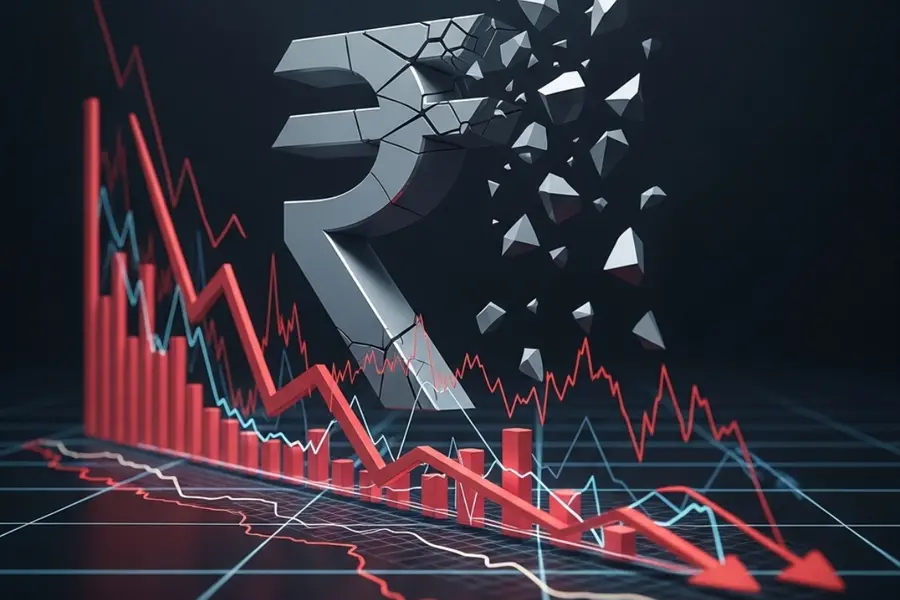
The Indian rupee plunged to a record low of 90.83 against the US dollar in early trade on Tuesday, while benchmark indices Sensex and Nifty opened in the red amid broad-based selling
Mumbai: The Indian stock market opened lower on Tuesday, 16 December 2025, with Sensex down 0.22% at 85,025.61 and Nifty slipping 0.29% to 25,951.5 in early trade.
Market sentiment is being weighed down by persistent foreign institutional investor (FII) sell-offs and uncertainty over India-US trade negotiations. All 16 major sectoral indices opened in the red, while small-cap and mid-cap stocks slightly underperformed, falling 0.2% and 0.1% respectively.
Also Read

Meanwhile, the Indian rupee fell to a fresh all-time low of 90.83 against the US dollar, continuing its decline for the fourth consecutive session. The previous record low of 90.7875 was hit on Monday, 15 December. The rupee has weakened by nearly 6% in 2025, starting the year at 85.72 against the dollar.
Reasons behind the rupee decline:
- US tariffs: President Donald Trump’s 50% tariff on Indian imports is expected to reduce GDP growth by 60–80 basis points and increase fiscal deficit, reducing foreign exchange inflows.
- FII selling: Since July 2025, FIIs have offloaded over ₹1.55 lakh crore of Indian assets amid tariff concerns.
- Importer demand: Oil, gold, and other importers are buying dollars for hedging and stocking up due to trade uncertainties, increasing dollar demand.
- Limited RBI intervention: The Reserve Bank of India’s forex market intervention this week was modest, providing limited support to the rupee.
Sensex and Nifty Open Lower Amid FII Selling and Trade Uncertainty
The Indian stock market opened in the red on Tuesday, 16 December 2025, with the Sensex down 0.22% at 85,025.61 and Nifty slipping 0.29% to 25,951.5 in early trade. Broad-based selling weighed on market sentiment, with all 16 major sectoral indices opening in the red. Small-cap and mid-cap stocks underperformed slightly, falling 0.2% and 0.1% respectively. Analysts say profit booking, combined with a lack of fresh domestic or global catalysts, is keeping investors cautious.
Rupee Hits Fresh All-Time Low Against US Dollar
The Indian rupee fell to a record low of 90.83 against the US dollar, marking the fourth consecutive session of decline. The previous all-time low of 90.7875 was recorded on Monday, 15 December. Starting the year at 85.72 against the dollar, the rupee has weakened by nearly 6% in 2025. The continued depreciation is raising concerns for importers, exporters, and consumers alike, as foreign currency costs rise and domestic prices for imported goods and services increase.
Implications for Consumers and Businesses
A weaker rupee makes imports more expensive, affecting sectors such as electronics, oil, and gold. Individuals planning overseas travel or education will face higher costs, as more rupees are needed to buy one US dollar. Rising import costs could also push inflation upward in certain sectors, influencing overall consumer prices.
Expert Commentary: Consolidation Expected
Dr. VK Vijayakumar, Chief Investment Strategist at Geojit Investments, stated that the market is currently in a short-term consolidation phase. While FII selling continues, domestic institutional investors are absorbing the outflows. He noted that improvements in India’s economic fundamentals, including a narrowing trade deficit from $41.64 billion in October to $24.53 billion in November, could stabilise the rupee.
Dr. Vijayakumar highlighted that Q3 earnings will be crucial for sustaining stock market gains. The Bank Nifty, he said, is expected to remain robust due to strong banking sector fundamentals. Overall, domestic buying support combined with improving trade balances may help cushion market volatility in the near term.
Outlook: Caution Advised for Investors
Investors and importers are advised to monitor currency trends closely, as global trade uncertainties and FII outflows continue to pose risks. While stock markets could find support on dips due to domestic institutional buying, the rupee may face continued short-term pressure. Analysts suggest a cautious approach, balancing exposure in equities with hedging strategies to protect against currency-related losses.
Published: 16 Dec 2025, 09:54 am IST
Related Topics
Disclaimer: Kindly avoid objectionable, derogatory, unlawful and lewd comments, while responding to reports. Such comments are punishable under cyber laws. Please keep away from personal attacks. The opinions expressed here are the personal opinions of readers and not that of Mathrubhumi.