
India’s gold demand is shifting towards investment as high prices dampen jewellery consumption.
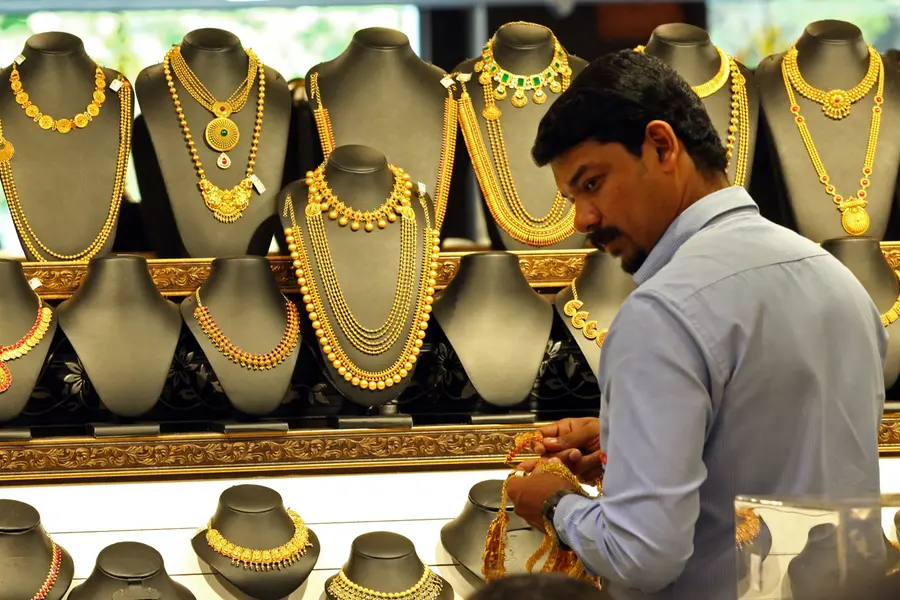
New Delhi: India’s gold market is witnessing a shift towards investment-driven demand, with rising prices dampening gold jewellery sales, according to a joint report by ICRA and Assocham released on Friday.
The report highlighted that India’s gold jewellery demand declined by around 26 per cent year-on-year in the first half of FY26, while demand for gold bars and coins increased by 15 per cent, partially offsetting the drop.
Rising gold prices reshape demand
Globally, gold jewellery consumption fell by 15 per cent in FY25 and a further 17 per cent in the first half of FY26, reflecting the impact of elevated gold prices. In contrast, investment demand for gold, including bars, coins and gold exchange-traded funds (ETFs), surged by 74 per cent and 60 per cent respectively year-on-year.
“High gold prices are likely to continue weighing on jewellery demand in the near term. However, rising investment demand, increasing financialisation and the expansion of organised players are expected to support medium-term growth,” the report said.
Also read| Jefferies drops HDFC Bank: Why shares are tumbling
India leads global gold consumption
India emerged as the world’s largest gold jewellery consumer, surpassing China, and accounted for nearly 30 per cent of global demand in FY25, driven by strong cultural demand during weddings and festivals.
At the same time, central bank gold purchases have remained robust, exceeding 1,000 tonnes annually between FY2023 and FY2025, supporting global gold prices amid ongoing geopolitical tensions and economic uncertainty.
Gold prices have risen sharply, increasing by around 33 per cent in FY25 and more than 50 per cent so far in FY26, supported by strong demand, currency depreciation and global market volatility.
Supply dynamics and imports
India continues to depend heavily on gold imports, which account for around 85–88 per cent of total supply, due to limited domestic mining. Globally, mine production contributes about 70 per cent of supply, while gold recycling in India has gained traction, helping to supplement availability.
Also Read| Fuel tax cut explained: Who gains and what it means for consumers
Organised sector gains traction
The report noted that the organised gold jewellery market in India now accounts for nearly 40 per cent of the sector, with leading players expanding through franchise models and increasing their presence in tier 2 and tier 3 cities.
Regulatory measures such as mandatory gold hallmarking and the India Good Delivery Standards (IGDS) have improved purity assurance, boosted consumer confidence, and strengthened domestic refining standards in line with global benchmarks.
Outlook
Experts believe that while gold jewellery demand in India may remain under pressure in the short term, the shift towards gold investment demand, combined with structural reforms and organised sector growth, will continue to shape the market’s long-term trajectory.
IANS
Published: 27 Mar 2026, 06:30 pm IST
Related Topics
Disclaimer: Kindly avoid objectionable, derogatory, unlawful and lewd comments, while responding to reports. Such comments are punishable under cyber laws. Please keep away from personal attacks. The opinions expressed here are the personal opinions of readers and not that of Mathrubhumi.
