
The Centre’s Rs 10 excise cut on petrol and diesel aims to ease pressure on oil firms while shielding consumers from price hikes.
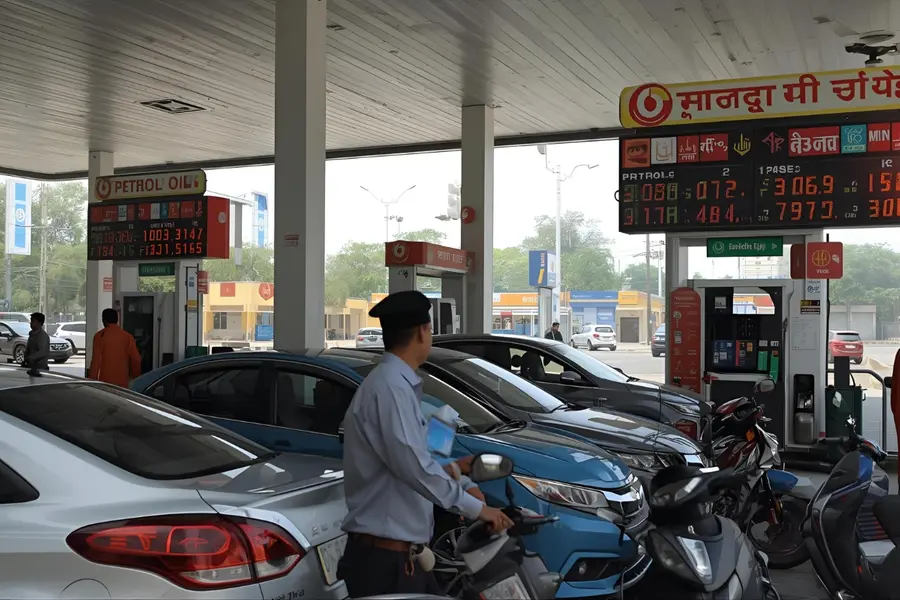
New Delhi: The Centre’s Rs 10 per litre excise duty cut on petrol and diesel comes amid surging global crude oil prices, offering indirect relief to consumers while easing financial pressure on oil marketing companies (OMCs).
Under the revised structure, excise duty on petrol has been reduced to Rs 3 per litre, while diesel has effectively been exempted, according to government data. The move is aimed at helping OMCs manage rising input costs without immediately increasing retail fuel prices.
Why fuel tax cut matters
The decision follows a sharp rise in international crude oil prices, driven by ongoing West Asia geopolitical tensions, which have significantly raised the cost of fuel production and supply. By lowering excise duty, the government enables OMCs to operate closer to break-even levels, thereby preventing a sudden spike in petrol and diesel prices in India.
Who benefits from excise duty cut?
While consumers may not see an immediate drop in fuel prices at the pump, the move helps:
- Oil marketing companies such as Indian Oil, BPCL and HPCL absorb losses
- Consumers, by avoiding a sharp increase in petrol and diesel rates
- The broader economy, by containing inflation and transport costs
Impact on government revenue
Fuel taxes in India remain a crucial revenue source for both the Centre and states. According to the Petroleum Planning and Analysis Cell (PPAC), the petroleum sector generated over Rs 7.5 trillion in tax revenue in 2023–24.
- The Centre earns roughly Rs 2.7–3 trillion annually through excise duty
- States collect over Rs 3 trillion via VAT on fuel
Fuel taxes contribute about 18–19 per cent of the Centre’s gross tax revenue and nearly 25–35 per cent of states’ own tax collections, underscoring their fiscal importance.
However, the fiscal cost of the excise cut is significant. Market estimates suggest that every Re 1 per litre reduction results in an annual revenue loss of Rs 14,000–16,000 crore. A Rs 10 cut could therefore lead to a revenue impact of nearly Rs 1.5 trillion for the Centre.
How fuel taxes are structured
Fuel prices in India include multiple components:
- Central excise duty, including cesses such as road and infrastructure cess
- State VAT, which varies across regions
In cities like Delhi, central taxes account for about 43 per cent of petrol prices and 37 per cent of diesel prices, with state taxes adding a substantial share. Notably, cesses imposed by the Centre are not shared with states, a point of contention in Centre-state fiscal relations.
What it means for consumers
Fuel taxes directly influence household expenses, transport costs, and overall inflation in India. While higher taxes increase price pressures, reductions like the current excise cut help stabilise costs.
Finance Minister Nirmala Sitharaman said the decision is aimed at protecting consumers from rising fuel prices. Meanwhile, Brent crude oil prices remain above $100 per barrel, indicating continued volatility in global energy markets.
Outlook
The government is expected to closely monitor global oil price trends and may take further measures to ensure fuel price stability and uninterrupted supply in the domestic market.
IANS
Published: 27 Mar 2026, 04:44 pm IST
Disclaimer: Kindly avoid objectionable, derogatory, unlawful and lewd comments, while responding to reports. Such comments are punishable under cyber laws. Please keep away from personal attacks. The opinions expressed here are the personal opinions of readers and not that of Mathrubhumi.
