
India and the European Union have concluded negotiations for a landmark free trade agreement, granting zero-duty access to major Indian sectors
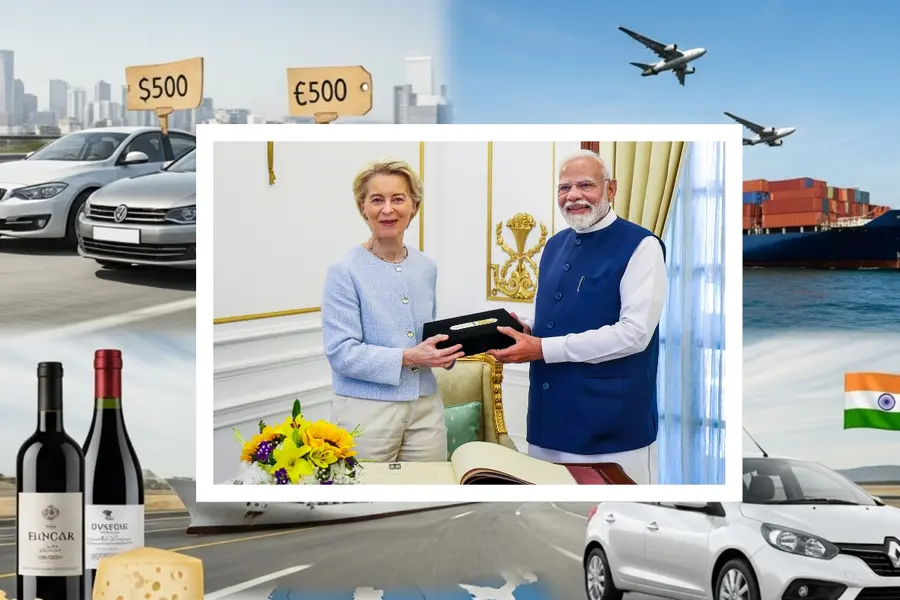
India and the European Union have officially concluded negotiations on a long-pending free trade agreement (FTA), marking one of the most significant trade deals for both sides.
The pact, negotiated over more than two decades, is expected to create a combined market of nearly two billion people and substantially boost bilateral trade in goods and services.
Officials have described the agreement as a landmark deal that balances market access, tariff reductions and sectoral protections for both India and the EU.
Zero-duty access for most Indian exports to the EU
Under the agreement, more than 93 per cent of Indian goods exported to the EU will receive zero-duty access. For the remaining products, tariff reductions and quota-based concessions will apply.
The EU will eliminate import duties on around 90 per cent of Indian goods from the first day the agreement comes into force. A further three per cent of tariffs will be phased out over a seven-year period. Overall, the EU is offering trade concessions covering nearly 99.5 per cent of the total trade value with India.
Sectors that will benefit most include textiles, apparel, clothing, footwear, leather goods, marine products, chemicals, plastics, rubber, base metals, gems and jewellery, furniture, toys and sports goods. These sectors currently face EU duties ranging from zero to 26 per cent.
India offers phased tariff cuts for EU goods
In return, India has agreed to provide duty concessions on about 97.5 per cent of the EU’s trade value over time. However, only 30 per cent of EU goods will receive immediate duty reductions when the pact comes into effect.
Duty-free access for 93 per cent of EU goods will be phased in over a ten-year period, allowing domestic industries time to adjust. Sensitive sectors such as dairy, cereals, soya meal and certain agricultural products have been excluded from tariff concessions.
Special arrangements for automobiles and electric vehicles
Automobiles have been one of the most sensitive areas in the negotiations. Instead of across-the-board tariff cuts, both sides have agreed to quota-based concessions.
India will not reduce duties on cars priced below ₹25 lakh, as this segment is dominated by domestically manufactured vehicles. European carmakers interested in this segment will be encouraged to manufacture locally.
For vehicles priced above ₹25 lakh, limited quota-based duty reductions will apply. Import duties on automobiles currently range from 66 per cent to 125 per cent, and no out-of-quota concessions will be permitted.
Electric vehicle concessions will begin from the fifth year of the agreement, with duties reduced gradually to 30–35 per cent depending on the vehicle segment.
Also read: What puts Tamil Nadu in the Padma Awards spotlight this year?
Wines and spirits to see gradual duty reductions
India has agreed to reduce import duties on high-value European wines over a seven-year period. Duties will fall from the current level of around 150 per cent to 20 per cent.
However, no concessions will apply to wines priced below €2.5. This phased approach is intended to protect domestic producers while allowing controlled access to premium European products.
Services trade and mobility commitments
On the services front, the EU has opened 144 out of 155 service sub-sectors to Indian firms, one of its most extensive offers to any trading partner. India, in turn, has opened 102 service sub-sectors.
The agreement includes commitments on professionals’ mobility, including limited post-study work visa provisions for Indian students. These measures are expected to benefit IT, consulting, education and professional services.
Rules beyond goods and services
The FTA also includes chapters on digital trade, intellectual property rights, sanitary and phytosanitary standards, and technical barriers to trade. These provisions aim to improve regulatory transparency and reduce non-tariff barriers.
Notably, the agreement does not cover energy, critical minerals or government procurement.
Expected boost to India-EU trade volumes
Bilateral trade in goods currently stands at around USD 136 billion and is projected to cross USD 200 billion within three to four years of implementation. Trade in services, valued at approximately USD 80–85 billion, could rise to USD 125 billion over the same period.
Officials expect the agreement to strengthen supply chains, improve export competitiveness and deepen long-term economic integration between India and the EU.
Published: 27 Jan 2026, 01:48 pm IST
Related Topics
Disclaimer: Kindly avoid objectionable, derogatory, unlawful and lewd comments, while responding to reports. Such comments are punishable under cyber laws. Please keep away from personal attacks. The opinions expressed here are the personal opinions of readers and not that of Mathrubhumi.
