
India will temporarily face a 10 per cent tariff on exports to the United States after President Donald Trump invoked a new legal provision following a Supreme Court ruling
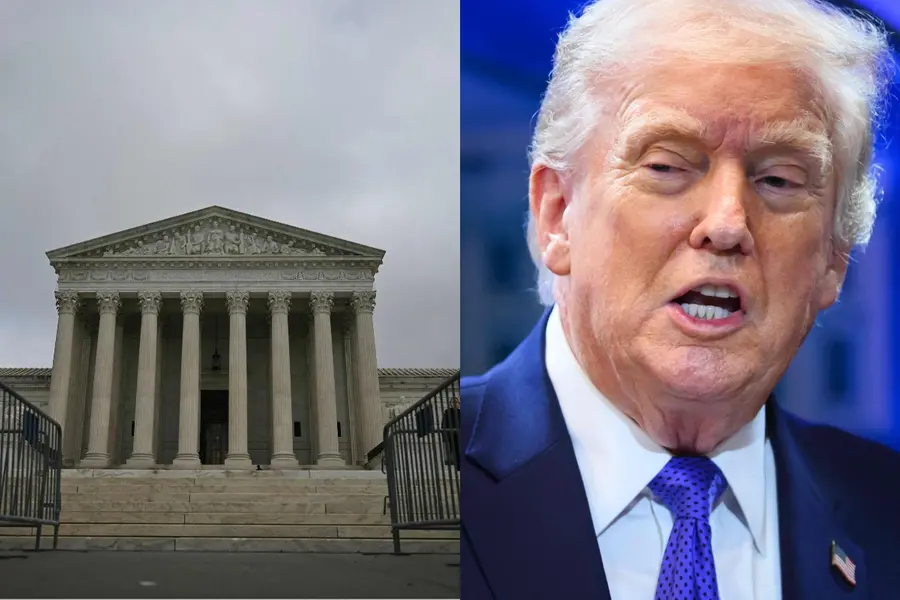
Washington DC: The White House has confirmed that India will face a 10 per cent tariff under a new global order signed by US President Donald Trump. The move comes after the Supreme Court of the United States ruled 6–3 that the administration exceeded its authority under the International Emergency Economic Powers Act (IEEPA) of 1977 when imposing broad-based import tariffs.
Following the ruling, Trump announced that he would impose a 10 per cent global tariff under Section 122 of the Trade Act of 1974. This provision allows the President to introduce a temporary import surcharge of up to 15 per cent for 150 days to address balance-of-payments concerns.
Also Read

A White House official clarified that the 10 per cent rate would replace the earlier IEEPA-based tariffs that had been struck down by the court. When asked whether India would pay 10 per cent, the official confirmed: “Yes, 10% until another authority is invoked.”
Impact on India’s tariff rate
Earlier this month, Trump had reduced the reciprocal tariff on India from 25 per cent to 18 per cent after the two countries agreed on a framework for an interim trade arrangement. However, the Supreme Court decision invalidated the legal basis for those IEEPA tariffs.
As a result, India’s applicable tariff rate will temporarily fall to 10 per cent under Section 122. The White House stated that this rate would remain in place until another statutory authority is used to implement what it described as a “more appropriate tariff rate”.
Trump said that “nothing changes” regarding the India trade framework and described the deal as “a fair deal now”. He also suggested that higher tariffs could be imposed later, stating that other legal tools remain available.
What the Supreme Court ruled
The Supreme Court held that IEEPA does not explicitly authorise the President to levy import duties, a power assigned to Congress under the US Constitution. Chief Justice John Roberts was joined by Justices Neil Gorsuch, Amy Coney Barrett and the three liberal justices in the majority opinion.
Justices Samuel Alito, Clarence Thomas and Brett Kavanaugh dissented, supporting a broader interpretation of presidential emergency powers.
The ruling invalidated billions of dollars in emergency and “reciprocal” tariffs and could require the US government to refund between $130 billion and $175 billion in collected revenue.
What happens next
Despite the legal setback, Trump has indicated that alternative statutory mechanisms will be used. Tariffs previously imposed under Section 232 (national security) and Section 301 (unfair trade practices) remain in force, as they were not affected by the ruling.
The administration has also launched new investigations under Section 301, which could lead to more targeted and potentially permanent duties.
The decision is expected to have wide-ranging implications for global trade flows, inflation trends and business sentiment. US stock markets rose following the ruling, reflecting investor expectations of reduced inflationary pressure, though gains were limited after Trump signalled fresh tariff action.
For India, the immediate effect is a temporary 10 per cent tariff rate, with the possibility of further adjustments depending on the legal path chosen by the US administration in the coming weeks.
Published: 21 Feb 2026, 09:19 am IST
Related Topics
Disclaimer: Kindly avoid objectionable, derogatory, unlawful and lewd comments, while responding to reports. Such comments are punishable under cyber laws. Please keep away from personal attacks. The opinions expressed here are the personal opinions of readers and not that of Mathrubhumi.