
However, India's External Affairs Minister, S. Jaishankar, maintains India's commitment to strategic autonomy, emphasizing that energy procurement is a commercial decision driven by national interests, availability, cost, and risk, rather than external pressure.
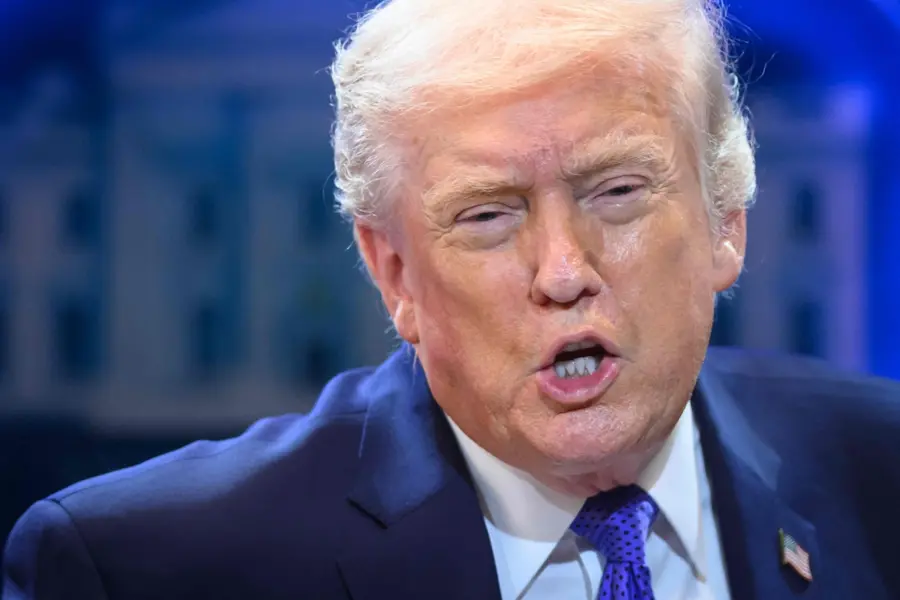
Washington: US President Donald Trump claimed Friday that India has significantly curtailed its oil trade with Russia following his personal intervention, framing the shift as a crucial step toward ending the conflict in Ukraine.
Speaking at a White House briefing, Trump cited his "fantastic relationship" with New Delhi as the catalyst for the change in procurement.
"India pulled out of Russia," Trump told reporters. "India was getting its oil from Russia, and they pulled way back on my request because we want to settle a horrible war, where 25,000 people are dying every month. My relationship with PM Modi is great."
The comments follow a period of intense economic friction. Washington had previously levied a 25% punitive tariff on Indian goods in response to New Delhi’s continued purchase of discounted Russian crude, which, when combined with existing levies, brought the total tariff burden to 50%. However, an interim trade agreement reached earlier this month has seen those additional charges shelved, lowering the baseline tariff to 18%.
Trade Conditions and Commitments
In a statement accompanying the removal of the punitive duties, the White House noted that the reprieve was tied to specific guarantees from the Indian government.
"India has committed to stop directly or indirectly importing Russian Federation oil, has represented that it will purchase United States energy products from the United States, and has recently committed to a framework with the United States to expand defence cooperation over the next 10 years," the administration stated.
New Delhi Maintains "Strategic Autonomy"
Despite the U.S. narrative of a decisive pivot, External Affairs Minister S. Jaishankar has signalled that India’s core foreign policy remains unchanged. Speaking at the Munich Security Conference on Saturday, Jaishankar asserted that India remains "firmly committed to strategic autonomy" regardless of shifting partnerships.
"We are very much wedded to strategic autonomy because it's very much a part of our history and our evolution," Jaishankar said. "It's something which is very deep, and it's something which cuts across the political spectrum as well."
The minister characterised the global energy landscape as "complex and dynamic," maintaining that procurement is a commercial decision rather than a purely political one. "Oil companies in India, as in Europe... look at availability, look at costs, look at risks and take the decisions that they feel are in their best interest," he noted.
National Interest First
Foreign Secretary Vikram Misri echoed this stance, emphasising that India’s energy policy is not dictated by external pressure but by the requirements of its 1.4 billion citizens. Misri identified "adequate availability, fair pricing and reliability of supply" as the three pillars of the country's energy strategy.
“What I can firmly and confidently say is that whether it is the government or indeed our businesses, at the end of the day, national interests will be the guiding factor in our choices,” Misri told reporters in New Delhi.
Industry data indicates that while India's imports of Russian crude dropped to a three-year low in January, the country continues to source energy from a wide variety of global partners to ensure price stability.
With inputs from ANI
Published: 21 Feb 2026, 07:34 am IST
Disclaimer: Kindly avoid objectionable, derogatory, unlawful and lewd comments, while responding to reports. Such comments are punishable under cyber laws. Please keep away from personal attacks. The opinions expressed here are the personal opinions of readers and not that of Mathrubhumi.
