
Global benchmark Brent crude surged to nearly $120 a barrel on Monday before retreating, but remained around $90 on Tuesday, roughly 24 per cent higher than levels recorded when the conflict began on February 28.
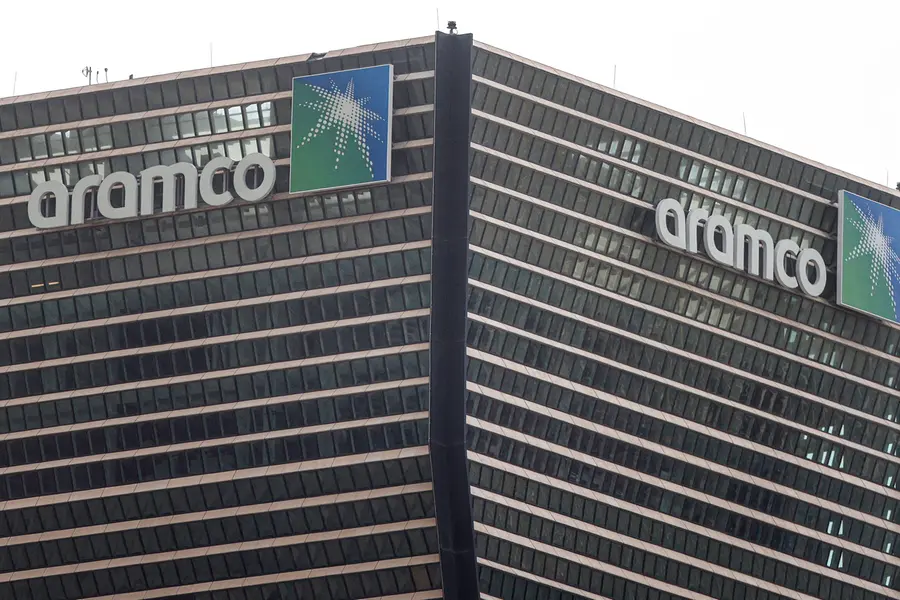
Riyadh: Saudi Aramco CEO Amin H. Nasser on Tuesday warned that the ongoing war in the Middle East could have severe repercussions for global energy markets, stressing the urgent need to reopen the vital shipping route through the Strait of Hormuz.
Speaking during a media call, Nasser cautioned that prolonged disruption in the region could trigger major instability in oil supplies and the broader global economy.
"There would be catastrophic consequences for the world's oil markets the longer the disruption goes on, and the more drastic the consequences for the global economy," he said.
"It's absolutely critical that shipping resumes in the Strait of Hormuz," Nasser added.
The warning comes as tensions escalate across the region, with Iran launching fresh attacks on Israel and several Gulf countries. The intensifying conflict has rattled markets, pushing oil prices sharply higher and raising fears of wider economic fallout.
Also read | LPG shortage hits restaurants across India; industry urges Indian Oil supply boost, ESMA warning
Air raid sirens were reported in Dubai in the United Arab Emirates and in Bahrain, while Saudi Arabia said it intercepted two drones over its oil-producing eastern region. Kuwait also reported shooting down six drones through its National Guard.
Later in the day, warning sirens sounded in Jerusalem, while explosions were heard in Tel Aviv as Israeli defence systems attempted to intercept incoming missiles. The Israel Defence Forces had earlier said it detected a missile launch from Iran.
Amid the escalating hostilities, Mohammad Bagher Qalibaf, the speaker of Iran’s parliament, struck a defiant tone on social media.
“We are definitely not looking for a ceasefire,” he wrote on X. "We believe that the aggressor should be punched in the mouth so that he learns a lesson so that he will never think of attacking our beloved Iran again.”
Alongside missile and drone strikes targeting Israel and US bases across the region, Iran has also reportedly targeted energy infrastructure. The disruptions, coupled with Tehran’s ability to influence shipping through the Strait of Hormuz, have fuelled sharp volatility in oil markets.
Global benchmark Brent crude surged to nearly $120 a barrel on Monday before retreating, but remained around $90 on Tuesday, roughly 24 per cent higher than levels recorded when the conflict began on February 28.
Indian government moves with caution
Amid growing concerns over a potential oil shortage, the BJP-led NDA government on Tuesday invoked the Essential Commodities Act (EC Act) to protect the domestic energy market.
Also read |
The Petroleum Ministry said the government has issued a control order directing refineries and petrochemical plants to maximise the production of liquefied petroleum gas (LPG) and divert key hydrocarbon streams to the LPG pool to ensure uninterrupted cooking gas supplies across the country.
The Petroleum Ministry stated that the invocation of the Act has established a clear priority list for natural gas distribution to manage current supply constraints.
Under this new mandate, there is a 100% assured supply of domestic piped gas for homes and CNG for vehicles. Other sectors will face calibrated supply caps based on their previous six-month average consumption.
Oil Marketing Companies have also initiated measures to enhance Liquefied Petroleum Gas (LPG) production and prioritise its availability for domestic consumers.
In a joint statement on Tuesday, Indian Oil Corporation Limited, Bharat Petroleum Corporation and Hindustan Petroleum Corporation confirmed that the Ministry has taken steps for higher LPG production while securing stocks for domestic customers and essential non-domestic sectors.
"In light of current geopolitical disruptions to fuel supply and constraints on supply of LPG, the Ministry has taken the step to increase LPG production and securing it for supplying to domestic customers. Along with ensuring supplies to all domestic customers, it has been decided to make supplies as per requirement to the essential non-domestic sectors such as hospitals, educational institutions, etc. For LPG supply to other non-domestic sectors, a committee of three Executive Directors of Oil Marketing Companies have been constituted to review the representations and prioritise the LPG supply," the joint statement said.
The statement noted that in cases of requirements considered essential in other sectors, a submission can be made to the committee through the provided official email IDs.
"In case of any requirements that are considered as essential in other sectors, a submission can be made to the committee through the above email ids. Since non-domestic LPG supply depends on the availability of imported products, the committee may not be able to address every grievance. Requests will be considered based on their merits, product availability and appropriate decisions will be made accordingly," the statement noted.
Published: 10 Mar 2026, 04:19 pm IST
Disclaimer: Kindly avoid objectionable, derogatory, unlawful and lewd comments, while responding to reports. Such comments are punishable under cyber laws. Please keep away from personal attacks. The opinions expressed here are the personal opinions of readers and not that of Mathrubhumi.
