
Public urged to avoid oil residues and report sightings.
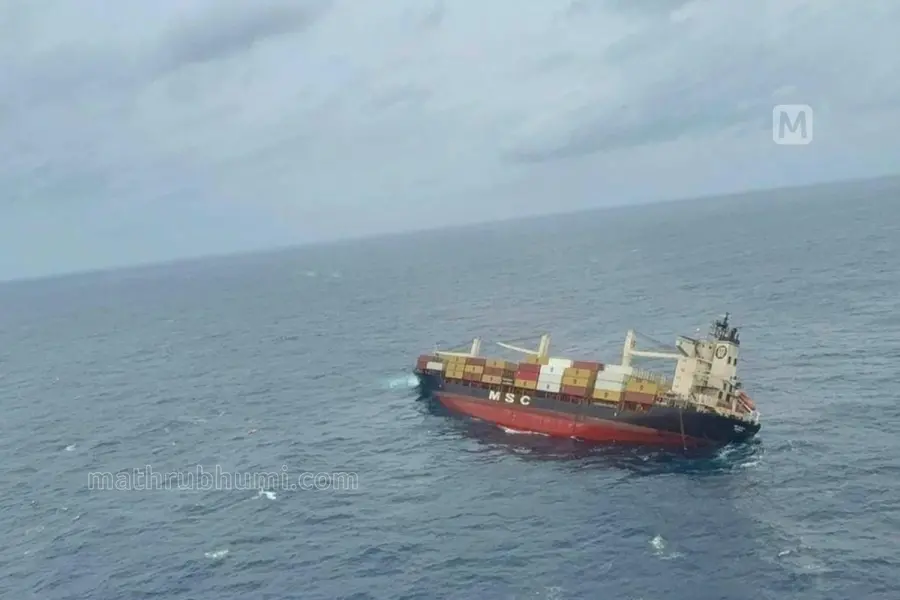
A Liberian container vessel, MSC Elsa 3, listed dangerously 38 nautical miles off the Kerala coast on Saturday afternoon, spilling part of its cargo — including marine fuels — into the Arabian Sea. The ship was en route from Vizhinjam port to Kochi when it tilted 26 degrees, prompting a distress call around 1.25 pm.
Of the 24-member international crew onboard, nine were rescued using liferafts, and operations are ongoing to evacuate the remaining 15. The Indian Coast Guard has deployed ships and aircraft to assist in the rescue. Medical help has already been provided to those rescued.
What did the ship spill?
According to Kerala State Disaster Management Authority (KSDMA), the vessel was carrying Marine Gas Oil (MGO) and Very Low Sulphur Fuel Oil (VLSFO) — two commonly used marine fuels. The Coast Guard confirmed the spillage, and KSDMA has warned that traces of oil may reach the coastline.
Authorities have urged the public to avoid touching any cargo containers or oil residue that may wash ashore and to report sightings to the police immediately.
What is Marine Gas Oil (MGO)?
Marine Gas Oil is a type of diesel fuel used primarily in smaller ships and coastal vessels. It is lighter and cleaner than heavy fuel oils, making it a preferred choice in environmentally sensitive regions. Despite being more refined, MGO is still flammable and harmful to marine life if spilled.
What is Very Low Sulphur Fuel Oil (VLSFO)?
VLSFO is a marine fuel with sulphur content capped at 0.5% in line with global environmental regulations enforced since 2020. It replaced higher-sulphur heavy fuels to reduce air pollution from ships. VLSFO is less toxic than older fuels but still poses risks to marine ecosystems if released into the sea.
Is it dangerous?
Yes, both MGO and VLSFO can be dangerous in certain conditions. While they are safer alternatives compared to traditional bunker fuels, they are still pollutants. If spilled, they can harm marine organisms, damage coastlines, and pose fire risks. Direct human contact with these fuels should be avoided, especially if they wash ashore in containers or as slicks.
The Kerala State Disaster Management Authority (KSDMA) has warned the public not to touch any oil slicks or containers that may wash ashore. Residents are advised to alert the police if they see any such material along the coast.
Published: 24 May 2025, 10:03 pm IST
Related Topics
Disclaimer: Kindly avoid objectionable, derogatory, unlawful and lewd comments, while responding to reports. Such comments are punishable under cyber laws. Please keep away from personal attacks. The opinions expressed here are the personal opinions of readers and not that of Mathrubhumi.
