
Vizhinjam International Seaport begins full-fledged EXIM operations today, marking its shift from a transshipment facility towards a wider gateway port. The first export container will carry Kerala food products to Spain.
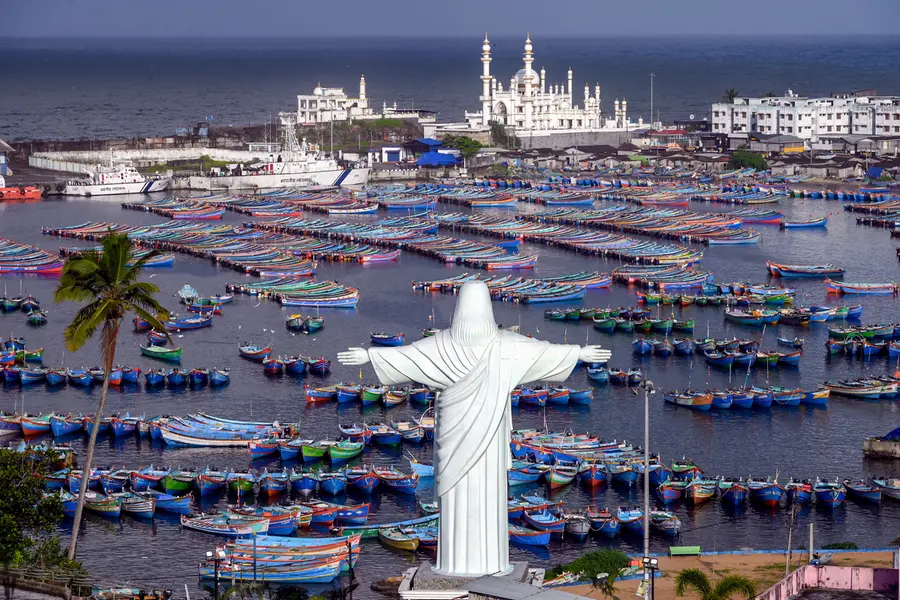
Vizhinjam International Seaport is entering a major new phase today, August 18, with the formal launch of full-fledged land-based export-import cargo operations.
The first export container, carrying a selection of Kerala food products, will be flagged off at the port, marking Vizhinjam’s transition from a deepwater transshipment facility towards a wider gateway for exports and imports.
Also Read

Vizhinjam EXIM operations to begin today
The first EXIM container will be flagged off at 10.45 am on Tuesday, August 18, at the Vizhinjam port gate. The ceremony marks the beginning of full-fledged land-based export-import operations at the port near Thiruvananthapuram.
Vizhinjam was developed primarily as a deepwater transshipment port capable of handling some of the world’s largest container vessels. The start of EXIM operations gives the port a broader role by allowing cargo from Kerala and other parts of southern India to move directly through Vizhinjam to international markets.
The development is being seen as an important step in Kerala’s attempt to build a stronger maritime trade and logistics network around the port.
What is inside the first export container?
The first export container has been chosen to showcase products associated with Kerala. According to reports, it will carry around 4,000 kg of food products, including jackfruit chips, banana chips, tapioca chips, Kerala mixture and Marayoor jaggery.
The consignment will also include packaged and frozen Kerala dishes such as puttu powder, masala dosa, aviyal, curries, idli and sambar. Some of the prepared food products can reportedly be stored for up to a year after freezing.
The shipment has been prepared by Thiruvananthapuram-based exporter Nilamels Exports.
The decision to use Kerala food products for the first shipment is deliberate. Organisers wanted the inaugural export to showcase goods produced in the state and associated with its food culture.
Where will the first shipment go?
The first export consignment is destined for Valencia in Spain. It is expected to travel aboard the Liberian-flagged container vessel MSC Marie Leslie.
The ship is expected to return to Vizhinjam on August 28 before departing for Europe the following day.
The shipment therefore provides an early demonstration of how products manufactured in Kerala can use Vizhinjam as a direct link to international shipping networks.
Why is this important for Kerala exporters?
One of the biggest potential advantages of Vizhinjam is its location and deepwater capability.
The port is situated close to major international east-west shipping routes in the Arabian Sea. Its deep draft allows large container vessels to call directly, potentially reducing the need for cargo to be transferred through another Indian port before reaching an international mother vessel.
This could shorten transit times and reduce handling and logistics costs for exporters.
Reports have cited exporters estimating savings of around Rs 75,000 per container in some cases. One exporter sending goods to Spain has said the journey could be reduced by about 20 days compared with the previous route.
Actual savings, however, will depend on shipping schedules, freight rates, cargo volumes and the destination.
Vizhinjam’s shift from transshipment to gateway port
The EXIM launch is significant because it expands Vizhinjam’s role.
A transshipment port primarily handles containers being transferred from one vessel to another. A gateway port directly handles cargo entering or leaving the domestic market.
Vizhinjam was developed as a deepwater transshipment facility. With the beginning of EXIM operations, it is moving towards becoming a multi-purpose maritime gateway.
That means the port can increasingly serve both international transshipment traffic and cargo directly connected with Indian exporters and importers.
For Kerala, this could reduce dependence on other major ports for handling international cargo.
Shipping links with Europe and Africa
The expansion is also supported by planned shipping services connecting Vizhinjam with international destinations.
MSC’s initial EXIM plans include the Himalaya Express service, which is expected to connect Vizhinjam with Las Palmas, Sines, Valencia, Barcelona and Gioia Tauro.
The India Africa Service is expected to provide links with Coega, Pointe Noire, Abidjan, Tema, Lome, Cotonou and Kribi.
These connections could give exporters in Kerala and other southern states access to European and African markets through a port located close to major international shipping routes.
Could exporters outside Kerala use Vizhinjam?
Yes. The potential market for Vizhinjam extends beyond Kerala.
Exporters from Tamil Nadu and Karnataka have reportedly shown interest in using the port because of the possible savings in transit time and logistics costs.
Manufacturing centres such as Tiruppur and Bengaluru could potentially benefit if shipping schedules and inland transportation costs make Vizhinjam commercially attractive.
However, the port’s success will depend on more than its location. Exporters will compare freight rates, road and rail connectivity, vessel schedules, port handling charges and reliability with competing ports.
What is Mission Samudra?
The EXIM launch is also linked to the Kerala government’s proposed Mission Samudra, a port-led industrial and logistics development initiative centred on the idea of a Port City.
The plan envisages the development of a wider Vizhinjam Maritime Economic Region around the port. It includes plans for industrial clusters, new cities and wider economic activity along Kerala’s coastline.
The objective is to ensure that Vizhinjam does not function only as a place where containers are loaded and unloaded, but becomes the centre of a larger industrial and logistics ecosystem.
The proposed development could include manufacturing, warehousing, logistics, maritime services and export-oriented industries.
Why does this matter for Kerala’s economy?
Kerala has a long coastline and a large trade-oriented economy, but a significant amount of international cargo has historically moved through ports outside the state.
A successful gateway operation at Vizhinjam could allow more cargo produced in Kerala to be handled closer to its source.
For exporters, shorter inland journeys and direct access to international shipping routes could translate into lower costs and faster delivery.
The larger ambition is to attract industries and logistics businesses that want to locate close to a major international port.
If that happens, Vizhinjam could influence not only shipping but also investment, manufacturing and employment in the surrounding region.
What are the challenges?
The launch of EXIM operations is an important milestone, but it does not automatically make Vizhinjam a major gateway port.
The port will need to attract sustained cargo volumes and establish regular commercial relationships with exporters, importers, shipping lines and logistics companies.
Road and rail connectivity will also be crucial. A world-class port cannot deliver its full economic potential if cargo cannot move efficiently between the port and production centres.
Another challenge is developing enough industrial activity around Vizhinjam to generate cargo. The success of Mission Samudra will therefore be closely linked to the port’s long-term commercial performance.
What happens after the first container?
The ceremonial flag-off is only the beginning.
The real test will be whether regular EXIM cargo volumes grow after the launch. The number of exporters using Vizhinjam, the frequency of international services and the actual cost and time savings achieved by businesses will determine whether the port can become a major gateway.
The government will also need to ensure that the wider infrastructure required for the port’s growth develops alongside cargo operations.
The bigger picture
Vizhinjam has already established itself as an important deepwater transshipment facility because of its location near major international shipping routes.
The start of EXIM operations takes the project into a new phase.
The first shipment, carrying around 4,000 kg of Kerala food products to Spain, is relatively small compared with the volumes expected from a major international port. Its importance lies in what it represents: a direct export route from Kerala through Vizhinjam to an overseas market.
If the port can attract regular shipping services, competitive logistics rates and a wider industrial ecosystem, Vizhinjam could change Kerala’s position in India’s maritime trade.
The first container is therefore not the destination. It is the starting point for the port’s much bigger gateway ambition.
Published: 18 Aug 2026, 07:28 am IST
ABOUT THE AUTHOR
Related Topics
Disclaimer: Kindly avoid objectionable, derogatory, unlawful and lewd comments, while responding to reports. Such comments are punishable under cyber laws. Please keep away from personal attacks. The opinions expressed here are the personal opinions of readers and not that of Mathrubhumi.