
The facts about the proposed Adani-MSC Vizhinjam Port deal deserve far greater attention than the rhetoric. The transaction is anything but ordinary, says Harikrishnan S
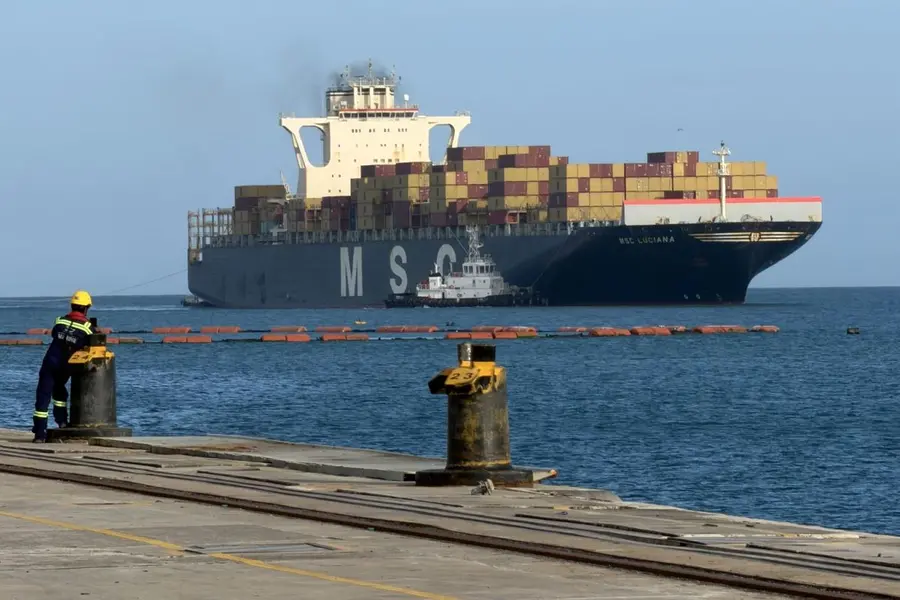
The proposed sale of a 49 per cent stake in Adani Vizhinjam Port Private Limited to the Mediterranean Shipping Company has raised questions that extend well beyond a corporate transaction. It has also exposed how easily political narratives can overwhelm legal and financial realities.
The facts deserve far greater attention than the rhetoric. There is one point on which there should be no confusion. The Government of Kerala continues to own the Vizhinjam Port. The proposed transaction does not transfer ownership of the port to either Adani or MSC. What is proposed for sale is a 49 per cent stake in the private company that holds the concession to develop and operate the port under a long-term agreement with the State. That distinction is fundamental.
Click Here: Kerala Govt toughens stance against Adani Group on Vizhinjam share transfer
It is also where many of the arguments now circulating begin to lose precision. The concessionaire is not the owner, but a contractual operator. The land and the port belong to Kerala. The concession agreement grants the private company the right to build, operate, and eventually hand back the asset to the State in accordance with its terms.
The proposed transaction therefore does not amount to a sale of Kerala's port. Yet it would be equally mistaken to conclude that this is an ordinary commercial transaction with which the State has no concern. The transaction is anything but ordinary.
The concession agreement reportedly provides that a change in ownership beyond a specified threshold requires the prior approval of the Government of Kerala. The Chief Minister has now informed the Assembly that no such proposal has been placed before the government and that no approval has been granted. If that is indeed the legal position, then this is not a procedural technicality but a contractual obligation.
The Government of Kerala, therefore, has both the right and the responsibility to insist that the agreement be honoured before the transaction proceeds any further. That does not mean the government should reject the proposal. It just means the government should examine it.
The first question is whether the proposed sale constitutes a change in ownership or effective control under the concession agreement. Corporate law often distinguishes between numerical shareholding and actual control. A shareholder with less than a majority can still exercise considerable influence through board representation, veto rights, reserved matters and shareholder agreements. The government cannot make an informed decision until it has examined every document governing the transaction, rather than relying on media reports or corporate announcements.
The second question concerns competition. MSC is not merely another financial investor. It is the world's largest container shipping company and, through its terminal business, one of the largest port operators in the world. That combination naturally raises questions about competitive neutrality. Every successful transhipment port depends upon the confidence of multiple shipping lines that they will receive equal access and equal treatment.
The commercial success of Vizhinjam will ultimately depend upon whether competing carriers regard it as a neutral hub rather than an extension of a rival's global network. That concern deserves careful examination. It should neither be exaggerated into an allegation of monopoly nor dismissed as an irrational fear.
There is another aspect that has not received the attention it deserves. The reported consideration of approximately ₹13,000 crore is being widely misunderstood. It is not an investment flowing into Kerala, but the consideration being paid for Adani's equity in the concessionaire company.
Unless the transaction separately commits fresh capital for future expansion, the proceeds belong to the seller rather than to the State or the port project itself. That distinction matters because public discourse should not confuse a transfer of private equity with new infrastructure investment.
There is also an unavoidable political dimension. The concession agreement itself was negotiated by the previous UDF government. The Left opposed it at the time, citing its financial structure and risk allocation. But after assuming office, the Left chose to continue with the agreement rather than reopen a dispute that could have delayed the project indefinitely.
Whether that decision was politically convenient or economically prudent remains open to debate. What is beyond dispute is that successive governments accepted that Vizhinjam was too important a project to become hostage to prolonged litigation. That same spirit should prevail now. The temptation to reduce this issue to a contest between political parties would be profoundly misplaced. The real questions concern contractual compliance, public interest and the long-term governance of one of India's most strategically significant ports.
Also Read: Vizhinjam Port: Kerala not informed of Rs 13,000 cr foreign investment, says CM
The government should insist upon full disclosure of the transaction documents. It should examine whether the proposed arrangement alters control in a manner contemplated by the concession agreement. It should assess the implications for competition, national security, and the port's future development.
If necessary, it should impose conditions to preserve Vizhinjam's neutrality as a common user facility. If the proposal satisfies all legal and public-interest requirements, approval should not be withheld solely for political reasons. Equally, if the proposal violates the concession agreement or compromises Kerala's legitimate interests, the government should not hesitate to exercise the authority vested in it under that very agreement. Neither blind opposition nor unquestioning approval would serve Kerala well.
Vizhinjam represents far more than a port. It is the cornerstone of Kerala's maritime ambitions and one of the State's most consequential economic assets. Its future should be determined neither by partisan reflexes nor by corporate announcements, but by the rule of law, the sanctity of contracts and an unwavering commitment to the public interest.
The author is a National Award winner for Best Narration and an independent political analyst. Views expressed are personal.
Published: 03 Jul 2026, 11:18 am IST
Disclaimer: Kindly avoid objectionable, derogatory, unlawful and lewd comments, while responding to reports. Such comments are punishable under cyber laws. Please keep away from personal attacks. The opinions expressed here are the personal opinions of readers and not that of Mathrubhumi.
