
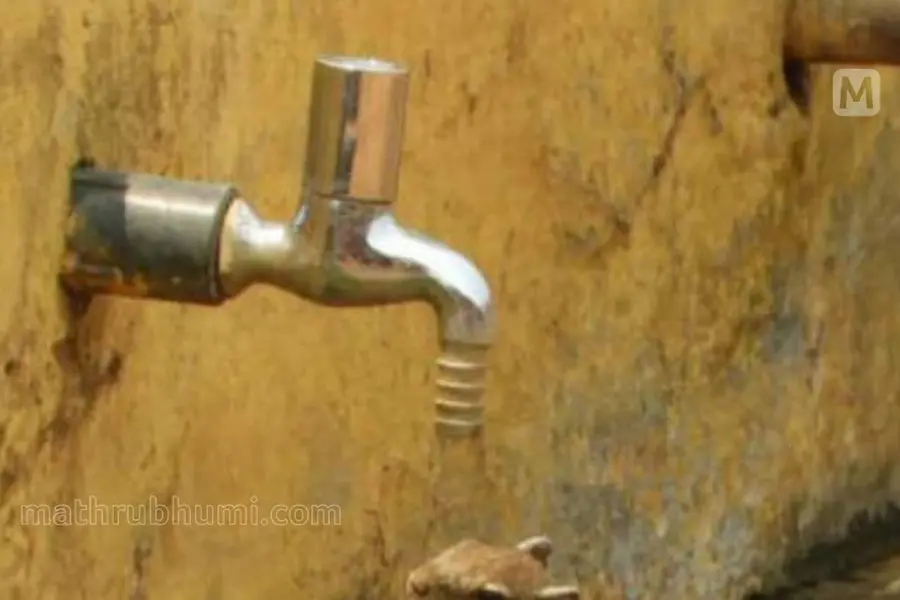
Thiruvananthapuram: Residents across 45 wards in Thiruvananthapuram have been enduring a severe water shortage since early Thursday morning. The Kerala Water Authority's (KWA) pipelines have run dry, cutting off the entire city’s access to drinking water. Initially, many households managed by relying on stored water, but as the shortage extends into its fourth day, the situation has grown increasingly critical. Municipal authorities are now under immense pressure, though they have assured that the water supply will be restored by Sunday night.
Pipeline repairs and prolonged disruption
Also Read

The KWA had previously informed the public that the water supply would be disrupted from Thursday to Friday due to essential repairs on the pipeline. However, the situation worsened unexpectedly when water supply across the entire city was not restored even after four days. Despite ongoing repair work, the restoration of water connections remains uncertain and it is now unlikely the supply will resume soon.
Many public and private establishments, including the Secretariat, have been severely impacted by the shortage. Although many offices were closed on Sunday, there are growing concerns that a larger crisis looms as commercial establishments and government offices prepare to reopen on Monday.
Minister Roshy Augustine addresses the issue
Minister for Water Resources of Kerala Roshy Augustine has acknowledged the difficulties faced by the city's residents. He explained that the initial plans did not anticipate such a severe disruption. The repair work, part of the Thiruvananthapuram-Kanyakumari railway project, was expected to be completed within two days. However, complications arose on Saturday afternoon when a valve broke during the restoration of water from the Aruvikkara treatment plant. Despite efforts to rectify the situation, the repair work was delayed, extending the water outage. Minister Augustine has been on-site since Saturday night to oversee the progress.
A meeting chaired by Minister V Sivankutty on Sunday aimed to find solutions to the crisis. During the meeting, the Water Authority faced criticism for initiating repair work without implementing a solid contingency plan.
Residents forced to pay for water tankers
The authorities have suggested booking water tankers through the Smart Trivandrum app, but residents have complained about the Rs 2,000 charge for the service, which they consider exorbitant in the midst of such a crisis.
Efforts by local councillors to supply water to the worst-affected areas have been insufficient to meet the growing demand. With government offices and businesses about to reopen on Monday, there are fears that operations could be forced to shut down if the water supply is not restored promptly.
Technical issues compound the crisis
The situation has been further complicated by ongoing work to replace a 700 mm pipeline under the railway line. This has necessitated a temporary halt to water supply from the PTP Nagar reservoir, affecting areas like Vattiyoorkavu and Sasthamangalam. Although water was briefly restored to these regions, supply was interrupted again due to technical difficulties with a newly installed valve.
Water Authority officials have stated that supply to these areas is expected to resume by 3 pm on Sunday, with water reaching all households by the night.
Residents’ daily struggles
The extended water shortage has left many residents scrambling to collect water from a single tap that still has some supply. People have been forced to transport water in cans and utensils, raising concerns about how long this minimal supply will last.
The shortage has also caused a scarcity of bottled water, adding to the growing frustrations of locals. Women, in particular, have raised concerns about limited access to bathrooms during the crisis, further highlighting the severe impact on daily life.
Authorities attribute the water supply disruption to ongoing construction related to the Smart City Project. This is the first time the city has experienced such a widespread issue, raising serious concerns about the effect these projects have on essential services.
Published: 08 Sept 2024, 10:30 am IST
Related Topics
Disclaimer: Kindly avoid objectionable, derogatory, unlawful and lewd comments, while responding to reports. Such comments are punishable under cyber laws. Please keep away from personal attacks. The opinions expressed here are the personal opinions of readers and not that of Mathrubhumi.