
The final DPR for the ₹10,000-crore Thiruvananthapuram Metro will hit the Cabinet next week, paving the way for construction to start within 6 months of central approval.
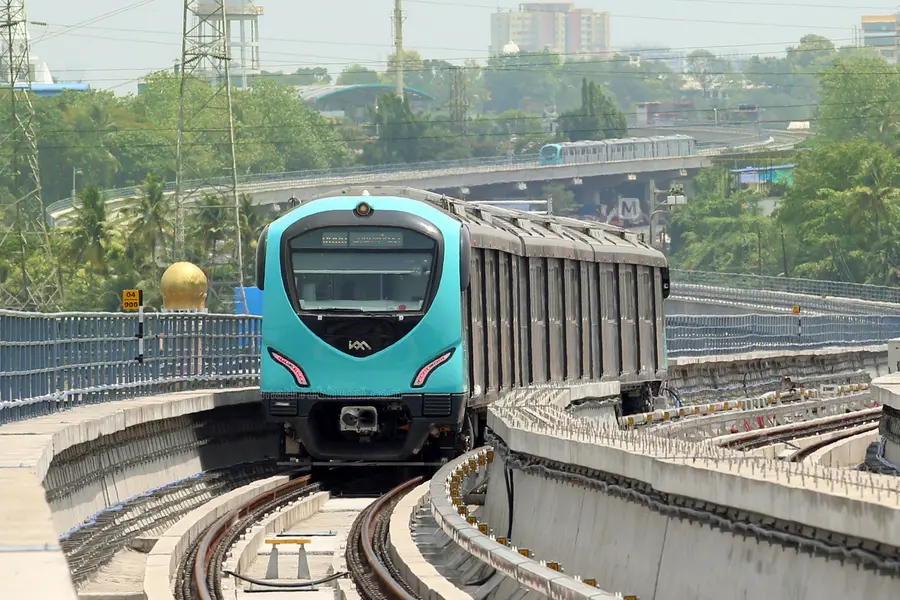
Thiruvananthapuram: The capital city's long-awaited mass rapid transit system is moving into the fast lane, with the final Detailed Project Report (DPR) for the Thiruvananthapuram Metro scheduled for submission to the state government next week. Kochi Metro Rail Limited (KMRL) will present the comprehensive document—which outlines the complete financial layout and structural plans prepared by the Delhi Metro Rail Corporation (DMRC)—for Cabinet evaluation and approval.
Once cleared by the State Cabinet, the DPR will be forwarded to the Union Ministry of Housing and Urban Affairs. KMRL officials project that actual physical construction on the ground can commence within six months of receiving the central government's final nod.
A 31-kilometre corridor
The approved alignment covers a 31-kilometre stretch designed to link major residential, administrative and IT hubs.
Phase 1 route: Starts at Pappanamcode and passes through Killipalam, Thampanoor, the Secretariat, Palayam, Pattom, Medical College, Ulloor and Kariavattom to reach Kazhakkoottam.
Extension: From Kazhakkoottam, the line continues toward Technopark, Aakkulam and Chakai to terminate at Enchakkal.
The state government had formally approved this alignment last November, subsequently directing KMRL to construct the exhaustive financial and land-acquisition roadmap now being readied for submission.
Elevated Vs underground corridor
The upcoming DPR is heavily tipped to recommend an entirely elevated viaduct system for the network. While initial feasibility studies explored building underground corridors through the city's historic core—particularly near the Secretariat—to protect heritage facades from massive concrete stations, financial constraints ultimately steered planners back to the air.
Industry experts estimate that building an elevated metro system for the capital will cost roughly ₹10,000 crore, whereas an underground network would effectively double that construction expenditure. Following the established financing matrix of the Kochi Metro, the project is structured to be funded through 60 per cent external institutional loans, with the remaining 40 per cent split equally (20 per cent each) as equity contributions from the State and Central governments.
Integrated mobility hub at Anayara
A standout feature detailed within the fresh DPR is the establishment of a state-of-the-art Integrated Mobility Hub at Anayara, utilising 106 acres of government-owned land earmarked under the Thiruvananthapuram Master Plan 2024.
Designed to operate under the administrative umbrella of the metro corporation, this facility aims to act as a seamless multi-modal transit nexus, bridging:
- Road networks (National Highway connectivity)
- Railways (close proximity to the Kochuveli Railway Station)
- Waterways (access via the Parvathy Puthanar canal)
- Air transit (strategic proximity to Thiruvananthapuram International Airport)
Beyond the mega-hub at Anayara, the DPR proposes six micro-mobility hubs built directly adjacent to key metro stations. These localised terminals will feature dedicated parking bays capable of accommodating over five buses simultaneously, integrated taxi and auto-rickshaw stands, public parking zones, and commercial utility areas including cafeterias—creating sustained non-fare box revenue streams to support the metro's long-term operations.
Published: 18 Jun 2026, 12:54 pm IST
Related Topics
Disclaimer: Kindly avoid objectionable, derogatory, unlawful and lewd comments, while responding to reports. Such comments are punishable under cyber laws. Please keep away from personal attacks. The opinions expressed here are the personal opinions of readers and not that of Mathrubhumi.
