
The NHAI introduces strict caps on subcontracting and mandates local consultation for highway designs following structural failures along national highways in Kerala.
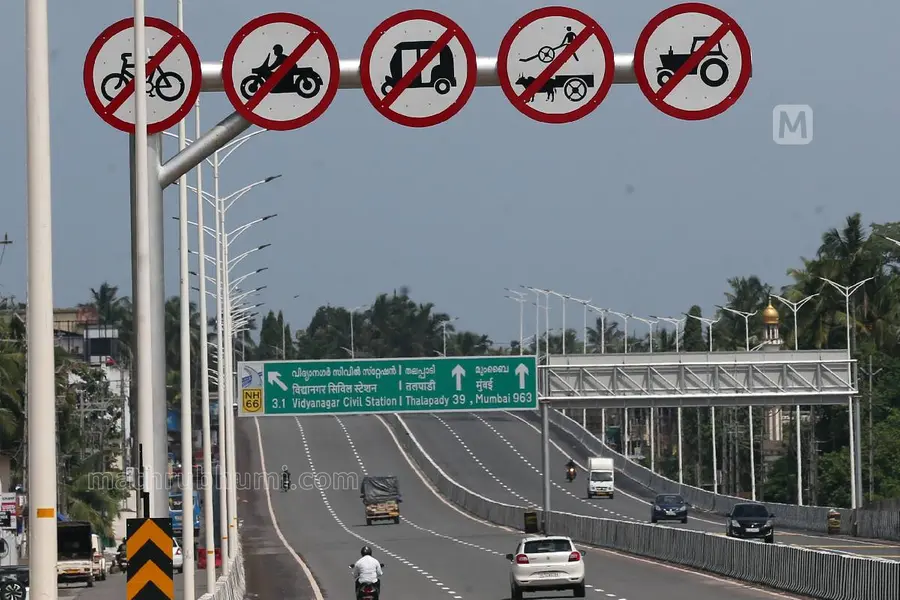
New Delhi: The National Highways Authority of India (NHAI) has announced measures to curb the widespread practice of main contractors offloading major portions of roadworks to subcontractors. NHAI chairman Santosh Kumar Yadav shared this update during a Parliamentary Public Accounts Committee (PAC) meeting on Wednesday. He added that the authority will thoroughly consult local administration and leadership, who possess deep knowledge of the terrain, while drafting Detailed Project Reports (DPRs).
These decisions follow specific recommendations made by the PAC after portions of the national highway caved in at Kooriad and Mylakkad in Kerala. The NHAI chairman assured PAC chairman K C Venugopal that these suggestions have been accepted and will be implemented in all forthcoming national highway construction projects. Wednesday’s session was a follow-up to a meeting held in May last year regarding construction flaws in national highway projects.
The PAC observed that recurring structural failures along Kerala's national highways stemmed from DPRs being prepared without understanding the state's unique geographical features. Consequently, the PAC insisted that henceforth, while designing a DPR, data must be gathered from local MPs, MLAs, District Collectors, local self-government bodies and regional experts. The highway authorities have now formally adopted this approach.
Concerns were also raised that primary contractors were making massive profits by simply flipping their projects to smaller firms. Moving forward, a contractor must obtain prior approval from the highway authorities before awarding any subcontract that exceeds 8 per cent of the total project cost.
The NHAI explained that while subcontracting cannot be completely eradicated—as primary contractors frequently require specialised firms for tasks like bridges, flyovers, underpasses and footpaths—the new rules aim to end the practice of completely outsourcing work purely for profit.
During the meeting, MPs across both treasury and Opposition benches pointed out major shortcomings in the NHAI's operations. Allegations were raised that collections at certain toll plazas resembled extortion rackets. Members noted that basic amenities such as ambulances, rapid response forces and toilets are completely missing at several toll plazas. Furthermore, full toll is being collected even when vehicles are diverted through service roads due to maintenance work on the main highway. In hilly terrains, instead of cutting roads scientifically with proper gradients to prevent environmental damage, the hills are reportedly being sliced through recklessly.
NHAI team to visit Amballur
K C Venugopal brought the issue of exposed concrete slabs at Amballur in Thrissur to the attention of the highway authorities, highlighting local anxieties that the ground could cave in further if the rains persist. The authorities promised to inspect the site immediately and take necessary action. A decision was also reached to swiftly resolve the issue at the Cherthala 11th Mile flyover, where a crater formed within a week of its opening.
In addition, rainwater has been flooding houses on both sides of the Alappuzha national highway due to the complete absence of a drainage system. In a meeting previously held at the Alappuzha Collectorate, the NHAI had stated it would sanction ₹65 crore for drainage works, with the execution to be handled by the state Public Works Department (PWD). However, as the national highway in Kerala is narrower compared to other states, drainage construction faces major bottlenecks. In light of this, the PAC directed the authorities to release the funds and assist states in creating alternative systems. The PAC also instructed them to study whether elevated highways could offer a viable solution.
Published: 16 Jul 2026, 10:19 am IST
Related Topics
Disclaimer: Kindly avoid objectionable, derogatory, unlawful and lewd comments, while responding to reports. Such comments are punishable under cyber laws. Please keep away from personal attacks. The opinions expressed here are the personal opinions of readers and not that of Mathrubhumi.
