
While Kerala boasts some of the best survival rates for children, it is also grappling with the realities of an increasingly elderly population.
The Office of the Registrar General of India under the Union Home Ministry recently published the Sample Registration System (SRS) Statistical Report for 2024, providing a detailed look at the nation's changing demographic profile. The findings of SRS 2024 show that Kerala continues to set the standard for health and social outcomes in India, though the state is now navigating a significant demographic transition. While Kerala boasts some of the best survival rates for children, it is also grappling with the realities of an increasingly elderly population.
Leading the way in child survival
Also Read

Kerala has secured the lowest Infant Mortality Rate (IMR) among India’s larger states. The IMR — which measures how many babies die before their first birthday for every 1,000 live births — stands at just 8 in Kerala. To put this in perspective, the national average is 24, while in states such as Chhattisgarh, the figure is as high as 36.
The state also leads in the Under-Five Mortality Rate (U5MR), which is the probability of a child dying before reaching the age of five. In Kerala, this rate is 9 per 1,000 live births, whereas the national average is 28. Consequently, a child born in Kerala has a 99.1% chance of surviving to their fifth birthday, the highest probability recorded in the country.
Demographic shifts and marriage trends
The report highlights a sharp decline in birth rates. Kerala’s Crude Birth Rate (CBR) — the number of live births per 1,000 people — is 11.1, the lowest among all major states. For comparison, Bihar recorded the highest CBR at 26.8.
Furthermore, the Total Fertility Rate (TFR) in Kerala has fallen to 1.3. The TFR represents the average number of children a woman is expected to have in her lifetime. This is significantly below the replacement level of 2.1, which is the rate required for a population to replace itself from one generation to the next. While Delhi has the lowest TFR at 1.2, Kerala remains near the bottom of the scale alongside Tamil Nadu and West Bengal.
The age at which women marry also shows a distinct trend in the southern state. The mean age at effective marriage for females in Kerala is 24.5 years. This is notably higher than the national average of 23.1 years and well above states such as Bihar and Jharkhand, where the average is roughly 21.5 years.
The challenge of an ageing population
While Kerala excels in keeping its youngest citizens alive, its overall Crude Death Rate (CDR) — the number of deaths per 1,000 people — tells a more complex story. Kerala’s CDR is 7.3, which is higher than the national average of 6.4 and significantly above Delhi’s 4.5.
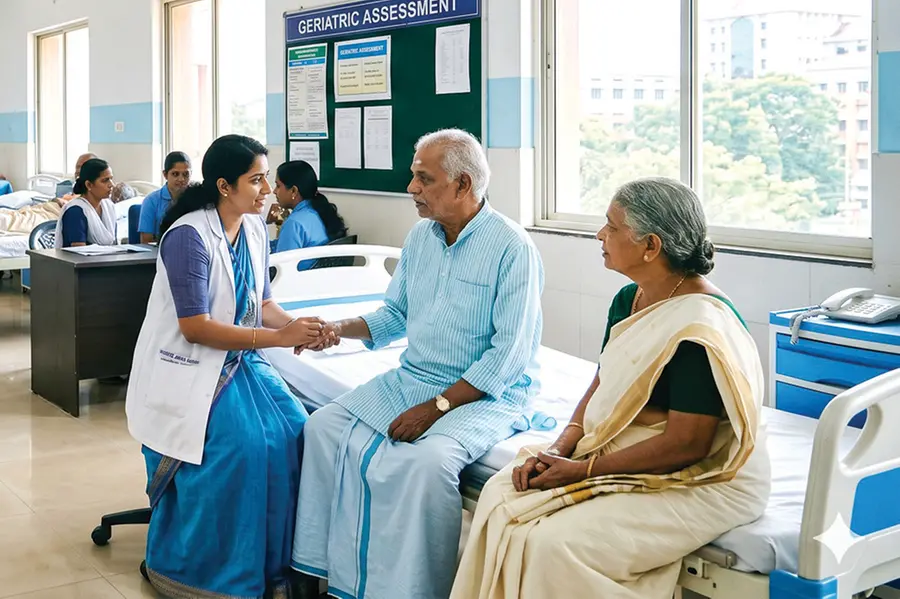
This does not imply poor healthcare; rather, it reflects that Kerala has the highest proportion of elderly residents in India. Approximately 15.1% of Kerala’s population is aged 60 or above, compared with a national average of just 9.7%. The report notes that 79.4% of all deaths in Kerala occur among those aged 60 and above, the highest percentage in the country.
Education and healthcare access
Education appears to play a central role in these statistics. Kerala has the highest percentage of women in the reproductive age group (15–49) with graduate-level education or higher, reaching 30.9%. In contrast, this figure is as low as 3.5% in Bihar.
Healthcare access at critical stages of life is also nearly universal in the state. Almost all births in Kerala (99.9%) take place in hospitals with medical supervision. Interestingly, when it comes to the end of life, 31% of people in Kerala receive medical attention at a private hospital before death, the highest rate among all major states. This suggests a heavy reliance on the private sector for elderly care and terminal illness.
Published: 30 May 2026, 05:58 pm IST
Disclaimer: Kindly avoid objectionable, derogatory, unlawful and lewd comments, while responding to reports. Such comments are punishable under cyber laws. Please keep away from personal attacks. The opinions expressed here are the personal opinions of readers and not that of Mathrubhumi.