
A comprehensive look at the origins, intense legal battles and key milestones of the 50-year-old Pariyathukavu land dispute that culminated in a historic settlement.
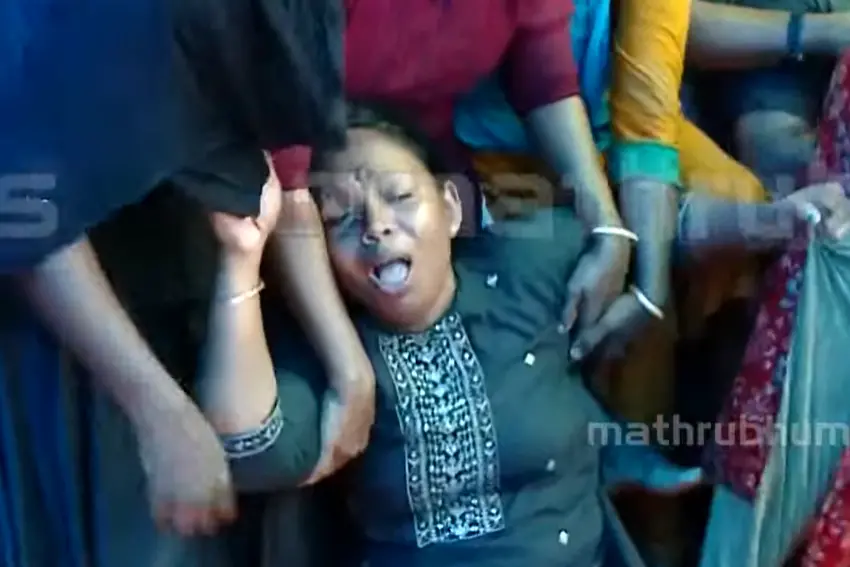
Kochi: The Pariyathukavu land dispute, rooted in Malayidamthuruthu Kara within Vazhakulam village under Kunnathunad taluk of Ernakulam, has historically centered around two-and-a-half acres of land where a local colony sits. This specific pocket forms part of a broader 19-acre property tract. For nearly 50 years, economically disadvantaged Dalit families, who inhabited the area, claimed the territory was government puramboke land (unassessed government property), asserting their right to stay.
The issue escalated into a major social and political flashpoint after a private individual claimed lawful ownership of the land and sought judicial intervention. Over the decades, more than 11 separate eviction attempts were successfully blocked by residents and local activists.
Legal battles and eviction stand-offs
The legal trajectory of the dispute consistently favoured the private property owner. Courts established that the individual possessed valid ownership records registered under Section 123 of the Transfer of Property Act. Furthermore, judicial reviews determined that the 19-acre stretch was not classified as government land.
The residents faced consecutive legal setbacks.
- The Perumbavoor Munsiff Court dismissed their initial obstruction petition.
- The Perumbavoor Sub Court subsequently rejected their appeal.
- The Kerala High Court dismissed a second appeal on December 12, 2024, citing that the residents lacked legal title deeds beyond long-term occupation.
- A final judicial order on March 19, 2026, authorised the immediate execution of the eviction.
Following this final directive, an advocate commission accompanied by a large, riot-gear-clad police contingent attempted to enforce the court order. This triggered massive local protests led by then CPM MLA P V Sreenijan and other activists, who argued the eviction survey was being executed unilaterally without proper statutory notice. After a tense, hours-long standoff involving water cannons and the detention of demonstrators, the eviction was temporarily suspended following high-level political interventions from the newly formed UDF government.
The resolution and rehabilitation framework
Recognising the escalating humanitarian and law-and-order crisis, the state administration shifted from forced enforcement to structured diplomacy. Higher Education Minister Roji M John initiated intensive discussions, bringing together district administrators, landowners, community delegates and residents.
Following five consecutive rounds of negotiations, all stakeholders officially signed a comprehensive settlement agreement on Monday night. Under this newly brokered pact, the private landowners agreed to allow the permanent on-site rehabilitation of seven Dalit families.
The state government announced that each family will be legally allotted five cents of land adjacent to their current residences. To ensure basic infrastructure, a three-metre-wide access road will be paved and handed over to the local panchayat, and a boundary wall will be built to cleanly partition the colony from the remaining private estate.
Furthermore, the government will coordinate the construction of new houses, ensuring each home spans a minimum of 1,000 square feet. These houses will be financed through corporate and public sponsorship frameworks, with a strict completion deadline of one year. To guarantee a smooth transition, residents are permitted to remain in their current homes until the new structures are ready, and the administration has directed the Scheduled Caste Development Department to fast-track welfare benefits to the families.
To maintain peace, the government confirmed it will take legal steps to officially withdraw the criminal cases registered against protesters during the agitations. The finalised settlement documents are being submitted to the judiciary via the Advocate General to formally close the half-century-old dispute.
Timeline of the Pariyathukavu dispute and resolution
- Late 20th century: Early legal foundations and disputed occupancy
Dalit families occupy land at Malayidamthuruthu Kara, viewing it as public property, while a private individual secures legally registered ownership records under the Transfer of Property Act.
- December 12, 2024: High Court dismisses second appeal
The Kerala High Court rejects the residents' second appeal, ruling that long-term occupation without valid title deeds does not confer legal ownership.
- March 19, 2026: Final judgement permits eviction
The High Court issues a final order clearing the legal path for the private owner to reclaim the land, prompting the formation of an advocate commission to execute the mandate.
- Mid-2026 (Pre-settlement): Violent clashes and temporary suspension
An eviction attempt escalates into a major standoff. Police deploy water cannons against protesters and political activists, leading to a temporary halt of the drive following state intervention.
- June 15, 2026: The diplomatic breakthrough
After five grueling rounds of stakeholder negotiations, Higher Education Minister Roji M John chairs a high-level meeting where residents and landowners officially sign a settlement treaty.
- Expected June 22–30, 2026: Boundary demarcation and survey kick-off
The state survey department begins delineating the newly assigned five-cent residential plots and the three-metre-wide public access road.
Published: 16 Jun 2026, 11:07 am IST
Related Topics
Disclaimer: Kindly avoid objectionable, derogatory, unlawful and lewd comments, while responding to reports. Such comments are punishable under cyber laws. Please keep away from personal attacks. The opinions expressed here are the personal opinions of readers and not that of Mathrubhumi.
