
A year after the Dharali disaster, Uttarakhand’s recovery has moved beyond rescue and relief, focusing on rebuilding livelihoods, infrastructure and the local economy.
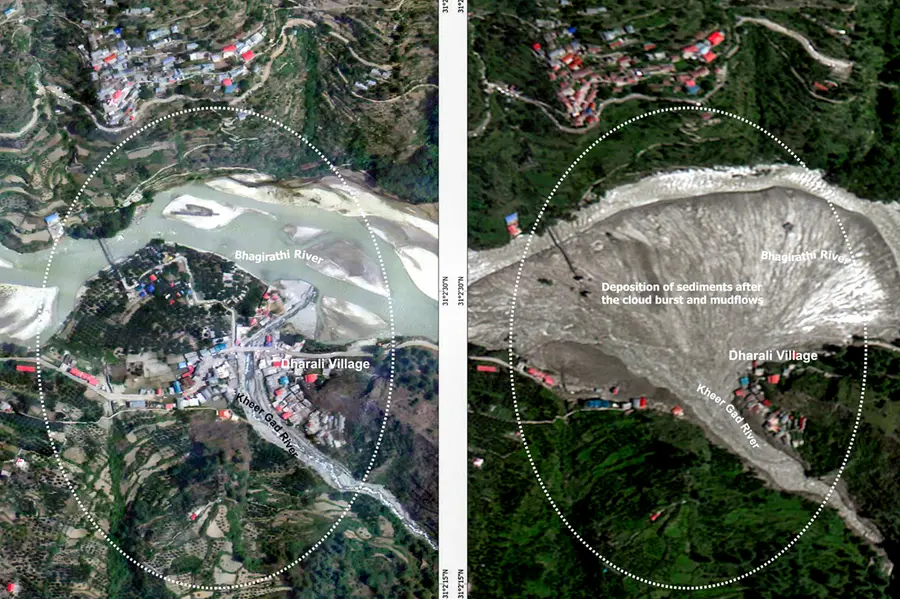
A year ago, Dharali was buried under debris. Today, the focus has shifted to rebuilding what the disaster took away. From damaged roads and farmlands to lost orchards, livestock and livelihoods, Uttarakhand's response in the Bhagirathi Valley has moved through a year-long transition from rescue and relief to rehabilitation and redevelopment.
The disaster on August 5 left deep scars across Dharali and surrounding areas. Homes and shops were damaged, agricultural land and orchards were affected, livestock was lost and several families were left without their usual sources of income.
One year on, the Uttarakhand Government says Dharali, Harsil and Bhatwari are steadily recovering, with roads and essential infrastructure restored, agricultural activity returning and the local economy beginning to regain momentum.
But the recovery effort, according to the Chief Minister's Office, has been about more than rebuilding what was physically damaged.
From rescue to rebuilding
From the first day of the disaster, the government's stated approach was to move "from relief and rescue to rehabilitation, and from rehabilitation to redevelopment."
Chief Minister Pushkar Singh Dhami visited the affected areas, met families and reviewed relief and rehabilitation efforts. Officials were directed to ensure that assistance reached those affected and that essential infrastructure was restored without delay.
Over the past year, the focus has gradually expanded from immediate disaster response to restoring livelihoods and rebuilding the economic foundations of the affected communities.
According to a government release, more than ₹16 crore has been spent on development and rehabilitation works through departments including Animal Husbandry, Irrigation, Horticulture, Agriculture, Rural Development, Energy, Tourism, Public Works, and Food & Civil Supplies.
More than ₹17 crore in financial assistance has also been provided to affected families through various relief schemes.
Together, the government says, more than ₹33 crore has been spent over the past year on development works, rehabilitation measures and financial assistance.
Rebuilding livelihoods after the loss
For families who lost orchards, crops, livestock or businesses, rebuilding infrastructure alone could not restore their lives.
The rehabilitation effort therefore included support for goat and sheep rearing, compensation for damaged orchards, distribution of crops and saplings, and assistance to restart agricultural activities, the release said.
Irrigation systems, drinking water facilities and electricity infrastructure were also restored on a priority basis.
Roads damaged in the disaster were repaired and reconstructed, while flood protection works along riverbanks were accelerated as part of efforts to make the region better prepared for future disasters.
Why tourism matters to Dharali's recovery
The rebuilding effort has also extended to the local economy.
With tourism playing an important role in the Bhagirathi Valley, the government said special emphasis was placed on reviving tourism activity. The objective was to help local businesses recover while restoring employment opportunities and economic activity in the region.
This marked another shift in the recovery strategy — from responding to the immediate destruction to restoring the systems that support everyday life and livelihoods.
Rebuilding beyond what was lost
During periodic review meetings, Dhami stressed that reconstruction should not simply bring the region back to the way it was before the disaster.
"The Dharali disaster was not merely a challenge of rebuilding infrastructure; it was a responsibility to restore the lives and future of the affected families," Dhami said.
He said the government's commitment was to make the Bhagirathi Valley "safer, stronger, and more prosperous than before", with rehabilitation and reconstruction efforts continuing.
One year later
The images from Dharali a year ago showed a region struggling under the impact of a devastating disaster. The picture presented by the Uttarakhand Government today is different: roads have been restored, agricultural activity is returning, orchards are beginning to flourish and local economic activity is gradually picking up.
The story of Dharali's recovery, therefore, is no longer only about what the disaster destroyed.
It is increasingly about what happened after the rescue — and how a region began the difficult journey from relief to rehabilitation, and from rebuilding to redevelopment.
With ANI inputs
Published: 10 Aug 2026, 06:33 am IST
ABOUT THE AUTHOR

Related Topics
Disclaimer: Kindly avoid objectionable, derogatory, unlawful and lewd comments, while responding to reports. Such comments are punishable under cyber laws. Please keep away from personal attacks. The opinions expressed here are the personal opinions of readers and not that of Mathrubhumi.