
Former women Naxals from Bastar walked the ramp in handloom attire at a National Handloom Day event in Raipur
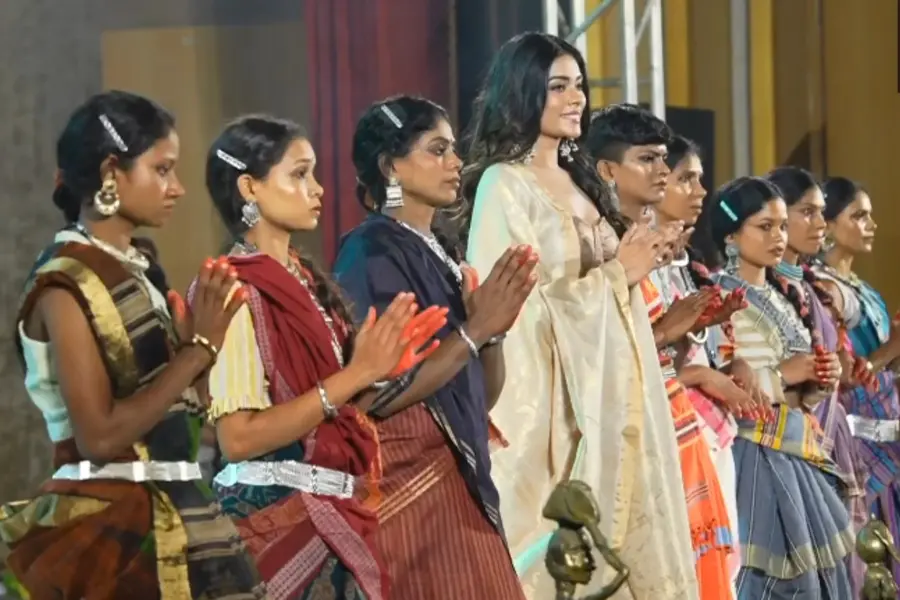
For a group of women from Bastar, walking a fashion ramp in Raipur was about much more than wearing a saree.
At a National Handloom Day event, the women appeared in handwoven sarees, smiling for the cameras and confidently walking before an audience. Their presence stood out because of the lives they had left behind. They were formerly associated with the Maoist movement and had surrendered their weapons to return to civilian life.
The scene offered a striking contrast to the image of Bastar that has dominated headlines for years. Instead of dense forests and armed conflict, there were colourful sarees, handloom textiles and women taking centre stage.
National Handloom Day, observed on August 7, is meant to celebrate India's weavers and the country's long handloom tradition. The occasion in Raipur brought that focus to Chhattisgarh, a state with its own strong textile and craft traditions.
Bastar's handloom story is particularly interesting because textiles are closely connected to the region's tribal communities and cultural identity. The state has also seen efforts to promote traditional crafts and create more livelihood opportunities for local communities.
The women who walked the ramp brought another layer to the event. Their appearance showed what life after surrender can look like when people are given opportunities to take up new roles and rebuild their lives.
Bastar's story is changing
For decades, Bastar has been closely associated with the Maoist insurgency. The region's forests became a major area of operations for the CPI (Maoist), with violence affecting local communities and disrupting development. But the picture has been changing.
In March 2026, 108 Maoist cadres surrendered in Bastar, including 44 women. The group was linked to the Dandakaranya Special Zonal Committee, and authorities said those who surrendered would be supported under the state's rehabilitation programme.
The surrender was significant not only because of its size, but also because of the number of women involved. It highlighted how women had been part of the insurgency and were also among those choosing to leave it.
The state's 'Puna Margem', or rehabilitation-to-rejuvenation initiative, is intended to help former cadres move back into civilian life. Assistance can include financial support, vocational training, housing and education.
For someone who has spent years living in the forest and outside ordinary civilian life, that transition cannot be reduced to simply handing over a weapon. Finding a livelihood and a place in everyday society is an important part of what comes next.
Why handloom makes an interesting backdrop
There is something fitting about the women appearing at a handloom event. Handloom is not simply about clothing. In many parts of India, weaving carries stories about communities, local materials, techniques and generations of craftsmanship. Chhattisgarh has several distinctive textile traditions, including the well-known Kosa silk associated with the state.
The Centre's handloom awards have also recognised work from Chhattisgarh. In 2025, Raigarh weaver Akash Kumar Dewangan received a National Handloom Award for his Tribal Bastar Jala Kosa Saree.
So, when former women Maoists walked the ramp in handloom sarees, the moment connected two very different conversations about Bastar: the region's difficult past and the possibility of building livelihoods around its cultural heritage.
From surrender to starting over
The journey back into mainstream life can take many forms. Some former cadres may take up vocational work, while others may return to education, farming or local employment. Rehabilitation programmes are designed to help with that transition rather than treating surrender as the final step.
That is what made the Raipur event more than a conventional fashion presentation. The women were not there simply to model sarees. Their appearance reflected a larger attempt to show another side of life after the insurgency.
And there was an obvious symbolism to the clothes themselves. Handloom represents a skill, a livelihood and a piece of cultural heritage that can be passed from one generation to another. Wearing those sarees on a public stage placed the women firmly in a very different setting from the one associated with their past.
The Chhattisgarh government has increasingly linked the decline of Maoist activity with a broader push for development in Bastar.
In March, the surrender of 108 cadres was followed by further surrenders across the region. By the end of that month, more than 30 additional cadres had surrendered across four Bastar districts, according to police.
The government's focus now extends beyond security to roads, connectivity, education, livelihoods and other forms of development. Union Home Minister Amit Shah has also spoken about moving Bastar from security towards development and prosperity.
That shift matters because life in a region does not change simply because an insurgency loses ground. People still need jobs, businesses, schools, transport and opportunities to build ordinary lives.
The women on the Raipur ramp offered a small but memorable glimpse of that transition. Once part of a conflict that kept Bastar in the national spotlight for all the wrong reasons, they were now standing before an audience in handloom sarees, smiling and taking part in a celebration of Indian craftsmanship. For Bastar, that is a very different picture to put in the frame.
Published: 13 Aug 2026, 11:32 am IST
ABOUT THE AUTHOR

Related Topics
Disclaimer: Kindly avoid objectionable, derogatory, unlawful and lewd comments, while responding to reports. Such comments are punishable under cyber laws. Please keep away from personal attacks. The opinions expressed here are the personal opinions of readers and not that of Mathrubhumi.