
National highways account for only two per cent of the country's total road network. However, the court observed that 33 per cent of road accident deaths occur on national highways.
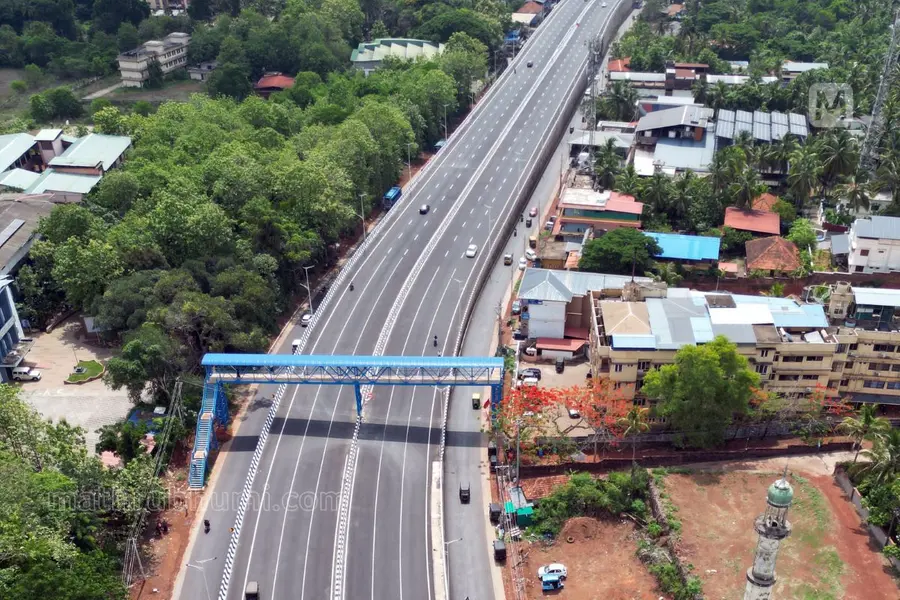
Haripad: Concern has been raised in Kerala over an interim Supreme Court order prohibiting permission for houses within 40 metres and commercial establishments within 75 metres of the centre of national highways.
In Kerala, national highways are 45 metres wide, leaving a distance of 22.5 metres from the centre to either side. If the court order is implemented, houses would be permitted only 17.5 metres beyond the existing highway boundary.
Also Read

For commercial establishments, the additional distance would be 52.5 metres. The order applies to both the issuance of new licences and the renewal of existing ones. The interim order was issued on April 26.
The Supreme Court has directed the Chief Secretaries, Director General of Police and National Highways Authority of India (NHAI) officials of the states to circulate copies of the order. The authorities concerned have also been asked to submit their objections.
In Kerala, construction permits are currently granted for buildings located 7 metres from the national highway.
Construction of new structures also requires an access permit from the NHAI. If the interim order is implemented in its present form, construction along national highways in the state could come to a halt.
In several other states, national highways are 60 metres wide, leaving 30 metres from the centre to either side. This means houses can be constructed 10 metres beyond the highway boundary. Since Kerala's highways are 45 metres wide, the state is eligible for relaxation in the distance requirement.
Background of the case
The Supreme Court took suo motu cognisance of the issue following two major accidents in November 2025. Twelve people were killed in an accident on an express highway in Rajasthan's Phalodi district on November 2, while another accident in Telangana's Rangareddy district the following day claimed 19 lives.
The court made the NHAI and other authorities respondents and observed that the disasters were caused by failures in providing basic facilities and negligence on the part of the authorities.
Senior advocate A.N.S. Nadkarni was appointed amicus curiae and submitted his suggestions on February 15 this year. The amicus curiae and the Solicitor General assessed measures to address the issues. The NHAI also submitted affidavits on two occasions.
After considering these submissions, the Supreme Court issued the interim order, prescribing a series of measures to be implemented while the case remains pending.
Two per cent of roads, 33 per cent of accident deaths
National highways account for only two per cent of the country's total road network. However, the court observed that 33 per cent of road accident deaths occur on national highways.
The interim order also emphasises the government's obligation to protect the right to life guaranteed under Article 21 of the Constitution.
Other directives in the interim order
- The Supreme Court has issued several other directions aimed at improving safety on national highways:
- Illegal parking must be prohibited. Police should be provided with accurate information about parking through cameras and GPS.
- Complaints regarding encroachments on national highways should be accepted through the toll-free number 1033 and the RajmargYatra app.
- No new dhabas or commercial establishments should be permitted along national highways. Existing illegal constructions must be demolished by district collectors within 60 days.
- No new licences or NOCs should be issued in highway safety zones without the permission of the NHAI and the Public Works Department.
- A task force headed by the district collector must be formed in every district within 15 days.
- Special police teams should conduct patrols at intervals of 50 kilometres. Vehicles must be equipped with tracking systems, while speed-monitoring cameras, digital display boards and emergency call boxes should be made operational within 60 days.
- Ambulances and cranes should be stationed at intervals of 75 kilometres. Truck parking facilities, along with centres providing food, rest rooms and toilets, should also be provided at 75-kilometre intervals along national highways.
- Accident-prone black spots should be identified, with lights and warning signs installed at such locations.
- The Ministry of Road Transport and Highways, in coordination with the states, should formulate uniform traffic rules and driving-time limits.
Published: 09 Aug 2026, 11:09 am IST
ABOUT THE AUTHOR
Related Topics
Disclaimer: Kindly avoid objectionable, derogatory, unlawful and lewd comments, while responding to reports. Such comments are punishable under cyber laws. Please keep away from personal attacks. The opinions expressed here are the personal opinions of readers and not that of Mathrubhumi.