
Kerala’s DA arrears row deepens as the Finance Minister cites fiscal strain while unions insist it is a hard-won right.
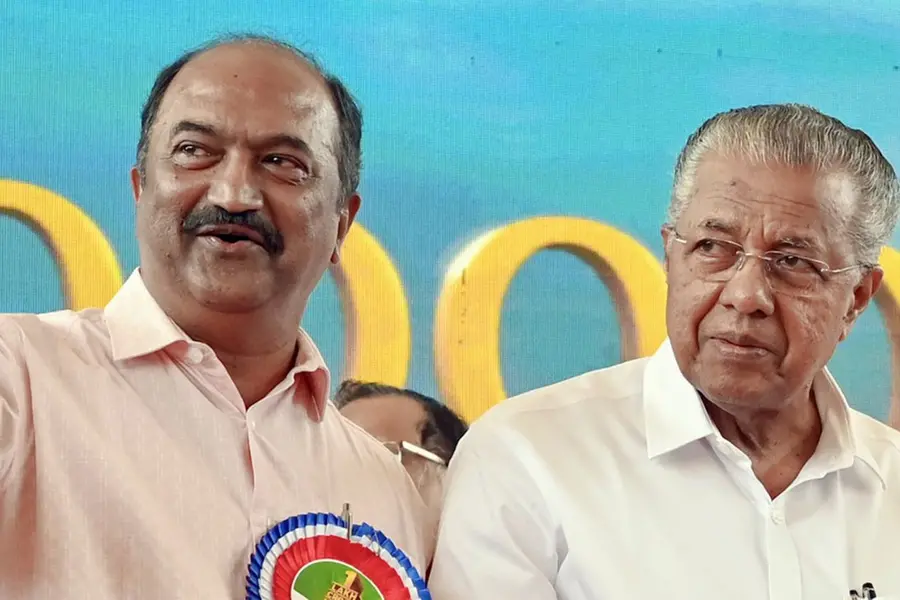
Thiruvananthapuram: Finance Minister K N Balagopal has said that the government will disburse the pending Dearness Allowance (DA) arrears for state employees and will also introduce a guaranteed pension scheme to replace the participatory pension system. Employees and pensioners “need not worry”, he said, adding that the government is committed to both.
His clarification comes amid controversy over the government’s affidavit in the High Court arguing that DA arrears are not a legal right but an administrative decision.
Balagopal warned that the system would collapse if the entire DA arrears—estimated at around ₹25,000 crore—had to be paid immediately. “Salary payments and other commitments would be disrupted. This is exactly what some people want. When there is a financial crisis, arrears can only be cleared in phases. This practical approach is what we conveyed to the court. It should not be misinterpreted as reluctance to pay,” he said.
Petitioners have argued that DA is their right, and several related cases are pending before the Supreme Court. “A final decision can be taken only after those verdicts. I assure as minister that everything due will be paid,” Balagopal added.
The minister said the Union government has withheld around ₹2 lakh crore that Kerala was entitled to over the last five years. “This year alone, ₹17,500 crore in borrowing limits was denied. If even that amount were granted, most of the arrears could be cleared. Instead of addressing this reality, some are rushing to court to create headlines,” he said.
He also pointed out that the Centre did not pay DA during the Covid period. “Did anyone approach the courts then?” he asked. Work is progressing on a guaranteed pension scheme that will ensure a fixed pension amount in place of the participatory model, he noted.
State awaits Supreme Court verdict
Kerala’s petition against restrictions on its borrowing limits is currently before the Constitution Bench of the Supreme Court. A favourable verdict could significantly ease the state’s financial distress, the minister said.
DA calculations: Govt says 9%, unions insist 13%
The government and employees’ organisations are at odds over how much DA is actually pending. According to the Finance Department, providing 1% DA per month costs ₹60 crore, and paying the current 9% arrears alone would require nearly ₹25,000 crore.
The government argues that pay revision follows a five-year cycle and the revised pay is due from 1 July 2024. Once the new pay scale comes into effect, DA will reset to zero. Until then, 31% DA should be paid. Out of this, 22%—including the 7% approved at the end of the previous LDF government—has already been sanctioned. Thus, the pending arrears stand at 9%. DA accruing after July 1, 2024 must be decided based on the revised pay structure, the government maintains.
Unions’ stance
Since the revised pay structure is yet to be implemented, employees should receive the biannual 2% DA hikes for January and July 2025, unions argue. With these additional instalments, the pending arrears would rise to 13%. If the state adopts the DA hike announced by the Centre this January, arrears will increase further, they say.
Left unions oppose affidavit; assert DA is a right
Left-leaning service organisations have rejected the Finance Department’s affidavit claiming that DA is not a right. The FSAITO, the joint platform of left unions including the NGO Union, said DA is a hard-won right achieved through decades of struggle and “cannot be denied through an affidavit”.
They recalled the Chief Minister’s assurance in the Assembly that DA arrears would be paid in full. The indefinite day-and-night protest in front of the Secretariat will continue until the arrears are settled, said general secretary M V Shashidharan and president T K A Shafee.
The CPI-backed Joint Council demanded action against officials who deviated from the Left Front’s long-standing position by filing the affidavit. Secretariat Action Council convenor M S Ershad, representing the opposition unions, said employees have suffered losses between ₹57,960 and ₹4.20 lakh due to unpaid arrears. The denial of retrospective effect has led to additional losses of ₹1.27 lakh to ₹9.26 lakh, he said.
Kerala Pradesh Teachers’ Association (KPSTA) president K Abdul Majeed alleged that the government’s stance amounts to “grave injustice against employees and teachers”. The KSTU and Kerala Arabic Munshis Association also protested against the government’s position.
Published: 17 Jan 2026, 11:51 am IST
Related Topics
Disclaimer: Kindly avoid objectionable, derogatory, unlawful and lewd comments, while responding to reports. Such comments are punishable under cyber laws. Please keep away from personal attacks. The opinions expressed here are the personal opinions of readers and not that of Mathrubhumi.
