

Chief Minister V.D. Satheesan and his team face a daunting task; however, recognizing the severity of the financial crisis is a critical starting point
For decades, the "Kerala Model of Development" was heralded as a radiant beacon of progressive governance, boasting social development indicators in health, literacy, and life expectancy that rivalled the developed West. Yet, as any undergraduate student of classical economics understands, an elaborate social superstructure cannot indefinitely survive upon a hollowed-out fiscal foundation. The illusions have finally shattered. The introduction of a candid, baseline institutional assessment has exposed a structural reality so severe that even the state's highest executive custodians can no longer rely on partisan hyperbole to mask the crisis.
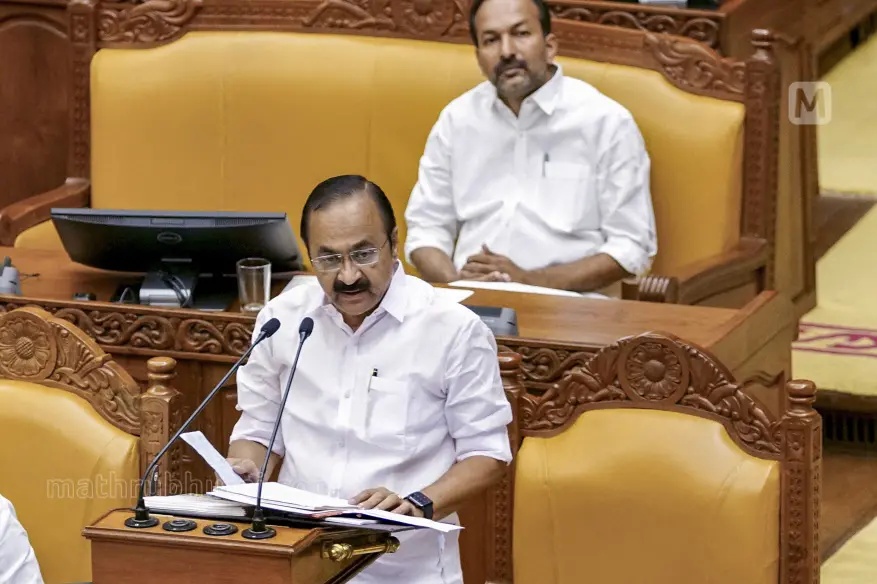
Tabling the state's comprehensive “White Paper” on financial health, titled Kerala's Fiscal Health: A Status Report, Chief Minister V.D. Satheesan delivered a sobering verdict to the Legislative Assembly: "The people of Kerala have a right to know the true state of the state's finances... [We have] inherited a severe financial crisis marked by mounting debt, rising liabilities and recurring treasury stress." The meticulously audited figures contained within the document are a devastating indictment of long-term economic mismanagement. Kerala is currently sitting on an astronomical outstanding public debt liability of ₹5.07 lakh crore, a staggering burden equivalent to roughly 35.5 percent of the state’s Gross State Domestic Product. Compounding this mountain of debt is an additional ₹48,733 crore in accumulated payment arrears—including long-overdue Dearness Allowance (DA) to public servants, pension reliefs, and unpaid bills to contractors—effectively matching the state’s entire annual market borrowing capacity.
Also Read
The primary catalyst for this civilizational slide into insolvency has been the reckless habit of the previous Left Democratic Front (LDF) administration to borrow fecklessly, deploying debt not to finance productive, revenue-generating capital assets, but to paper over its own administrative failures and short-term political vulnerabilities. In a healthy, liberal market economy, borrowing is a tool for future wealth creation. In Kerala, it has become an existential substance dependency used to meet everyday consumption and even pay Onam bonuses.
Nowhere is this perversion of economic logic more starkly illustrated than in the state's structural prioritization of operational continuity over developmental vision. According to the White Paper, committed expenditure (the combined, unyielding requirements of government salaries, pensions, and interest payments) devours an astonishing 77 percent of Kerala's total revenue receipts. A staggering 20.09 percent of every single rupee collected by the state is immediately swallowed by debt servicing alone. Consequently, the state government now spends significantly more on paying off the ghosts of its predecessors’ past borrowings than it does on building its future. Left with virtually no fiscal space for developmental activities, Kerala’s actual capital expenditure has collapsed to a pathetic 1.3 percent of GSDP, a figure that stands at less than half of the Indian national average, rendering it one of the lowest capital-investing states in the entire republic.
This systemic reliance on debt has degraded even the state’s most sacred cultural traditions into annual exercises in deficit financing. There is an old, deeply cherished Malayalam proverb that captures it: "Kaanam vittum Onam unnanam" (the cultural injunction that one must enjoy a magnificent Onam festival lunch even if it requires selling one's own ancestral property). While this sentiment was originally intended as a poetic testament to familial hospitality and cultural pride, successive governments have transformed it into a literal, reckless administrative policy. Every year, as the harvest festival approaches, the treasury lapses into acute stress, forcing the government to rush to the bond market to execute high-interest market borrowings simply to distribute festival bonuses, advances, and welfare payouts. It is the ultimate tragedy of governance: a state systematically liquidating its long-term stability and borrowing against its children's future to fund the temporary, populist consumption of a seasonal lunch.
This structural decay is further worsened by the unique, highly volatile composition of Kerala’s revenue architecture. The state has long suffered from a profound internal production vacuum, suffering from an aversion to private capital entry and a historic hostility toward industrialization. Instead, its consumption-heavy economy is kept afloat by a triad of volatile, regressive, or socially unviable pillars: overseas remittances, state-sponsored lotteries, and the aggressive monetization of alcohol excise. For decades, the massive influx of non-resident Indian (NRI) remittances—averaging between 25 to 30 percent of the state’s income—fuelled a massive real estate and retail boom, giving Kerala the highest per capita consumption expenditure in India while masking the complete absence of a domestic manufacturing base.
When these remittances face global macroeconomic or geopolitical headwinds, the state’s internal revenues crater, leaving the treasury disproportionately dependent on its two most cynical revenue generators: the state lottery monopoly and the state-run liquor monopoly. Non-tax revenues are heavily dominated by the lottery system, which effectively extracts capital from the state's poorest citizens looking for a lucky escape from economic stagnation. Simultaneously, the state’s own tax revenue remains profoundly inelastic, requiring constant, regressive restructuring of sumptuary taxes on alcohol to keep the state functioning.
This chronic insolvency has triggered severe, explicit warnings from the nation's premier financial institutions and global observers. The Union Finance Ministry has repeatedly intervened to tighten Kerala's net borrowing ceilings, insisting that deceptive off-budget mechanisms like KIIFB's liabilities must be explicitly accounted for within the state's fiscal deficit parameters to prevent systemic default. The Reserve Bank of India (RBI), in its authoritative studies on state finances, has consistently flagged Kerala as one of the most highly fiscally stressed states in India, warning that its debt-to-GSDP ratio has crossed the threshold of sustainability. Crucially, the RBI recently observed a deeper, ticking demographic time bomb: by 2026, Kerala is officially entering an "ageing category," with nearly 20 percent of its resident population over the age of 60. This demographic shift means that while the state's own tax revenue growth continues to slow, its obligations toward pensions, old-age dependency ratios, and healthcare spending are set to explode exponentially. Concurrently, international rating agencies have noted that Kerala’s persistent structural deficits, zero-sum capital investment, and extreme vulnerability to external remittance shocks severely impair its long-term creditworthiness and deter the very private investment the state now desperately requires to survive.
The White Paper published by Kerala emphasizes the urgent need for financial stability. It highlights several key strategies to achieve this, including reorganizing KIIFB, increasing openness in state spending, revamping unprofitable state-owned businesses, enhancing tax and revenue collection, and moving away from a reliance on borrowing toward more sustainable financial practices. The paper doesn’t address an inescapable conclusion: the state must foster a hospitable environment for businesses to draw in investors, which will create employment opportunities and boost much-needed state revenue.
The success of these initiatives hinges on the government's political determination and its readiness to implement tough, potentially unpopular choices. Chief Minister V.D. Satheesan and his team face a daunting task; however, recognizing the severity of the financial crisis is a critical starting point. If the insights from this White Paper trigger genuine structural changes and prudent governance, Kerala has a chance to revive its financial stability without compromising the social progress for which it is celebrated. While the journey will be challenging, the most reliable route to recovery lies in transparency, accountability, and disciplined economic oversight.
The lesson of the Kerala fiscal crisis is as clear as it is painful. You cannot build a sustainable, compassionate society through the systematic destruction of fiscal discipline. When a state chooses the short-term sugar rush of populist borrowing over the patient, structural labour of capital creation and industrial rejuvenation, the laws of economics will eventually demand a reckoning. Reclaiming the foundational promise of Kerala requires immediate, courageous, and transparent structural adjustments: dismantling off-budget illusions, curbing non-developmental expenditure, and aggressively courting private capital. The age of selling our property to fund our lunch must come to an end, lest we find ourselves with nothing left to sell, and nothing left to eat.
Published: 01 Jul 2026, 09:23 am IST
ABOUT THE AUTHOR
Disclaimer: Kindly avoid objectionable, derogatory, unlawful and lewd comments, while responding to reports. Such comments are punishable under cyber laws. Please keep away from personal attacks. The opinions expressed here are the personal opinions of readers and not that of Mathrubhumi.