
By opting for Satheesan, the party has signalled a preference for perceived stability and public-facing leadership over internal numerical advantage within the legislature party
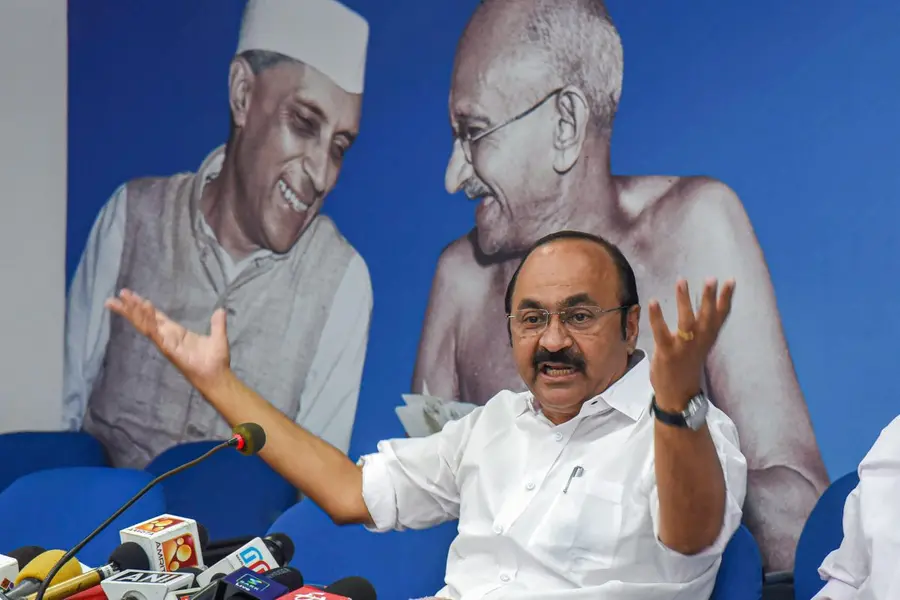
After nearly ten days of speculation following the Congress-led UDF’s sweeping victory in Kerala, the state’s political suspense has finally eased. What initially looked like a familiar replay of internal Congress rivalries has instead ended with a clearer-than-expected decision: the party has chosen VD Satheesan as its Chief Ministerial face.
Inside the legislature party, early numbers appeared to favour KC Venugopal, a senior national leader with strong organisational influence and considerable backing among MLAs. But by Thursday, the Congress high command had moved decisively in a different direction, signalling a preference for political cohesion over internal arithmetic.
A decision shaped by past experience
The choice has inevitably been viewed through the lens of Karnataka, where the Congress faced prolonged post-election uncertainty after its 2023 victory. There, organisational strategist DK Shivakumar—credited with rebuilding the party machinery—was ultimately passed over in favour of veteran leader Siddaramaiah, largely due to stronger backing among MLAs.
While that arrangement eventually produced a government, it also left behind lingering tensions, periodic speculation over leadership change, and a persistent undercurrent of factional unease.
Satheesan’s rise within Kerala politics
Satheesan’s elevation caps a steady rise within the Kerala Congress ecosystem. After the party’s 2021 Assembly defeat, he was appointed Leader of the Opposition—a moment widely interpreted as a generational shift in style and tone.
In the years that followed, Satheesan emerged as the most visible face of the Congress-led United Democratic Front (UDF) opposition. His combative approach towards the CPI(M)-led state government, particularly on governance and corruption issues, helped re-energise the party’s public messaging.
By the time of the UDF’s return to power, Satheesan had become closely associated with the revival narrative itself.
Internal equations and competing claims
Despite that public profile, internal dynamics within the party were far from straightforward. Reports suggested that a significant section of MLAs leaned towards KC Venugopal for the top post, citing his organisational strength and close proximity to the national leadership.
Another senior figure, Ramesh Chennithala, was also understood to have been in contention, reflecting the breadth of competing ambitions within the state unit.
ALSO READ | ‘Touched feet; danced to their tunes’: BJP alleges Muslim League influence in Kerala CM selection
This created a familiar dilemma for the Congress high command: whether to follow legislative support within the party or reward the leader most closely associated with the electoral resurgence.
Coalition considerations in Kerala
Unlike Karnataka, where internal Congress arithmetic largely dominated the equation, Kerala’s coalition structure added another layer of complexity. The Congress’s key ally, the Indian Union Muslim League, is known to play a significant role in shaping consensus within the UDF.
Avoiding a Karnataka-style outcome
Ultimately, the Congress appears to have drawn a clear lesson from its experience in Karnataka: even a victorious government can be politically distracted by unresolved leadership tensions.
By opting for Satheesan, the party has signalled a preference for perceived stability and public-facing leadership over internal numerical advantage within the legislature party.
In doing so, the Congress may have avoided the very scenario it has struggled with elsewhere: a victory overshadowed by its own internal contest.
Published: 14 May 2026, 05:35 pm IST
Related Topics
Disclaimer: Kindly avoid objectionable, derogatory, unlawful and lewd comments, while responding to reports. Such comments are punishable under cyber laws. Please keep away from personal attacks. The opinions expressed here are the personal opinions of readers and not that of Mathrubhumi.
