
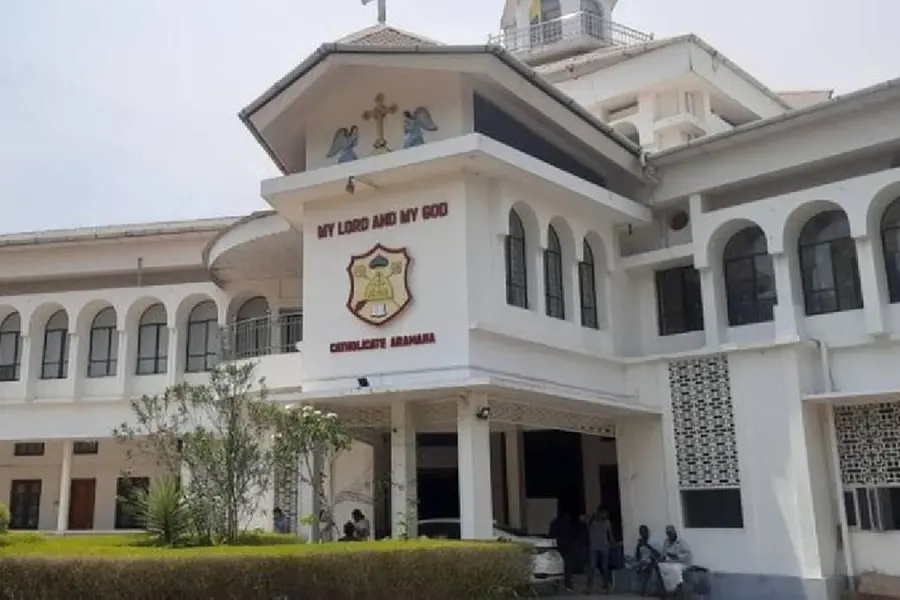
New Delhi: The head of the Malankara Orthodox Church, Baselios Marthoma Mathews III, has informed the Supreme Court that the funeral rites conducted in the cemeteries of the Malankara Church’s churches are in accordance with the Cemeteries Act passed by the Kerala Legislative Assembly. In an affidavit filed, he further clarified that those conducting funeral rites outside the churches or cemeteries may do so with a priest of their choice, based on their preferences.
In the Malankara Orthodox-Jacobite Church dispute, the Supreme Court had earlier clarified that the mandating acceptance of the 1934 Church Constitution for use of the Malankara Church’s cemeteries, schools and hospitals cannot be enforced. The Court had directed the Malankara Orthodox Church to provide a written assurance on this matter. Baselios Marthoma Mathews’ affidavit comes in response to this directive.
Sections 3 and 6 of the Cemeteries Act outline how funeral rites should be performed. Church priests are required to maintain a funeral registry according to the Cemeteries Act, 2020, and the 1934 Church Constitution. The Orthodox Church clarified that when relatives of the deceased approach the priest, details of the deceased, including the cause of death, are recorded in the registry.
The Orthodox Church also informed the Supreme Court that public facilities in schools and hospitals under the Orthodox Church are available for use by all, including the Jacobite faction. Furthermore, the affidavit noted the ruling in the K S Varghese case, which states that educational institutions under the Malankara Church must adhere to the provisions of education laws in Kerala.
The administration of schools under the Malankara Church follows the Kerala Education Act and regulations. Therefore, the issue of requiring the acceptance of the 1934 Church Constitution for the use of public facilities in these institutions does not arise, Baselios Marthoma Mathews confirmed. The affidavit also explained that no one had been denied admission to schools due to non-acceptance of the 1934 Church Constitution.
The Supreme Court also directed that hospitals under the Malankara Church cannot deny treatment to anyone based on their religious beliefs, caste, or other factors. The Orthodox Church Head informed the Court that there has been no denial of treatment in hospitals due to the non-acceptance of the 1934 Constitution. He also informed the Court that many people continue to receive free medical treatment at these hospitals.
Following the Supreme Court's ruling (mandating acceptance of the 1934 Church Constitution for use of Malankara Church’s cemeteries invalid), it was expected that Jacobite faction priests would be allowed to conduct funeral rites even in disputed church cemeteries.
Published: 15 Dec 2024, 02:30 pm IST
ABOUT THE AUTHOR

Related Topics
Disclaimer: Kindly avoid objectionable, derogatory, unlawful and lewd comments, while responding to reports. Such comments are punishable under cyber laws. Please keep away from personal attacks. The opinions expressed here are the personal opinions of readers and not that of Mathrubhumi.