
The Centre has circulated a key amendment to the Women’s Reservation Bill proposing a major expansion of Lok Sabha seats and paving the way for earlier implementation of 33% quota for women.
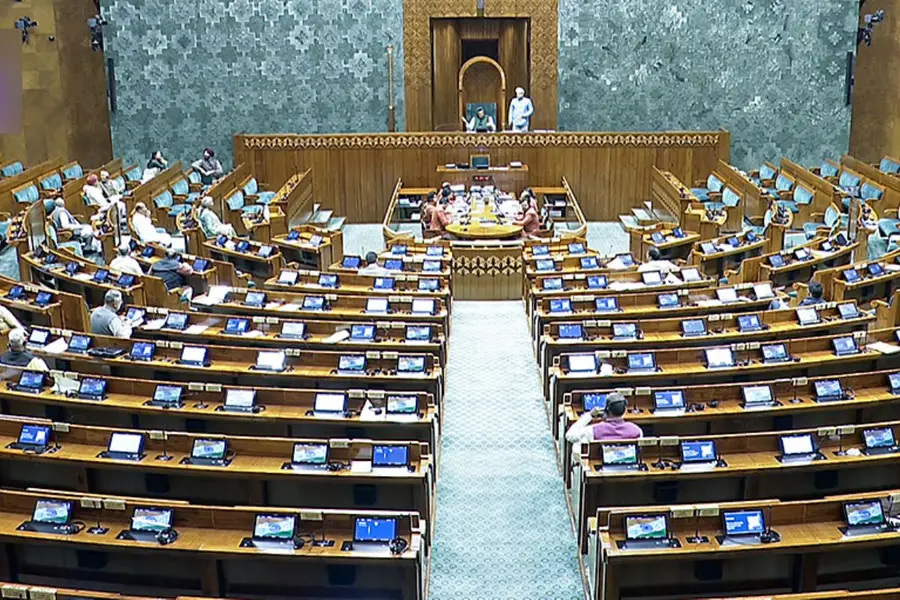
New Delhi: The Union government has circulated the draft of the Constitution (131st Amendment) Bill, 2026, proposing a sharp increase in the strength of the Lok Sabha to 850 members. This includes up to 815 members from States and a maximum of 35 from Union Territories.
At present, the Lok Sabha has 543 members, a number fixed after the last delimitation exercise. The proposed expansion is aimed at addressing population growth, improving representation, and creating space for implementing 33 per cent reservation for women without reducing existing seats.
Also Read

Background: decades-old freeze on delimitation
India’s parliamentary seat distribution has remained largely unchanged since the 1970s due to a freeze on delimitation. This freeze was originally introduced to encourage population control across states and has been extended multiple times. It is currently set to remain in place until after the first census conducted post-2026.
Over time, this has led to growing concerns among states with higher population growth, which argue that they are under-represented in Parliament compared to states that have successfully controlled population growth. The proposed expansion is an attempt to address this imbalance without penalising any region.
Key change: Redefining population
A major shift in the Bill is the redefinition of “population” for the purpose of seat allocation. The amendment gives Parliament the authority to decide which census data will be used.
This effectively allows the government to rely on earlier census data, such as the 2011 Census, instead of waiting for the next census cycle. This change is crucial for fast-tracking reforms, particularly the implementation of women’s reservation.
Link to the women’s reservation
The amendment is closely tied to the implementation of the Nari Shakti Vandan Adhiniyam, which provides for 33 per cent reservation for women in the Lok Sabha and state assemblies.
Earlier, this quota was linked to a future census and delimitation exercise, delaying its rollout. By delinking it from the next census, the government aims to implement the reservation before the 2029 general elections.
Role of the Delimitation Commission
The Bill strengthens the role of the Delimitation Commission by clearly stating that seat allocation and constituency boundaries will be determined based on census data and through a structured process led by the Commission.
It also introduces the rotation of reserved seats for women, ensuring that different constituencies benefit over time. The reservation is proposed to be in force for a fixed period, with the possibility of extension by Parliament.
Political push and timeline
Union Minister Kiren Rijiju has described the amendment as non-controversial and urged all political parties to support it. The government has convened a special Parliament session from April 16 to 18 to debate and pass the Bill, with the Bharatiya Janata Party issuing a whip to ensure full attendance.
Criticism and concerns
Despite the government’s push, the proposal has raised several concerns among political parties and experts. One major criticism is the decision to delink seat allocation from future census data. Critics argue that using older data like the 2011 Census may not accurately reflect current population realities, potentially affecting fair representation.
There are also concerns about how the increase to 850 seats will impact the balance of power between states. Southern states, which have achieved lower population growth, fear they could lose relative political influence compared to northern states with higher population growth if delimitation is carried out differently in the future.
Another issue being debated is whether increasing seats alone will ensure better governance and representation, or whether it could lead to logistical challenges in managing a much larger Parliament. Questions have also been raised about infrastructure, costs and the functioning of legislative processes with a significantly expanded House.
The bigger picture
The Bill represents one of the most significant proposed changes to India’s electoral framework in decades. It attempts to balance three major goals: expanding representation, correcting historical imbalances, and implementing women’s reservation.
However, the success of the reform will depend on how these competing concerns are managed. While it could mark a historic step towards greater inclusivity, it also opens up complex debates about federal balance, representation fairness and the future structure of Indian democracy.
Published: 14 Apr 2026, 06:17 pm IST
Related Topics
Disclaimer: Kindly avoid objectionable, derogatory, unlawful and lewd comments, while responding to reports. Such comments are punishable under cyber laws. Please keep away from personal attacks. The opinions expressed here are the personal opinions of readers and not that of Mathrubhumi.