
Mallikarjun Kharge has written to Prime Minister Narendra Modi alleging political motives behind the special Parliament sitting on the women’s reservation law amid ongoing state elections.
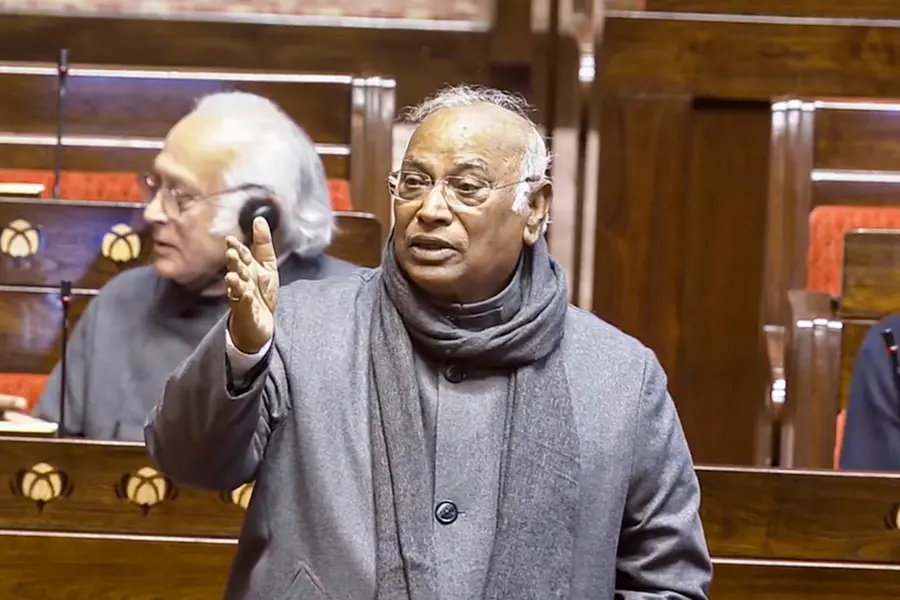
New Delhi: Congress president Mallikarjun Kharge has written to Prime Minister Narendra Modi, alleging that the timing of the special Parliament sitting amid ongoing state elections raises concerns that the government is seeking “political mileage” from the implementation of the women’s reservation law.
In his letter, Kharge said the move to convene a special session to discuss the Nari Shakti Vandan Adhiniyam, 2023, without prior consultation with Opposition parties, undermines consensus-building and the parliamentary process.
Kharge demands an all-party meeting on delimitation and constitutional amendments
Reiterating the Opposition’s stance, Kharge urged the government to convene an all-party meeting after April 29 to discuss the proposed delimitation exercise, which has been linked to constitutional amendments associated with the women’s reservation implementation.
He said Opposition parties have consistently demanded structured consultation on delimitation and related constitutional changes, arguing that such decisions have far-reaching implications for both the Centre and states.
Kharge’s letter was in response to Modi’s communication on holding a special parliamentary sitting from April 16 to debate the women’s reservation legislation.
Congress alleges a lack of transparency on delimitation-linked changes
In his letter dated April 11, Kharge said that although the women’s reservation law was passed unanimously in September 2023, the government had not clarified the framework for its implementation, particularly the delimitation process linked to it.
He said: “Without details of delimitation and other aspects, it would be impossible to have any meaningful discussion on this historic law.”
Kharge also alleged that claims of Opposition consultation did not reflect reality, stating that multiple parties had sought a post-election all-party meeting after April 29.
Congress questions the timing of the special Parliament session
The Congress chief said the decision to hold a special sitting during the ongoing state elections reinforces suspicions that the government is attempting to push through the legislation for electoral advantage rather than genuine women’s empowerment.
He further criticised the government’s past handling of major policy decisions, citing issues such as demonetisation, GST implementation, census delays, and fiscal federalism concerns.
Also Read| Lok Sabha clears Transgender Amendment Bill: What changes now for recognition rules
Background: Women’s reservation law and upcoming parliamentary plans
The exchange comes ahead of a three-day special session of Parliament, during which the government is expected to move forward with legislation to operationalise the women’s reservation law and expand the Lok Sabha strength to 816 seats, including 273 seats reserved for women.
The Congress has previously argued that linking delimitation with women’s reservation implementation could have “serious constitutional and political consequences” and requires wider consultation.
Opposition coordination ahead of the Parliament session
The Congress Working Committee has reportedly decided to convene a meeting of Opposition leaders ahead of the session to formulate a joint strategy, amid rising political tensions over the legislative agenda.
State elections are currently underway across several states, including West Bengal, Tamil Nadu, Kerala, Assam and Puducherry, adding to the broader political sensitivity surrounding the parliamentary developments.
PTI
Published: 12 Apr 2026, 09:37 am IST
Disclaimer: Kindly avoid objectionable, derogatory, unlawful and lewd comments, while responding to reports. Such comments are punishable under cyber laws. Please keep away from personal attacks. The opinions expressed here are the personal opinions of readers and not that of Mathrubhumi.
