
Aircraft circling before landing is often a routine air traffic management procedure rather than a sign of an emergency. As global air traffic increases, the International Civil Aviation Organization (ICAO) is calling for stronger international coordination to reduce unnecessary delays, fuel consumption and aviation emissions.
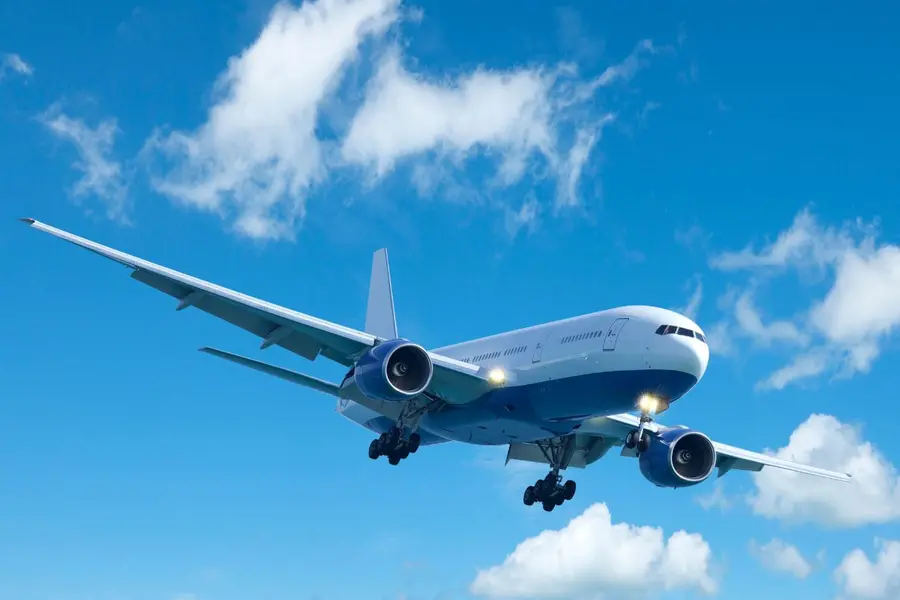
Imagine looking out of your aircraft window and seeing the airport below, only for the plane to turn away from the runway and begin circling. Minutes pass, but the aircraft does not seem to be getting any closer to landing.
For many air travellers, this can be an anxious experience. Is there bad weather? Has something gone wrong with the aircraft? Or is the airport too crowded to allow another landing?
Also Read

In many cases, the answer is simpler, the aircraft is simply waiting for its turn to land.
Such delays are a familiar part of modern air travel, as airports and airspace become increasingly busy. But the problem goes beyond passengers spending extra time in the air. Delays also mean additional fuel consumption, higher airline operating costs and more carbon emissions.
The United Nations' aviation agency, the International Civil Aviation Organization (ICAO), is now calling for countries to improve coordination of air traffic across national borders. The aim is to prevent delays before they build up, rather than manage the consequences after aircraft are already airborne.
Why do aircraft circle before landing?
When an aircraft circles or flies a repeated route while waiting for permission to land, it may be following what is known as a holding pattern. This is a standard air traffic management procedure that allows aircraft to remain safely airborne until a runway or arrival route becomes available.
Holding patterns may be necessary when too many aircraft are approaching an airport at the same time, bad weather reduces the airport's capacity, or an unexpected event disrupts normal operations.
However, not every aircraft seen circling is in a formal holding pattern. Air traffic controllers may also ask pilots to change direction or extend their route to maintain safe separation between aircraft and organise the landing sequence.
Commercial aircraft cannot hover in one place like helicopters. What may look like hovering from the passenger window is usually a holding pattern or an extended flight path.
These procedures are designed to maintain safety. The challenge is to reduce the need for unnecessary waiting through better planning and coordination.
How can countries prevent delays before they begin?
One of the key solutions is air traffic flow management, which involves airlines, airports, air traffic controllers and weather services sharing information and coordinating decisions.
The idea is similar to synchronising traffic signals on busy city roads. If one road is blocked, traffic signals elsewhere can be adjusted to prevent vehicles from building up at the same junction. In aviation, if an airport cannot accommodate additional arrivals for a period, departure times can be adjusted so that aircraft do not spend unnecessary time waiting in the air.
For example, if thunderstorms are expected to reduce an airport's landing capacity, airlines and air traffic management teams can plan for the disruption in advance. Some departures may be delayed at their origin airports, allowing aircraft to arrive closer to the time when landing capacity becomes available.
This approach requires timely information and cooperation between different parts of the aviation system. When one airport or country makes decisions without considering conditions elsewhere, delays can spread across the network.
ICAO Secretary General Juan Carlos Salazar has compared the problem to traffic lights operating independently, creating congestion instead of allowing traffic to flow smoothly.
How flight delays affect passengers and airlines
For passengers, delays can mean missed connections, longer journeys, uncertain arrival times and additional waiting at airports. A disruption lasting only an hour can affect several later flights because aircraft and crew are scheduled to operate multiple services throughout the day.
For airlines, the impact can be more expensive. Extra time in the air means additional fuel consumption, while delays on the ground can increase crew costs and disrupt aircraft utilisation. A late-arriving aircraft may also delay its next scheduled departure, creating a chain reaction across the network.
The scale of the problem is significant. According to EUROCONTROL, Europe's air navigation organisation, air traffic management delays cost the region an estimated $2.3 billion or more in 2025.
Better coordination could help airlines reduce these costs while giving passengers more reliable travel schedules. It could also allow airports and air traffic controllers to use available capacity more efficiently.
Better coordination can save fuel and reduce emissions
The benefits of improved air traffic management are already visible in some regions.
Collaborative trials supported by ICAO in the Americas saved more than 265,000 minutes of flying time in 2026, equivalent to approximately 4,400 hours. The initiative also reported savings of more than $38.9 million, around 13,330 tonnes of fuel and approximately 42,160 tonnes of carbon dioxide emissions.
In Europe, a EUROCONTROL programme that anticipated weather-related disruptions and congestion avoided around 3.1 million minutes of delay between May and August 2026. The programme was estimated to have saved $448 million and improved network stability by 14% on the most difficult days.
These results demonstrate how better planning can deliver benefits beyond punctuality. When aircraft spend less time holding or following inefficient routes, they can use less fuel and produce fewer emissions.
Reducing avoidable delays is therefore also relevant to aviation's wider ambition to achieve net-zero carbon emissions from international aviation by 2050.
Why is global cooperation still difficult?
Several countries, including Brazil and Colombia, have operated collaborative air traffic management systems for years. However, coordinating flights across international borders is considerably more complex.
An aircraft travelling between distant regions may cross several countries' airspace and pass-through different air traffic management systems. If information about weather, congestion, route restrictions or airport capacity is not shared in time, a disruption in one region can affect flights much further away.
ICAO says technology alone cannot solve the problem. Countries and aviation organisations must also be willing and able to share information in real time and coordinate operational decisions.
This is particularly important when geopolitical conflicts force airlines to avoid certain airspace. Rerouted flights can create congestion along alternative routes, placing additional pressure on airports and air traffic controllers.
ICAO, which has 193 member States, is working to establish common standards and support countries in improving coordination. New international rules on air traffic flow management are scheduled for November 2030, with regional workshops planned for 2027 to support implementation.
A busier sky needs smarter management
The challenge is likely to grow as air travel expands. ICAO projects that global air passenger numbers could reach 12.4 billion by 2050.
At the same time, the aviation system is becoming more complex. Drones, air taxis, rocket launches and the unplanned re-entry of objects from orbit will add to the demands on airspace management. Weather disruptions and geopolitical tensions will continue to create operational challenges.
For passengers, better coordination should mean more predictable journeys, earlier information about delays and a quicker recovery when disruptions occur.
For airlines, it could mean lower fuel bills, better aircraft utilisation and fewer knock-on delays. For the environment, it offers a practical way to reduce emissions without relying solely on new aircraft or alternative fuels.
What should passengers know when an aircraft circles?
A plane circling before landing does not automatically indicate a technical problem or an emergency. Often, the aircraft is waiting for a safe opportunity to land while pilots and air traffic controllers manage weather, traffic and runway conditions.
Pilots continuously assess the situation, including available fuel and expected delays. If conditions do not improve within the available operating limits, the aircraft may make another approach, continue holding or divert to a suitable alternate airport.
Even when an aircraft appears close to the runway, the final approach must meet the required safety conditions. If those conditions are not met, the crew may discontinue the approach and try again when appropriate.
For travellers, an extra turn in the sky can be frustrating, particularly when connecting flights or important appointments are at stake. But the immediate priority is always a safe landing.
The longer-term solution lies in making these delays less frequent through better information-sharing, smarter scheduling and stronger international cooperation. As skies grow busier, the ability to coordinate flights before congestion develops could make air travel more efficient for passengers, airlines and the environment alike.
Published: 30 Oct 2026, 09:23 am IST


ABOUT THE AUTHOR
Related Topics
Disclaimer: Kindly avoid objectionable, derogatory, unlawful and lewd comments, while responding to reports. Such comments are punishable under cyber laws. Please keep away from personal attacks. The opinions expressed here are the personal opinions of readers and not that of Mathrubhumi.