
Cockpit audio reveals critical seconds before Air India Flight 117 crashed, killing 270. Pilot confusion and fuel cutoff are key factors.
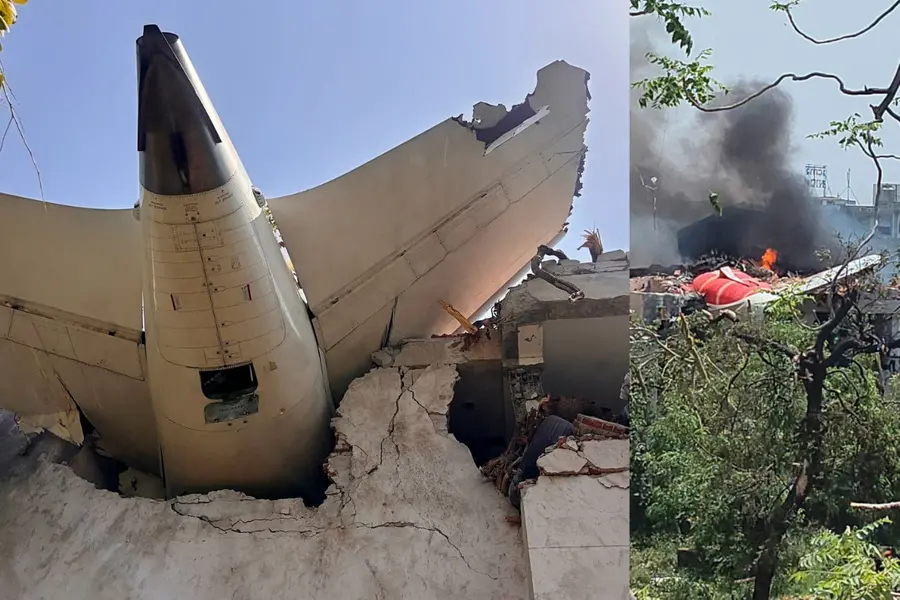
Ahmedabad: In the final, chilling seconds before Air India Flight AI-117 plunged into a medical student hostel near Ahmedabad airport, killing at least 270 people, a brief but revealing exchange between the two pilots captured a moment of confusion that may hold the key to India’s worst aviation disaster in decades.
According to a preliminary investigation report released Saturday by the Aircraft Accident Investigation Bureau (AAIB), cockpit voice recordings revealed one of the pilots urgently asking, “Why did you cut off?”, a question that was met with an immediate denial from the other.
This exchange occurred just seconds after both engine fuel control switches on the Boeing 787-8 Dreamliner were manually moved from ‘RUN’ to ‘CUTOFF’, cutting off the fuel supply and causing both engines to lose power shortly after takeoff from Ahmedabad on June 12.
What the flight recorders showed
The 15-page AAIB report, based on data from the Enhanced Airborne Flight Recorder (EAFR), indicates that the aircraft was inexplicably starved of fuel immediately after becoming airborne. While Dreamliners are equipped to continue takeoff with one functioning engine, the near-simultaneous shutdown of both proved catastrophic.
Moments later, both fuel switches were toggled back to ‘RUN’, suggesting a frantic attempt by the pilots to restart the engines mid-air. The aircraft’s automated systems initiated a relight and thrust recovery sequence, but by then, altitude and time had run out.
Seconds later, the voice recorder fell silent. One pilot was heard transmitting a MAYDAY distress call. When Air Traffic Control tried to confirm the call sign, there was no response. Radar then showed the aircraft descending rapidly.
Just 32 seconds in the air
The aircraft was airborne for only 32 seconds. It crashed just outside the airport perimeter wall, striking a hostel for medical students and exploding on impact. All but one of the 242 people on board perished, along with more than two dozen on the ground.
Who were the pilots of the Air India flight that crashed
The ill-fated flight was commanded by Captain Sumeet Sabharwal, a Line Training Captain with over 8,200 flying hours. His co-pilot, First Officer Clive Kundar, had logged around 1,100 hours. Both were deemed medically fit, adequately rested, and fully certified to operate the aircraft.
No signs of sabotage, but design concerns emerge
The AAIB report found no evidence of bird strikes, sabotage, or foul play. However, it referenced a prior FAA advisory concerning similar Boeing aircraft, particularly Model 737s, where fuel control switches were found installed without proper locking mechanisms.
Adding to the emergency, CCTV footage from the airport showed the deployment of the Ram Air Turbine (RAT), a backup device triggered in the event of total engine or hydraulic failure, just moments after takeoff.
Published: 12 Jul 2025, 08:03 am IST
Related Topics
Disclaimer: Kindly avoid objectionable, derogatory, unlawful and lewd comments, while responding to reports. Such comments are punishable under cyber laws. Please keep away from personal attacks. The opinions expressed here are the personal opinions of readers and not that of Mathrubhumi.
