
The Centre has informed the Supreme Court that WhatsApp has banned 9,400 accounts linked to digital arrest scams, as part of a wider crackdown involving multiple agencies.
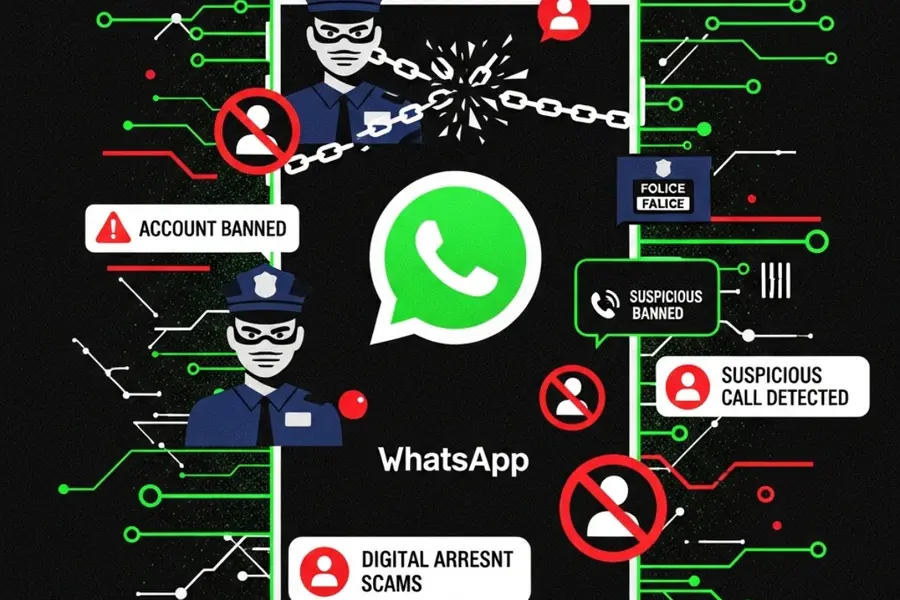
WhatsApp has banned 9,400 accounts linked to digital arrest scams since January 2026, the Centre informed the Supreme Court of India, highlighting a coordinated national crackdown on cyber fraud.
The action is part of a wider enforcement drive involving multiple agencies, including telecom regulators, financial authorities, and law enforcement bodies.
Also Read

What are digital arrest scams and why they are rising
Digital arrest scams are a form of organised cyber fraud where criminals impersonate police, courts, or government agencies to intimidate victims into transferring money. Fraudsters often use fake documents, video calls, and threats of legal action to create panic and force compliance.
Authorities have flagged a sharp rise in such cases across India, with scams often run through international networks and targeting vulnerable individuals, including senior citizens.
WhatsApp’s enforcement action and new safeguards
According to the status report submitted to the court, WhatsApp launched a dedicated investigation in January 2026 to track and dismantle these scam networks. The process involved identifying suspicious accounts, mapping their connections, and taking action at scale, resulting in 9,400 bans over a 12-week period.
To strengthen user protection, the platform is rolling out new safeguards, including:
Detection and removal of accounts using fake police or government logos
Warnings for calls from newly created or suspicious accounts
Measures to hide profile photos of unknown callers to prevent impersonation
These steps aim to reduce the ability of scammers to appear credible and manipulate victims.
Multi-agency response led by the Centre
The crackdown is being coordinated by the Ministry of Home Affairs through the Indian Cybercrime Coordination Centre (I4C), following directions issued by the Supreme Court earlier this year.
Key measures outlined in the report include:
- Faster blocking of fraudulent SIM cards within two to three hours of detection
- A proposed Biometric Identity Verification System (BIVS) for real-time tracking of SIM issuance
- A framework involving banks, telecom operators, and digital platforms to curb fraud
The Reserve Bank of India has also issued guidelines for banks to temporarily freeze suspicious transactions to prevent money laundering through mule accounts.
Role of investigative agencies and high-value fraud cases
The Central Bureau of Investigation (CBI) has set a threshold of Rs 10 crore loss for taking over digital arrest cases and has already re-registered major fraud investigations, including high-value cases from Gujarat and Delhi.
These scams often involve large financial losses, with some cases running into crores, underlining the scale and sophistication of the networks involved.
Policy push and what comes next
The Centre has urged the Supreme Court to direct faster implementation of proposed safeguards, including stricter SIM verification rules and compliance by telecom service providers.
The broader strategy focuses on combining technology, regulation, and inter-agency coordination to tackle cyber fraud more effectively. With new detection tools, faster response systems, and tighter financial controls, authorities aim to reduce both the frequency and impact of digital arrest scams across India.
(With PTI inputs)
Published: 28 Apr 2026, 02:29 pm IST
Related Topics
Disclaimer: Kindly avoid objectionable, derogatory, unlawful and lewd comments, while responding to reports. Such comments are punishable under cyber laws. Please keep away from personal attacks. The opinions expressed here are the personal opinions of readers and not that of Mathrubhumi.