
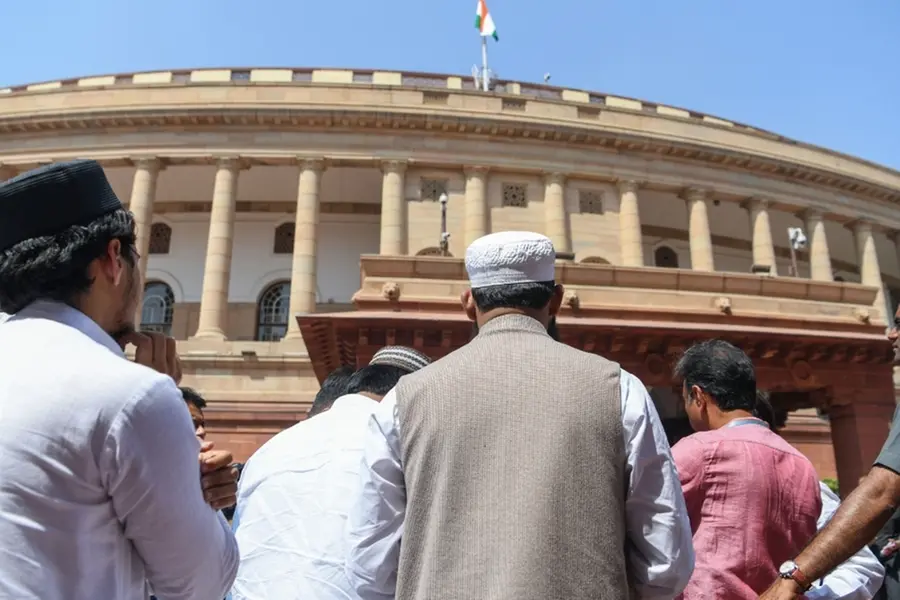
The Lok Sabha passed the Waqf (Amendment) Bill, 2025, early on Thursday after a 12-hour debate. The bill, approved by 288-232 votes, will now be introduced in the Rajya Sabha. It seeks to amend the Waqf Act of 1995, which governs properties donated for religious or charitable purposes in Islam.
What is Waqf?
A waqf is an Islamic charitable endowment where a donor permanently dedicates an asset, such as land, buildings, or other properties, for religious or philanthropic purposes. Once established, the asset becomes inalienable, meaning it cannot be sold, transferred, or inherited, and its generated income is used to benefit the designated charitable causes. This practice has been integral to Islamic societies, supporting institutions like mosques, schools, hospitals, and aiding the needy.
In secular India, various religious communities have systems for managing properties dedicated to religious and charitable purposes, similar to the concept of waqf. Hindu temple properties are often managed by Devaswom Boards or trusts, depending on regional laws. Sikh gurdwaras are administered by bodies like the Shiromani Gurdwara Parbandhak Committee (SGPC). Christian churches and institutions operate under trusts and societies governed by laws such as the Indian Trusts Act, 1882, and the Societies Registration Act, 1860. The Parsi community manages its assets through organisations like the Bombay Parsi Punchayet. While these systems function differently in structure and governance, they all involve property being set aside for religious or community welfare purposes.

Key changes proposed in the bill
The Waqf bill introduces several amendments, including:
- Inclusion of non-Muslims in Waqf bodies: Two non-Muslim members will be added to the Central Waqf Council and Waqf Boards.
- New donation rules: Only individuals who have practised Islam for at least five years can donate property to Waqf.
- Government land and Waqf ownership: Government land identified as Waqf will no longer belong to the government. The local Collector will determine ownership in case of disputes.
- Property rights for women: Women must receive their inheritance before a property is declared as Waqf. Special provisions will be made for widows, divorced women, and orphans.
- Change in dispute resolution: A senior government official, rather than a Waqf tribunal, will decide ownership disputes.
Government's justification for the bill
The NDA government argues that the bill is necessary to prevent irregularities in Waqf property management. Union Home Minister Amit Shah claimed that large amounts of land, including government and temple properties, had been transferred to Waqf due to loopholes in the law.
Shah cited examples, saying:
- "Properties in Delhi’s Lutyens zone went to Waqf, and they started taking over government land."
- "In Tamil Nadu, a 400-year-old temple property was declared as Waqf."
- "A five-star hotel land was given to Waqf for ₹12,000 a month."
Union Minister Kiren Rijiju stated that without the amendment, "even the building we are sitting in could have been claimed as Waqf property."
The government also claims that the 2013 amendment under the Congress-led UPA government unfairly expanded Waqf control over properties. According to Shah, "123 properties in Delhi’s Lutyens zone were handed over to Waqf just 25 days before elections."
Opposition’s concerns and resistance
The opposition, including Congress and AIMIM, argues that the bill is unconstitutional.
Congress MP Gaurav Gogoi called it "an assault on the Constitution," adding, "The aim is to dilute the Constitution, defame and disenfranchise minorities."
AIMIM chief Asaduddin Owaisi tore a copy of the bill in Parliament, stating, "I am tearing up the law like Mahatma Gandhi did with British law in South Africa."
Shiromani Akali Dal MP Harsimrat Kaur Badal criticised the BJP, saying, "The party which does not have a single Muslim MP is suddenly concerned about Muslims. Why?"
The opposition also raised concerns that: The inclusion of non-Muslims in Waqf bodies interferes with religious affairs, the five-year requirement for donations is restrictive and giving a government official final authority over property disputes could lead to bias.
Legal challenge and next steps
The All India Muslim Personal Law Board has announced plans to challenge the bill in court. Spokesperson Mohammad Mohsin warned, "We will organise protests like the farmers’ agitation if needed."
As the bill moves to the Rajya Sabha, its passage remains uncertain. If passed, it could significantly impact how Waqf properties are managed in India. The debate reflects wider political tensions over religious and property rights, with both sides standing firm on their positions.
The Waqf Amendment Bill 2024 has ignited significant debate due to its proposed changes to the traditional management of waqf properties. While the government asserts that the amendments aim to enhance transparency and inclusivity, critics argue that they may infringe upon the rights of the Muslim community and alter the historical governance of these endowments. As the bill progresses through the legislative process, it is essential to balance the objectives of reform with respect for religious practices and minority rights, ensuring that any changes serve the broader interests of all stakeholders involved.
Published: 03 Apr 2025, 07:06 am IST
Related Topics
Subscribe to our Newsletter
Disclaimer: Kindly avoid objectionable, derogatory, unlawful and lewd comments, while responding to reports. Such comments are punishable under cyber laws. Please keep away from personal attacks. The opinions expressed here are the personal opinions of readers and not that of Mathrubhumi.