
Prime Minister Narendra Modi launched the Ayush Mark at the WHO Global Summit on Traditional Medicine, positioning it as a global quality benchmark for Ayush products and services
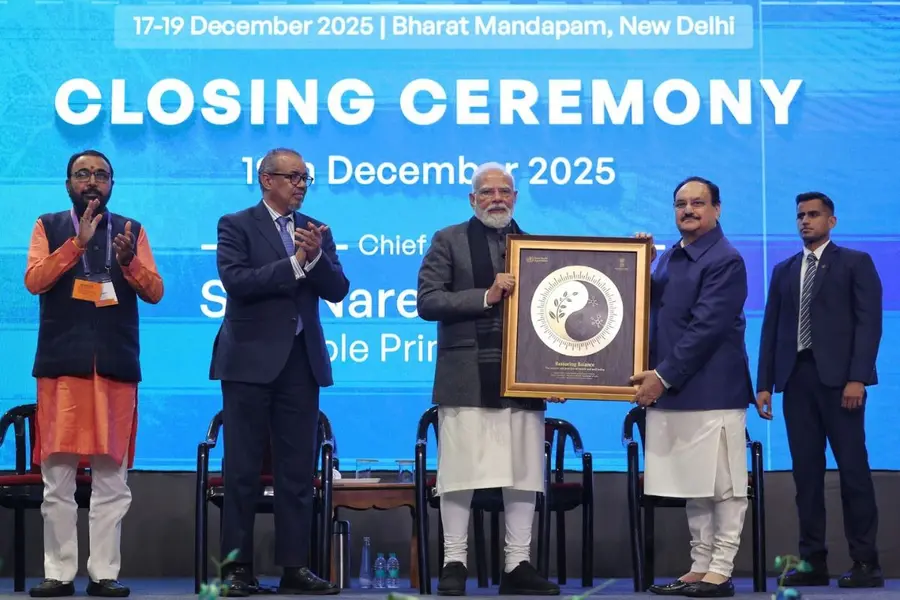
New Delhi: Prime Minister Narendra Modi on Friday launched the Ayush Mark at the Second WHO Global Summit on Traditional Medicine, positioning it as a global benchmark for quality assurance in Ayush products and services. The summit was held at Bharat Mandapam from December 17 to December 19, 2025, under the theme “Restoring balance: The science and practice of health and well-being”.
Addressing the closing ceremony, the Prime Minister highlighted India’s expanding leadership in advancing traditional medicine as an evidence-based, integrated and people-centred component of global health systems.
What is the WHO Global Summit on traditional medicine?
The Second WHO Global Summit on Traditional Medicine brought together experts from across the world to deliberate on the role of traditional medicine in modern healthcare systems. The event focused on strengthening scientific evidence, policy frameworks and global collaboration in traditional medicine practices.
Speaking at the summit, Prime Minister Modi said, “Over the past three days, experts from around the world in the field of traditional medicine have held meaningful discussions here. I am happy that India is providing a strong platform for this, and the WHO has also played an active role in this. It is our good fortune and a matter of pride for India that the WHO Global Centre for Traditional Medicine has been established in Jamnagar, India. The world entrusted us with this responsibility with great confidence at the first Traditional Medicine Summit.”
What is the Ayush Mark
The Ayush Mark is a certification label issued by the Ministry of Ayush for Ayurveda, Yoga and Naturopathy, Siddha, Unani and Homoeopathy products and services. It indicates adherence to quality manufacturing practices, the use of standard raw materials, and safety testing.
The Ayush Mark Certification Scheme has been operated by the Quality Council of India since 2009. While two levels of Ayush certification already existed, the newly launched Ayush Mark builds on them and aims to establish a global benchmark for traditional medical products and services.
What were the earlier Ayush certifications?
Earlier, Ayush certification included two levels: the Ayush Standard Mark and the Ayush Premium Mark.
The Ayush Standard Mark is based on Good Manufacturing Practices for Ayurvedic, Siddha and Unani medicines under Schedule T of the Drugs and Cosmetic Rules, 1945. The Ayush Premium Mark follows the World Health Organisation’s Good Manufacturing Practices guidelines for herbal medicines.
What other initiatives were launched by the Prime Minister?
Along with the Ayush Mark, Prime Minister Modi launched several key initiatives during the summit. These included the My Ayush Integrated Services Portal, known as MAISP, which will serve as the master digital portal of the Ayush Grid.
He also released a commemorative postal stamp on Ashwagandha, unveiled the WHO technical report on training in Yoga, and launched the book “From Roots to Global Reach: 11 Years of Transformation in Ayush.” The Prime Minister additionally presented the Prime Minister’s Awards for Outstanding Contribution to the Promotion and Development of Yoga, recognising national and international individuals and organisations for exemplary service.
World Health Organisation Director-General Dr Tedros Adhanom Ghebreyesus was present at the summit and praised Prime Minister Modi for championing traditional medicine at the highest global level.
Dr Tedros commended India for translating vision into action and described the country as a global leader in moving traditional medicine from heritage to evidence-informed practice. He highlighted major initiatives such as the establishment of the Ministry of AYUSH and the WHO Global Centre for Traditional Medicine in Jamnagar, noting that these efforts have helped integrate traditional medicine into health systems, research and policy while contributing to universal health coverage and sustainable development worldwide.
Published: 20 Dec 2025, 06:56 pm IST
Related Topics
Disclaimer: Kindly avoid objectionable, derogatory, unlawful and lewd comments, while responding to reports. Such comments are punishable under cyber laws. Please keep away from personal attacks. The opinions expressed here are the personal opinions of readers and not that of Mathrubhumi.
