
For decades, elections in West Bengal have been accompanied by allegations of violence, intimidation and political clashes, cutting across governments and parties.
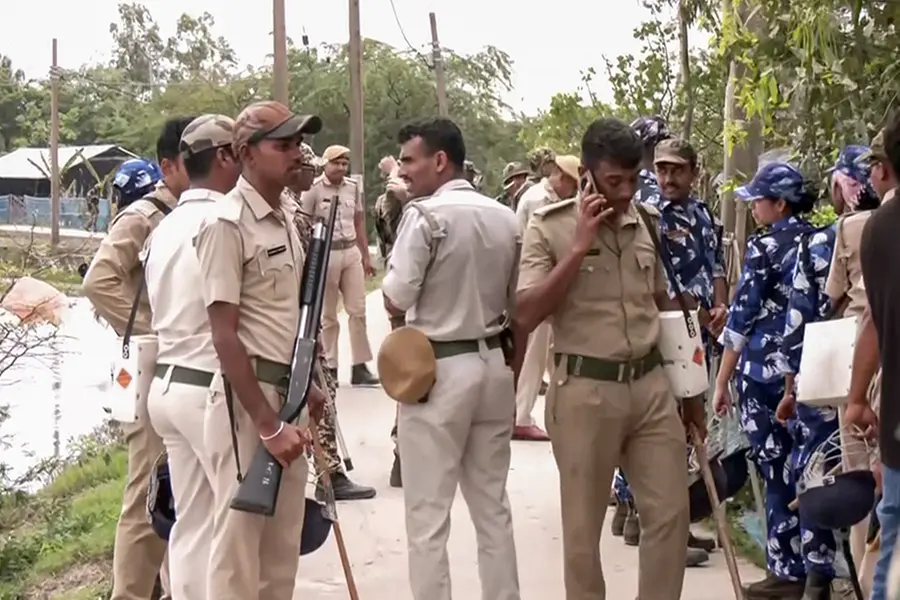
West Bengal has long witnessed a history of intense political conflict, with post-poll violence often emerging as a recurring feature of the state’s electoral landscape. Political clashes and displays of power have been associated with elections since the decades of Left rule in the state. Over the years, fear of violence has at times discouraged people from stepping out during elections, as rival party workers frequently engage in intimidation and clashes. Critics argue that such violence is often used as a tool to influence voter behaviour and create an atmosphere of fear during the polling period.
The Trinamool Congress came to power in May 2011, ending the Communist Party’s 34-year rule in West Bengal. However, political violence continued to remain a persistent feature of the state’s electoral landscape. During the 2011 Assembly elections and the subsequent transition of power, reports suggested that between 17 and 25 people lost their lives, alongside allegations of physical and sexual assaults. According to lists released by CPM leaders, more than 150 party workers were allegedly killed between May 2011 and July 2016.
During this period, the Lok Sabha elections in the state also witnessed incidents of violence. The Election Commission recorded cases in which local residents, including people not affiliated with any political party, were injured in bomb attacks and incidents of post-poll vandalism. As such incidents continued over the years, elections increasingly became associated with fear among many residents. Similar scenes were reported during the 2018 panchayat elections, when armed party workers were allegedly seen near polling booths, and incidents of ballot boxes being damaged after miscreants forcibly entered booths were also reported.
Also read | Suvendu Adhikari’s personal secretary reportedly shot dead in West Bengal
During the 2019 Lok Sabha elections, the BJP emerged as a major challenger to the Trinamool Congress, expanding its political presence in the state and intensifying the rivalry between the two parties. The elections witnessed widespread clashes, particularly in parts of North Bengal, where reports suggested that more than 700 people, including civilians and party workers, were injured in incidents of violence. The situation further escalated during the Assembly election, when the TMC returned to power for a third consecutive term, a period that went on to become one of the most extensively documented phases of post-poll violence in West Bengal.
During the 2023 panchayat elections, incidents of violence reportedly began even before polling day, highlighting the deepening political tensions in the state. Reports suggested that more than 40 people lost their lives during the election period, while clashes intensified among the Trinamool Congress, BJP and CPM, as opposition parties attempted to regain political ground in West Bengal.
Also read | From 215 to 80: The brutal anatomy of the Trinamool Congress’s institutional collapse
In the 2026 West Bengal Assembly elections, held in two phases on April 23 and 29, the BJP secured a sweeping victory by winning 207 of the 294 seats, while the Trinamool Congress was reduced to 80 seats. The results, declared on May 4, marked a major political setback for the TMC after 15 years in power. Following the outcome, TMC chief Mamata Banerjee alleged that the elections had been rigged by the central government and rejected the results.
It didn’t take much time for the chaos to start; right after the day of the results, the TMC union office in New Market was demolished and burnt to the ground, and other structures in New Market were destroyed by bulldozers. Banerjee claims that BJP workers are targeting the Trinamool Bhavan and Abhishek Bhavan, creating tension, and in areas such as Jiaganj and Murshidabad, a decades-old Lenin statue was vandalised. Following this, the Chief Election Commissioner Gyanesh Kumar issued strict orders to arrest those involved in both the post-poll violence and vandalism. After which, 443 arrests were made for those involved in the cases of post-poll violence. Continuous patrolling was done in several areas by the Director General of police (DGP) Siddh Nath Gupta, Police Commissioners, and District Magistrates to restrain any form of violence from taking place. Since May 4, more than 200 FIRs have been registered that showcased various acts of violence and destruction of public properties.
According to the NCRB report that came out in 2021, West Bengal records the highest number of political murders in India. In this year’s election, a total of 4 killings took place; 2 party workers were reported dead on the side of the BJP, while TMC claims that 2 of their party people were beaten to death, accusing the BJP of this murder.
But then again, other than using violence as a measure to win and take the lives of their competitors, is Bengal moving forward in politics, or are they moving backwards by the BJP coming to power and pushing TMC to the bottom, the same place they pushed CPM to in 2011?
Published: 07 May 2026, 09:39 pm IST
Related Topics
Disclaimer: Kindly avoid objectionable, derogatory, unlawful and lewd comments, while responding to reports. Such comments are punishable under cyber laws. Please keep away from personal attacks. The opinions expressed here are the personal opinions of readers and not that of Mathrubhumi.
