
TVK has shown particular strength in Chennai regions, traditionally dominated by the DMK, while also gaining ground in key segments across the state.
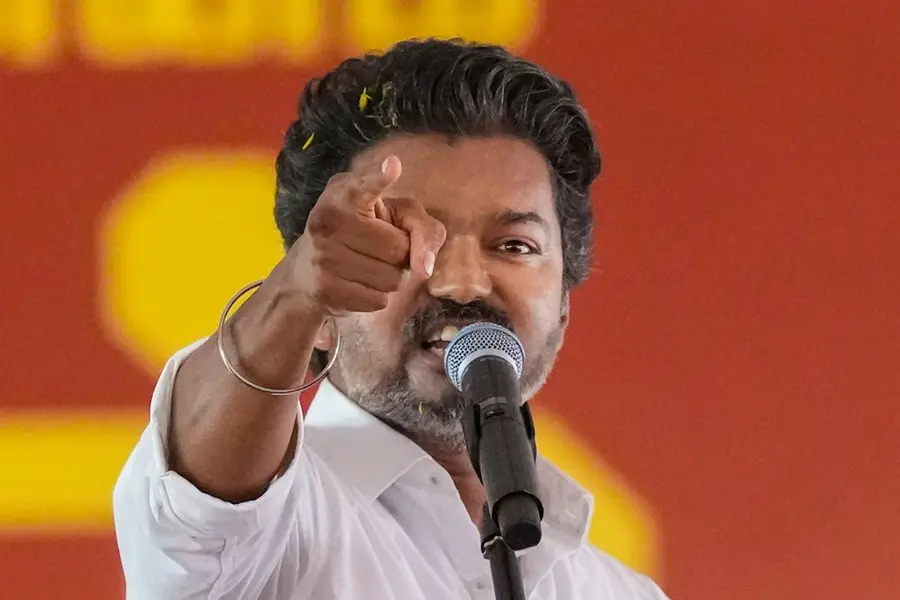
Chennai: After nearly three hours of counting in the Tamil Nadu Assembly election, actor-politician Vijay’s Tamilaga Vettri Kazhagam (TVK) has surged ahead of both Dravidian majors, marking what appears to be a politically historic early trend that aligns with the actor’s own campaign narrative referencing the watershed elections of 1967 and 1977.
Also read | TN polls: What is the magic number for Vijay’s TVK to form government?
During his campaign, Vijay had drawn repeated parallels to the elections of 1967 and 1977—two landmark moments in Tamil Nadu political history that reshaped the state’s power structure. In 1967, Dravida Munnetra Kazhagam (DMK), led by C.N. Annadurai, formed the first non-Congress government in the state after independence. A decade later, in 1977, M.G. Ramachandran (MGR) broke away from DMK and led the AIADMK to a historic victory, dislodging the M. Karunanidhi-led government and establishing a new political order.
Now, early counting trends suggest a similar disruption may be unfolding once again in the “Dravidian heartland,” with TVK emerging as a major challenger in constituencies long considered strongholds of the DMK and AIADMK. The party is reportedly leading in 98 constituencies, positioning itself ahead of both established Dravidian parties in the initial rounds of counting.
TVK has shown particular strength in Chennai regions, traditionally dominated by the DMK, while also gaining ground in key segments across the state. According to early trends, the party is ahead in constituencies including Ponneri, Tiruvallur, Poonamallee, and Avadi.
In a major setback for the ruling DMK, several senior leaders are reportedly trailing. Chief Minister M.K. Stalin is said to be behind TVK’s VS Babu by 2,277 votes in Kolathur, while Deputy Chief Minister Udhayanidhi Stalin is also trailing in Chepauk–Thiruvallikeni, according to multiple reports. Overall, the DMK is leading in around 35 constituencies.
Reports also suggest that as many as 15 cabinet ministers, including Stalin, are trailing in early trends, raising concerns within the party camp. The DMK’s performance appears to be under pressure despite its welfare-driven “Dravidian model” governance pitch over the past five years.
Meanwhile, the AIADMK, led by Edappadi K. Palaniswami, is leading in 63 seats, with the party chief himself ahead in Edappadi by over 10,000 votes. The party is also ahead in constituencies such as Katpadi and Gudiyattam. Its ally PMK is leading in six segments, while the BJP is ahead in just one constituency, Thali, and trailing in 26 others.
In Tiruchirappalli East, Vijay is reportedly ahead by over 3,000 votes after two rounds of counting, further strengthening TVK’s early momentum.
The momentum behind the TVK was further electrified by a stunning projection from Axis My India, which sent ripples through the political establishment by predicting a potential victory for the actor.
The survey suggests the TVK could secure between 98 and 120 seats, potentially pushing the ruling DMK into a desperate struggle for survival and relegating the AIADMK to a distant third with just 22 to 23 seats.
Should these figures hold as the Electronic Voting Machine (EVM) rounds progress, it would mark the first time in over half a century that a non-Dravidian giant has stood on the threshold of the Secretariat.
Echoes of MGR: A scripted ascent
The parallels between Vijay and MGR are being analyzed with clinical intensity. Both leaders used the silver screen as a strategic launching pad, cultivating a "saviour" image through protagonist roles that emphasized heroism, social justice, and poverty alleviation.
Much like MGR’s "Puratchi Thalaivar" (Revolutionary Leader) brand, Vijay has successfully weaponized his "Thalapathy" (Leader) moniker, building a massive youth fan base that views him as a real-life extension of his cinematic characters.
Beyond the screen, the two share a history of deep-pocketed public service. Vijay has spent a significant portion of his earnings on philanthropic initiatives, fostering an emotional bond with the rural and suburban masses that mirrors the mother-son and brother-sister themes MGR utilized in the 1960s and 70s.
However, while MGR was a product of the formal Dravidian movement under C.N. Annadurai, Vijay’s path has been a swifter, more independent ascent, fueled by a modern celebrity culture that bridges the gap between the theater and the ballot box.
Ideological "Phantom" or New Vision?
Despite the euphoria in the streets, seasoned political observers remain skeptical of the TVK’s long-term stability. Critics argue that while traditional parties like the DMK and AIADMK possess a clear "Tamil First" conviction, Vijay’s ideology appears to be built on a "phantom."
While he frequently invokes social justice and the need to free the state from the "clutches" of the established duopoly, independent analysts point out a perceived lack of concrete policy action, citing his handling of recent public incidents as a point of concern.
The final verdict remains subject to a major wildcard: the Special Intensive Revision of electoral rolls, which saw the removal of 67 lakh names. It remains to be seen whether this cleanup will dampen the youth surge or if the 85.10% voter turnout signals a mandate that is immune to bureaucratic variables.
Published: 04 May 2026, 11:08 am IST
Related Topics
Disclaimer: Kindly avoid objectionable, derogatory, unlawful and lewd comments, while responding to reports. Such comments are punishable under cyber laws. Please keep away from personal attacks. The opinions expressed here are the personal opinions of readers and not that of Mathrubhumi.
