
The government says the amendment comes during the 150th anniversary of the composition of Vande Mataram, written by Bankim Chandra Chattopadhyay in 1876 and published in his novel Anandamath in 1882
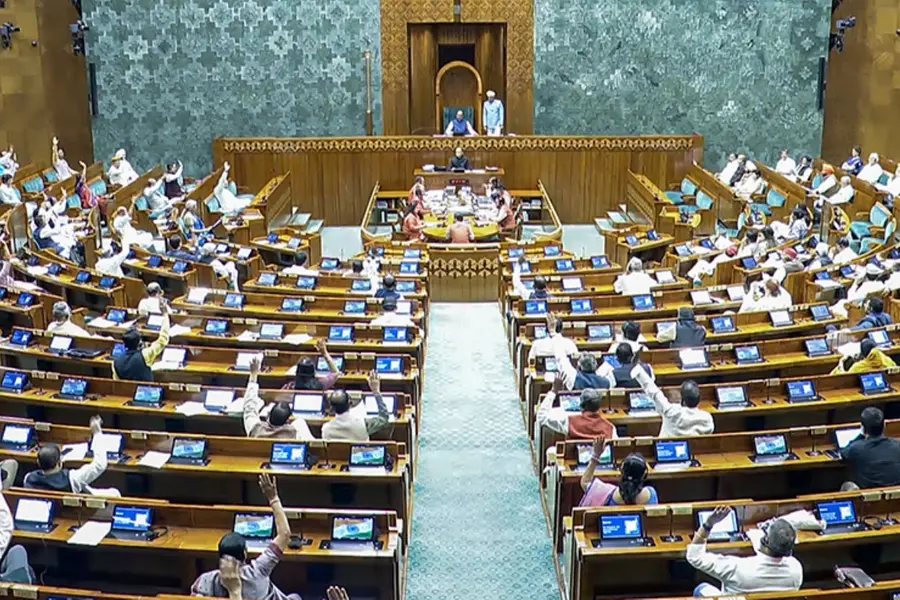
The Centre has introduced the Prevention of Insults to National Honour (Amendment) Bill, 2026, proposing to give Vande Mataram the same legal protection currently enjoyed by the National Anthem, Jana Gana Mana.
If passed, the Bill would make it a criminal offence to intentionally insult, obstruct or disrupt the singing of the National Song, carrying a punishment of up to three years' imprisonment, similar to offences involving the National Anthem.
The proposal, introduced during the 150th anniversary year of Vande Mataram, has reignited debate over freedom of expression, religious rights and the distinction between the National Anthem and the National Song.
What does the Bill propose?
The Bill seeks to amend the Prevention of Insults to National Honour Act, 1971, which currently protects the National Flag, the Constitution and the National Anthem.
At present, Section 3 of the Act makes it an offence to intentionally prevent the singing of the National Anthem or cause a disturbance during its rendition. Conviction can lead to imprisonment of up to three years.
The amendment proposes extending the same protection to Vande Mataram. This means that anyone who deliberately prevents, disrupts or causes a disturbance while the National Song is being sung could face the same criminal penalties.
A key aspect of the proposal is the use of the word "intentionally". As with the National Anthem, authorities would have to establish deliberate disruption or disrespect, rather than accidental interruption.
How will the law change?
The 1971 Act currently contains no provision specifically protecting the National Song.
If Parliament passes the amendment, law enforcement agencies would be able to register criminal cases for offences related to Vande Mataram under the Act itself, instead of relying on broader provisions of the Bharatiya Nyaya Sanhita.
The amendment would effectively place the National Song and National Anthem on an equal legal footing when it comes to protection against deliberate insults or disruption.
Why is Vande Mataram different from the National Anthem?
Although both hold national significance, Jana Gana Mana and Vande Mataram have different constitutional and legal status.
Jana Gana Mana was adopted as India's National Anthem on January 24, 1950. On the same day, the Constituent Assembly recognised Vande Mataram as the National Song, acknowledging its historic role in India's freedom movement.
However, unlike the National Anthem, the National Song has never received statutory protection under the 1971 Act. Nor is there any law requiring it to be played at official events.
Recently, however, the Union government directed that Vande Mataram be played before Jana Gana Mana at events where both are performed, signalling greater official emphasis on the song.
Why has the Bill been introduced now?
The government says the amendment comes during the 150th anniversary of the composition of Vande Mataram, written by Bankim Chandra Chattopadhyay in 1876 and published in his novel Anandamath in 1882.
The anniversary has been marked through parliamentary discussions and government events over the past year.
The proposal also comes against the backdrop of political debates surrounding the use of Vande Mataram, particularly after the West Bengal Assembly elections, where the issue frequently featured in political exchanges.
Why is the Bill controversial?
While supporters argue that the National Song deserves the same legal protection as the National Anthem, critics say the proposal raises important constitutional questions.
1. What amounts to an 'insult'?
The Bill does not define what would constitute an insult or disruption beyond using the term "intentionally".
Legal experts argue that this could leave room for varying interpretations and potential misuse.
2. Freedom of speech concerns
Article 19 of the Constitution protects freedom of speech and expression, which courts have recognised also includes the right not to speak in certain circumstances.
Critics argue that criminalising conduct relating to the National Song without clearly defining prohibited acts could have a chilling effect on legitimate political expression, academic discussion or public debate.
3. Religious freedom
Vande Mataram has long been a subject of debate because some of its later stanzas invoke imagery associated with Hindu goddesses.
During the freedom movement, sections of the Muslim community objected to these portions. In response, national leaders including Mahatma Gandhi and Jawaharlal Nehru agreed that only the first two stanzas would be used as the National Song.
The issue also recalls the Supreme Court's 1986 judgment in Bijoe Emmanuel v. State of Kerala, where the court held that school students belonging to the Jehovah's Witness faith could not be compelled to sing the National Anthem because it violated their freedom of religion.
Whether similar constitutional protections would apply to Vande Mataram under the proposed law remains an open legal question.
What happens next?
The Bill will now be debated in Parliament before any decision is taken on its passage.
If enacted, it would mark the first time that Vande Mataram receives specific statutory protection under the Prevention of Insults to National Honour Act, placing it alongside the National Anthem in terms of legal safeguards while also opening fresh debates on constitutional rights, free speech and religious freedom.
Published: 21 Jul 2026, 09:29 am IST
Related Topics
Disclaimer: Kindly avoid objectionable, derogatory, unlawful and lewd comments, while responding to reports. Such comments are punishable under cyber laws. Please keep away from personal attacks. The opinions expressed here are the personal opinions of readers and not that of Mathrubhumi.
