
While emphasising that defining the national song is the state's prerogative, the court focused on safeguarding fundamental rights.
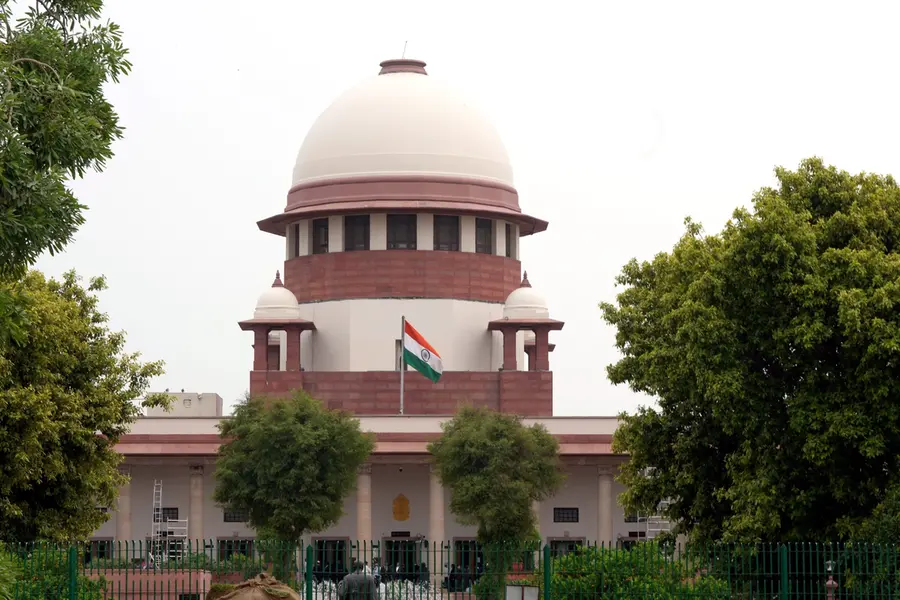
New Delhi: A "conscientious objector" should not face punishment for declining to sing Vande Mataram, the Supreme Court informed the Centre on Tuesday while urging it to observe a 1986 precedent that safeguarded children who declined to sing the national anthem on grounds of personal conscience.
The bench, led by Chief Justice of India Surya Kant, was hearing a challenge filed by Carnatic vocalist T M Krishna against legislation mandating the singing of all six stanzas of Vande Mataram, contending that the final four stanzas compromise the nation's secular framework.
Seeking the Centre's response, the bench, which included Justices Joymalya Bagchi and V Mohana, stated it expected the legal principles established by the apex court's 1986 Bijoe Emmanuel vs State of Kerala ruling to apply to the updated law.
In that landmark case, the court protected pupils who respectfully declined to perform the national anthem based on religious conscience.
"... We are not inclined to issue notice. But we would expect that the law of the land, as declared by this court in Bijoe Emmanuel, will govern the (amended) Act," Justice Bagchi remarked orally to Solicitor General Tushar Mehta.
"What is the national song is not in dispute. The declaration of law in the Bijoe Emmanuel is not yet questioned. It is for the democratic state to decide what is the national song, whether two stanzas or four stanzas. But nobody who feels an infraction of Article 25 and 26 rights (fundamental right to freedom of religion) or a conscientious objector would be subjected to (penal consequences)," Justice Bagchi said.
Krishna's petition challenges Section 3 of the Prevention of Insults to National Honour Act, 1971, as amended in 2026, alongside Ministry of Home Affairs directives issued on 28 January and 9 July 2026.
The updated Section 3 carries penalties of up to three years' imprisonment, a fine, or both for intentionally preventing the singing of the National Anthem or national song, or disrupting a gathering assembled for such performance.
Justice Bagchi remarked that assessing national sentiment or cultural ties surrounding Vande Mataram falls outside the judiciary's purview, noting such determinations remain the prerogative of the state.
The bench further indicated that defining the composition of the national song is not a judicial function, clarifying that it would focus on whether the statutory rights of a "conscientious objector," specifically those objecting on religious grounds, remain safeguarded under the law.
The court, Justice Bagchi affirmed, is not reviewing what ought to constitute the national song.
Senior advocate S Muralidhar, representing Krishna, argued that the amendment fails to define the term "national song," creating ambiguity and potential for misuse. He stated that the statutory modification was passed without specifying which text or stanzas form the recognised version.
He further noted that the Home Ministry instructions were promulgated via an un-gazetted office memorandum, arguing that executive directives had altered the traditional understanding of Vande Mataram.
When Justice Bagchi noted that Vande Mataram has historically been recognised as the national song, Muralidhar clarified that such recognition historically pertained to its initial two stanzas.
The senior lawyer also contended that the legislative amendment had been enacted hastily without securing a broader national consensus.
The Solicitor General urged the bench against issuing formal notice on the petition, arguing that doing so could "sensationalise" the matter.
Krishna's filing contends that applying criminal penalties to the national song, alongside directives mandating all six stanzas, raises crucial issues regarding freedom of expression, freedom of conscience, equality, religious freedom, and secularism.
The petition explicitly challenges the requirement treating the six-stanza version as the official national song and the directive that Vande Mataram precede the national anthem whenever both are performed.
A sharp exchange occurred between Muralidhar and the Solicitor General during the hearing.
Mehta opposed the petitioner's arguments, stating that "secularism cannot be this narrow". He later remarked that "law-making cannot be as per Naxalites idea".
Muralidhar strongly objected to the remark and demanded its retraction, stating such comments were unfitting for a senior law officer.
Mehta stated his reference applied to those who disregarded established legislative processes. Following the proceedings, Muralidhar again called for a retraction, which the Solicitor General declined.
"I can repeat what I said. One has to go by law. I am not sorry about what I said. I said that is the constitutional way, not what the Naxalite wants. And I am not sorry about it," the solicitor general said.
Muralidhar subsequently accused the solicitor general of "playing to the gallery".
The bench did not intervene in the altercation, noting it was not taking formal record of the remarks.
PTI
Published: 22 Sept 2026, 07:18 pm IST
ABOUT THE AUTHOR

Related Topics
Disclaimer: Kindly avoid objectionable, derogatory, unlawful and lewd comments, while responding to reports. Such comments are punishable under cyber laws. Please keep away from personal attacks. The opinions expressed here are the personal opinions of readers and not that of Mathrubhumi.