
President Droupadi Murmu has returned Bengal’s ‘Anti-Goonda Bill’ after the Centre flagged an overlap with existing narcotics and preventive detention laws.
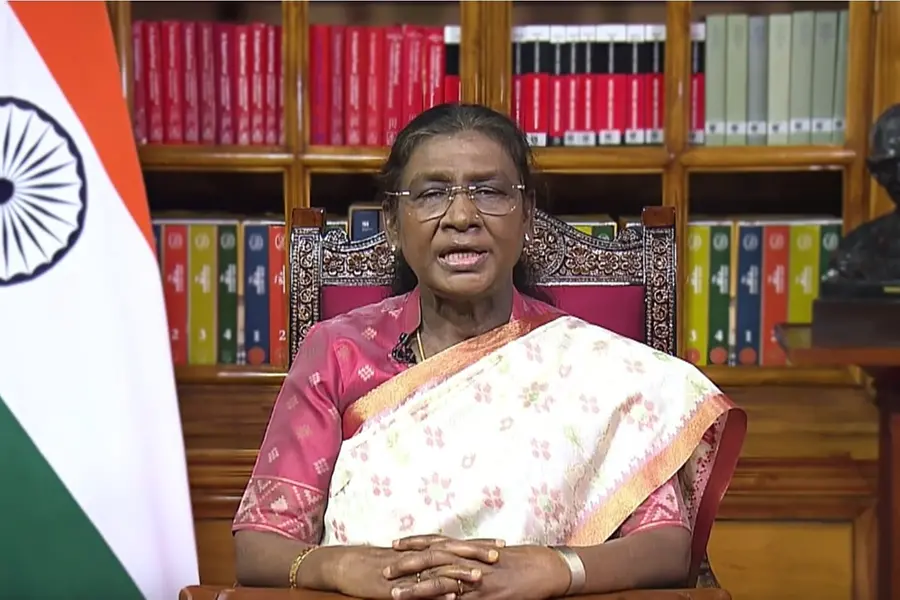
Why did President Droupadi Murmu return West Bengal’s ‘Anti-Goonda Bill’ instead of giving her assent to the legislation passed by the state Assembly?
The key issue flagged by the Centre is an overlap between the proposed law and existing central legislation governing narcotics-related offences and preventive detention.
The President has returned the West Bengal Public Safety and Control of Anti-Social Activities Bill, 2026, for reconsideration after the Union Home Ministry raised concerns over provisions dealing with offences under the Narcotic Drugs and Psychotropic Substances (NDPS) Act, 1985.
Under the proposed legislation, a person who commits, attempts to commit, abets, promotes, finances or facilitates an offence punishable under the NDPS Act could be brought within the definition of a ‘goonda’.
The Centre has argued that this provision could overlap with the preventive detention framework already provided under the Prevention of Illicit Traffic in Narcotic Drugs and Psychotropic Substances Act, 1988, or PITNDPS Act.
The central law specifically deals with preventive detention of people involved in illicit trafficking of narcotic drugs and psychotropic substances.
According to the Centre’s note, the proposed state provision could consequently create a parallel preventive detention mechanism for drug-related activities.
It has also raised the issue of possible repugnancy under Article 254 of the Constitution, which deals with conflicts between central and state laws.
The Centre has therefore advised the state to remove the reference to offences under the NDPS Act from Section 2(d)(iii)(B) of the proposed legislation to avoid duplication and overlap with the existing central legal framework.
The development comes as the state government was preparing to implement the legislation.
A senior state official said the bill could be brought back before the Assembly after the necessary changes are made, following which it could again be sent to the President for assent.
The ‘Anti-Goonda Bill’ was introduced by the state government in June with the stated objective of curbing anti-social activities.
Besides defining who can be classified as a ‘goonda’, the legislation contains provisions allowing authorities to restrict a person’s entry into a specified area or district for up to one year.
The bill has been controversial since its introduction, with Opposition parties raising concerns over its preventive detention provisions and alleging that the legislation could be misused against political opponents.
Chief Minister Suvendu Adhikari had assured the Opposition that the law would not be used for political vendetta and that the administration would act strictly according to the law.
The legislation had also faced a legal challenge before the Calcutta High Court.
On August 6, a division bench comprising Justice Tapabrata Chakraborty and Justice Partha Sarathi Chatterjee dismissed three public interest litigations challenging the bill, observing that the petitions were premature because the legislation had not yet received the President’s assent.
The issue had also triggered confusion over whether the proposed law had already come into force.
CM Adhikari had previously claimed on several occasions that the Governor had given assent to the legislation and that it had become law.
He had also claimed that it had been invoked against those accused of orchestrating violence during the July 24 protest march at Esplanade.
However, the state government later told the High Court that the bill was still awaiting the President’s assent and had therefore not become law.
The court subsequently observed that the petitions challenging its validity were premature until the required presidential assent was granted.
With President Murmu now returning the ‘Anti-Goonda Bill’ for reconsideration, the state government will first have to address the Centre’s objections, particularly the provision concerning NDPS offences, before the legislation can be reconsidered and sent back for presidential assent.
Published: 25 Sept 2026, 05:40 pm IST
ABOUT THE AUTHOR

Related Topics
Disclaimer: Kindly avoid objectionable, derogatory, unlawful and lewd comments, while responding to reports. Such comments are punishable under cyber laws. Please keep away from personal attacks. The opinions expressed here are the personal opinions of readers and not that of Mathrubhumi.