
Tamil Nadu forest department panel proposes measures to tackle human–wildlife conflict in Valparai, focusing on estate safety, waste management, lighting, and awareness for migrant workers.
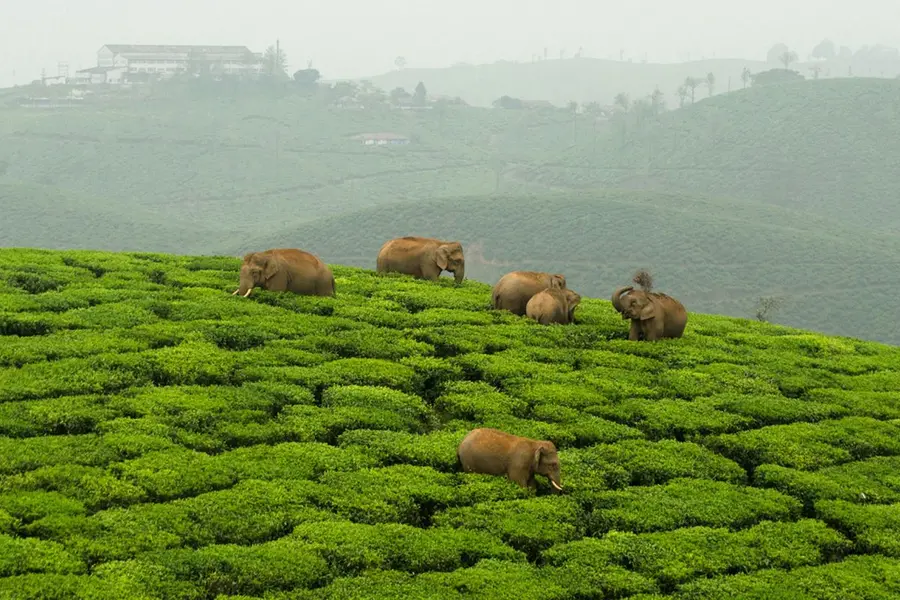
Chennai: A six-member committee led by the Tamil Nadu Forest Department has initiated coordinated consultations with government departments and estate authorities to address the rising human–wildlife conflict in the Valparai plateau. The panel is in the process of finalising its recommendations for submission to the state government.
The committee, headed by Additional Principal Chief Conservator of Forests S Rama Subramanian, held a review meeting with officials from the municipality, revenue, police and labour departments at the Valparai Municipal Commissioner’s office. Discussions focused on upgrading tea estate infrastructure, strengthening waste management systems, and introducing preventive measures to reduce encounters between humans and wild animals.
Officials said the committee aims to complete its report by the end of the week, although the government has allowed a total of 15 days for submission.
As an immediate directive, the labour department has been instructed to ensure that estate managements provide essential amenities such as adequate lighting, functional toilets and a safe living environment, especially for migrant workers residing near forest fringes. Poor infrastructure and low visibility around residential areas were identified as major contributors to wildlife attacks.
Municipal authorities have been asked to remove accumulated garbage promptly to prevent wild animals from entering human habitations. The municipality is also tasked with enhancing street lighting, sanitation, and solid waste management, including the proper disposal of waste generated by tourists visiting Valparai.
Over the past week, committee members visited several tea estates, including Iyerpadi estate, where an eight-year-old boy was recently killed in a leopard attack. Other estates were inspected to assess the availability of basic facilities and worker safety arrangements.
The panel aims to replicate the Sakthi estate model, where comprehensive amenities are provided to workers across other estates in the region. NGO representatives have been engaged to conduct awareness programmes for migrant workers, educating them on safety practices and preventive measures to avoid wildlife encounters.
“In the last 18 years, more than 60 people have died due to human-animal conflict in the Valparai region,” an official said.
Estate authorities have requested additional manpower and vehicles to manage wild elephants during emergencies. The committee has also instructed managements to clear bushes around workers’ homes, maintaining a 30–40-foot cleared zone to improve visibility and allow residents to detect movement of animals such as leopards and sloth bears.
The panel’s recommendations are expected to strengthen human–wildlife coexistence strategies, reduce incidents of animal attacks, and improve safety and living conditions for workers in forest-adjacent estates.
IANS
Published: 17 Dec 2025, 09:20 am IST
Disclaimer: Kindly avoid objectionable, derogatory, unlawful and lewd comments, while responding to reports. Such comments are punishable under cyber laws. Please keep away from personal attacks. The opinions expressed here are the personal opinions of readers and not that of Mathrubhumi.
