
After decades in American galleries, three ancient Indian bronze sculptures, quietly taken from Tamil Nadu temples, are finally heading home, following a damning provenance review by the Smithsonian.
Washington: The United States is set to return three historic South Indian bronze sculptures to India after rigorous provenance research confirmed they were illegally removed from temple sites in the mid-20th century. The announcement was made by the Smithsonian’s National Museum of Asian Art in Washington DC.
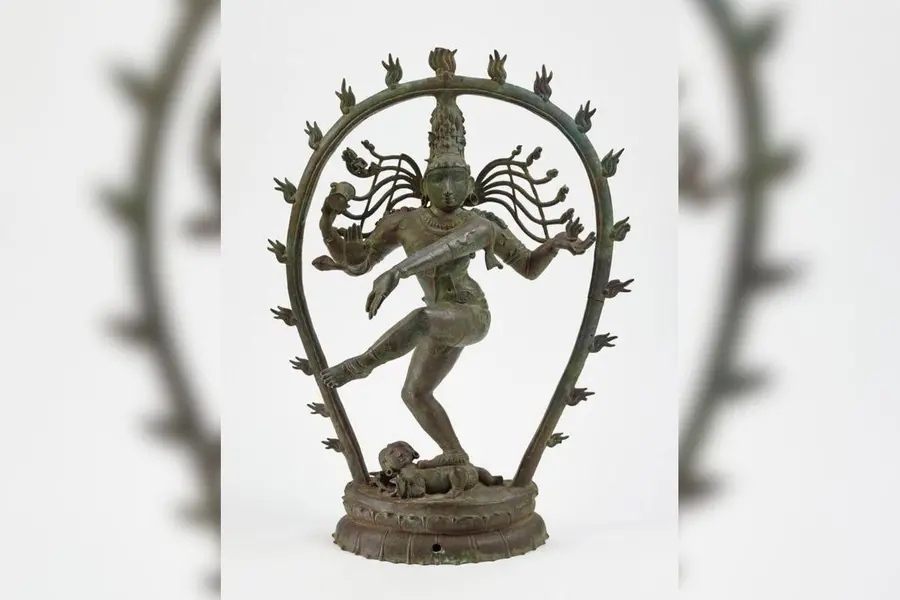
The sculptures — Shiva Nataraja (Chola period, circa 990), Somaskanda (Chola period, 12th century) and Saint Sundarar with Paravai (Vijayanagar period, 16th century) — represent some of the most important examples of South Indian bronze casting traditions and were originally sacred icons carried in temple processions.
Also Read

Provenance Investigation And Findings
As part of a systematic review of its South Asian collection, the museum’s provenance team conducted detailed research into the objects’ origins and ownership history.
Archival photographs from 1956–59, in collaboration with the Photo Archives of the French Institute of Pondicherry, showed the bronzes within temples in Tamil Nadu, India, before they entered Western markets. The Archaeological Survey of India later verified that these objects were removed in violation of Indian antiquities laws.
The Shiva Nataraja, originally from the Sri Bhava Aushadesvara Temple in Tirutturaippundi, Tamil Nadu, was purchased by the Smithsonian in 2002 from a New York gallery with falsified documentation, according to museum researchers.
Return And Loan Agreement
While all three sculptures will be formally returned to the Government of India, New Delhi has agreed to place the Shiva Nataraja on long-term loan to the Smithsonian.
This arrangement enables the museum to continue exhibiting the piece as part of the exhibition “The Art of Knowing in South Asia, Southeast Asia, and the Himalayas,” while also openly sharing its full history — including how it arrived in the museum and its subsequent restitution.
Museum director Chase F Robinson said the move reflects a commitment to ethical museum practice, transparency, and responsible stewardship of cultural heritage, thanking the Indian government for its collaboration in the process.
The museum is now coordinating with the Indian Embassy to finalize the repatriation and associated ceremonies, marking a significant step in international cooperation on cultural heritage protection.
Published: 30 Jan 2026, 09:55 am IST
Related Topics
Disclaimer: Kindly avoid objectionable, derogatory, unlawful and lewd comments, while responding to reports. Such comments are punishable under cyber laws. Please keep away from personal attacks. The opinions expressed here are the personal opinions of readers and not that of Mathrubhumi.