
Disputes often hinge on the ‘Places of Worship Act, 1991,’ which mandates maintaining the status quo of sites as of 1947. Its validity is currently being challenged in the Supreme Court.
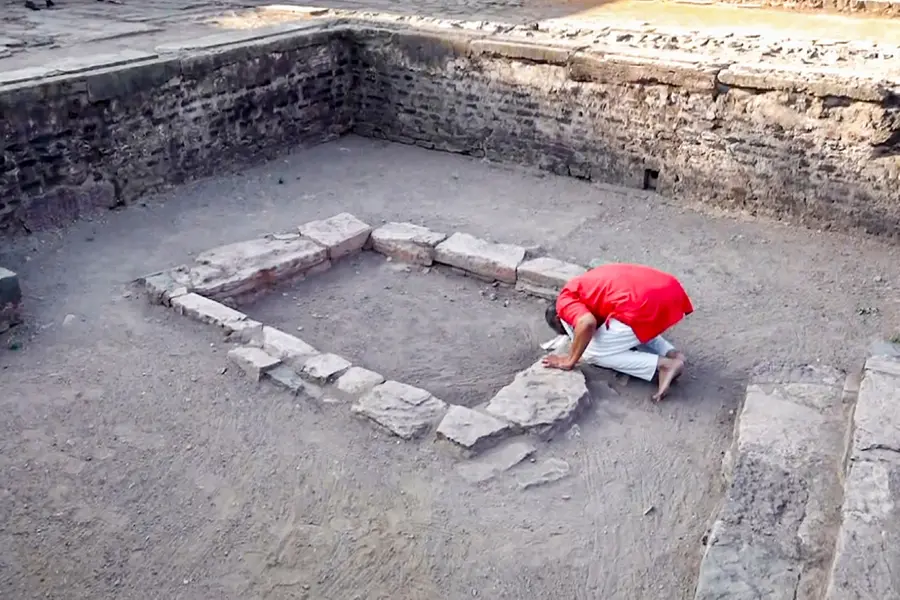
A decision by the Madhya Pradesh High Court on Friday declaring the contested Bhojshala-Kamal Maula Mosque site in the Dhar district to be a temple dedicated to Goddess Saraswati has renewed attention on a series of prominent legal battles concerning the religious identity of historic structures across India.
The high court overturned an Archaeological Survey of India (ASI) regulation from decades ago that granted Muslims the exclusive right to perform Friday prayers at the site while restricting the devotional rights of Hindus within the premises.
Most ongoing litigations involving these contested sites feature arguments centred on the Places of Worship (Special Provisions) Act, 1991. The statute mandates that the religious character of any place of worship must remain as it existed on Aug. 15, 1947. Currently, more than six petitions challenging the constitutional validity of various provisions of the 1991 law are awaiting adjudication before the Supreme Court, following the landmark 2019 Ayodhya title dispute resolution that enabled the construction of the Ram temple.
Krishna Janmabhoomi-Shahi Idgah Mosque (Mathura, Uttar Pradesh)
The dispute involves a 13.37-acre property encompassing the Krishna Janmabhoomi temple complex, revered by Hindus as the birthplace of Lord Krishna, and the adjacent Shahi Idgah mosque. Hindu litigants contend that the mosque was erected in the 17th century during the reign of Mughal Emperor Aurangzeb over a pre-existing temple. Conversely, Muslim representatives argue that the site is protected by the Places of Worship Act.
Eighteen separate lawsuits filed by Hindu devotees, organisations, and the deity's "next friend" are currently pending before the Allahabad High Court, seeking possession of the land and the restoration of the temple. On Aug. 1, 2024, the high court dismissed challenges brought by the mosque administration regarding the maintainability of the suits, ruling that the litigation was not barred by the Limitation Act, the Waqf Act, or the Places of Worship Act.
Kashi Vishwanath Temple-Gyanvapi Mosque (Varanasi, Uttar Pradesh)
Situated in the holy city of Varanasi, this dispute ranks alongside Ayodhya and Mathura as one of the most high-profile religious property cases in India. Hindu petitioners claim the original Kashi Vishwanath temple was dismantled under Aurangzeb's rule to construct the Gyanvapi Mosque. The Muslim side maintains that the dispute is invalid under the 1991 Act, citing centuries of uninterrupted Islamic prayers at the venue.
The legal battle intensified in 2021 when five women petitioned a local court for worship rights. A subsequent court-ordered inspection reportedly uncovered a structure resembling a shivling inside the mosque's ablution tank (wazukhana), which the mosque committee characterised as a defunct fountain mechanism. In 2022, the Supreme Court ordered the protection of the specific area where the object was found while ensuring that access for Muslim worshippers remained unimpeded. The top court further intervened in 2024 by refusing to stay a lower court order that permitted a Hindu priest to conduct daily prayers within the "Vyas Ji Ka Tahkhana" basement sector of the mosque.
Shahi Jama Masjid (Sambhal, Uttar Pradesh)
The Sambhal district became a focal point of civil unrest in 2024 after a local court commissioned a survey of the Shahi Jama Masjid. The order followed a petition by a Hindu devotee alleging the mosque occupied the site of the ancient Harihar temple, dedicated to Kalki, the final avatar of Lord Vishnu. The petition claims the mosque was built in 1526 during the reign of Mughal Emperor Babur.
Clashes between local demonstrators and security forces during a second survey round resulted in four deaths and dozens of injuries. The mosque committee challenged the survey, alleging it was ordered hastily without a proper hearing and violated the Places of Worship Act. Hearing a special leave petition contesting the Allahabad High Court's refusal to halt the inspection, the Supreme Court subsequently ordered the maintenance of the status quo at the site.
Quwwat-ul-Islam Mosque (Delhi)
In 2021, Hindu and Jain devotees initiated a lawsuit in a Delhi civil court requesting the restoration of deities within the Qutub Minar complex. The plaintiffs asserted that 27 temples were partially demolished by Qutubdin Aibak, a general in the army of Mohamad Gauri, to construct the Quwwat-ul-Islam Mosque using the salvaged materials.
The ASI countered the suit by clarifying that the mosque resides within a designated protected monument where active religious worship is legally prohibited. The civil court dismissed the suit in 2021, observing that historic grievances cannot serve as a justification to disrupt contemporary peace. An appeal of the ruling is currently pending before an appellate court.
Idgah Maidan (Hubballi, Karnataka)
A dispute emerged in 2022 when local municipal authorities permitted Ganesh Chaturthi festivals to take place at the Hubballi Idgah Maidan, drawing formal objections from the Anjuman-e-Islam organisation.
The Karnataka High Court upheld the municipal decision, ruling that the land belonged to the Dharwad municipality and that Anjuman-e-Islam held only a 999-year lease at a nominal annual fee of Re 1. While the Muslim organisation argued the grounds fell under the protection of the Places of Worship Act, the high court determined the maidan was not a regular place of worship, noting it was historically used for Islamic prayers exclusively during the festivals of Bakrid and Ramzan.
Malali Masjid (Dakshina Kannada, Karnataka)
The Malali mosque became a subject of litigation in 2022 when structural renovations reportedly exposed traditional Hindu architectural elements within the building.
Several Hindu groups subsequently petitioned a local court in Mangaluru to demand a formal inspection of the premises. The court subsequently ruled as maintainable a lawsuit seeking the appointment of a court commissioner to survey the Malali mosque to determine if it was superimposed on a prior Hindu temple.
With inputs from PTI
Published: 16 May 2026, 10:32 pm IST
Disclaimer: Kindly avoid objectionable, derogatory, unlawful and lewd comments, while responding to reports. Such comments are punishable under cyber laws. Please keep away from personal attacks. The opinions expressed here are the personal opinions of readers and not that of Mathrubhumi.
